South Korea and Japan Share Trade Negotiations with the U.S. and U.S. Military Presence
Many Reasons to Cooperate
As the 60th anniversary of the normalization of diplomatic relations between South Korea and Japan (June 22) approaches, a former U.S. official has stated that there are many reasons for the Lee Jaemyung administration to cooperate with Japan.
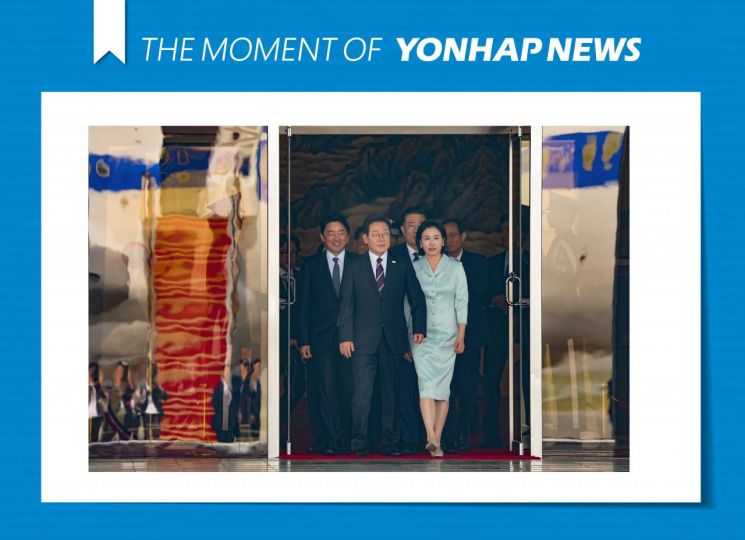
Christopher Johnston, who served as Director for East Asia at the White House National Security Council (NSC) during the Joe Biden administration, said in an online discussion hosted by the Center for Strategic and International Studies (CSIS) on June 16 (local time), "President Trump's major agenda is to have allies further strengthen their defense capabilities, and by having the two U.S. allies (South Korea and Japan) cooperate more closely, the aim is to reduce the burden on the United States." He emphasized, "There are many reasons for South Korea and Japan to engage in dialogue and cooperation."
Former Director Johnston noted the commonalities that both South Korea and Japan are conducting separate trade negotiations with the United States and that U.S. forces are stationed in both countries. He analyzed, "Given this background, there is ample justification for the two countries to deepen their dialogue with each other."
He assessed that the "early signals" in South Korea-Japan relations since the launch of the Lee Jaemyung administration have been positive. However, reflecting on the period of the previous Democratic Party administration under Moon Jaein, he pointed out that uncertainty remains regarding the outlook for bilateral relations during President Lee's term as well.
He noted that public opinion in both countries toward the other has greatly improved, and that decisions made by the leaders of South Korea and Japan regarding bilateral relations will have a significant impact on public sentiment. He diagnosed that this could serve as momentum for policies related to South Korea-Japan relations, or could become an obstacle.
Former Director Johnston evaluated that during the tenure of former President Yoon Sukyeol, Yoon, his counterpart former Prime Minister Fumio Kishida, and the current Prime Minister Shigeru Ishiba all supported progress in South Korea-Japan relations. He predicted, "Going forward, decisions made by the leaders of both countries regarding bilateral relations will influence public opinion in both countries, and this will either strengthen the relationship or deal a blow to it."
Yuki Tatsumi, a senior fellow at the Stimson Center who also participated in the discussion, mentioned the internal political situations within the ruling parties of both countries as variables that could affect future South Korea-Japan relations, with particular attention to the situation in Japan.
Researcher Tatsumi analyzed, "President Lee has a unified ruling party (the Democratic Party of Korea), which gives him political space to pursue centrist policies, but Japan's ruling party (the Liberal Democratic Party) is divided, so Prime Minister Ishiba does not have that flexibility."
© The Asia Business Daily(www.asiae.co.kr). All rights reserved.

















