National Research Institute of Cultural Heritage Announces Reinvestigation Results
Molar Teeth Excavated, Forensic Analysis Reveals Owner Was in Mid to Late Teens
Multiple Pieces of Evidence Found for Active Trade During Early Ungjin Period
The owner of Tomb No. 2 at the 'Gongju Muryeongwang Tomb and Royal Tomb Complex' has been identified as King Samgeun, the grandson of King Gaero.
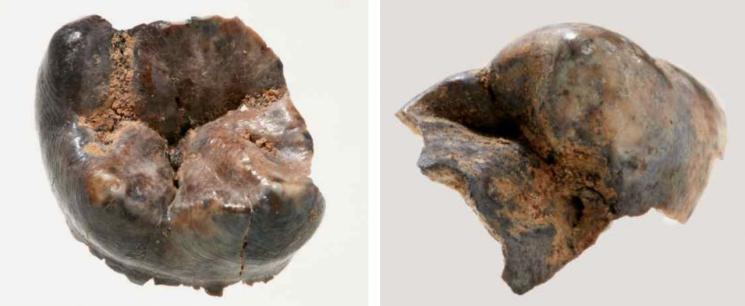
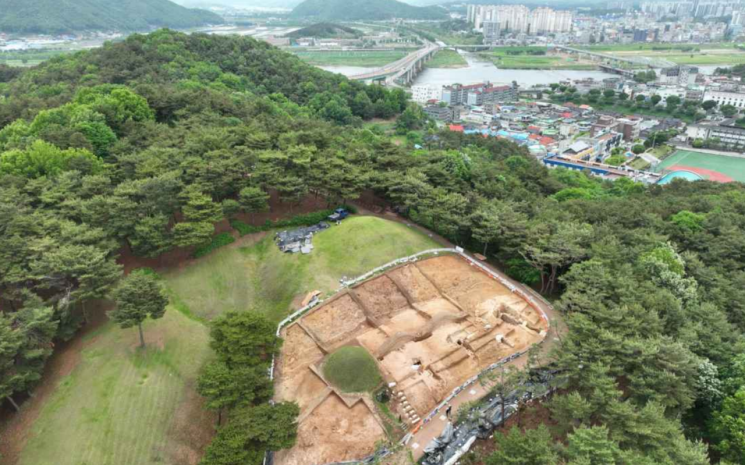
The National Research Institute of Cultural Heritage and the National Buyeo Institute of Cultural Heritage announced on June 17, 2025, the results of their reinvestigation of the Gongju Muryeongwang Tomb and Royal Tomb Complex, which began in September 2023. Located at San 5-17, Geumseong-dong, Gongju, this site served as the royal burial ground for the kings of the Ungjin period of Baekje from 475, when the capital was moved to Gongju, until 538.
The institute focused its investigation on Tomb No. 2, located in the northeast of the royal tomb complex, and discovered two gold earrings and two molar teeth. Forensic analysis revealed that the tomb's owner was in their mid to late teens. King Samgeun is the only king of the Ungjin period known to have died in his teens. He was born in 465, ascended the throne in 477, and died in 479 at the age of fourteen.
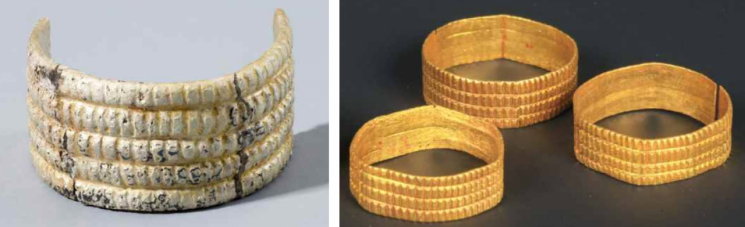 Rings excavated from Tomb No. 2 at Gongju Royal Tomb Site (left) and from the Northern Tomb of Hwangnamdaechong in Gyeongju
The institute explained, "The gold earrings with blue glass beads excavated from Tomb No. 2 represent an intermediate style between the Hanseong and late Ungjin periods," adding, "This proves that the tomb's owner reigned during the early Ungjin period." They further stated, "It is presumed that the owners of Tombs No. 1 to 4, which are arranged side by side, were all direct descendants of King Gaero, including King Munju, and were thus royal family members related by blood."
The institute also found multiple pieces of evidence indicating that Baekje established a solid political system and engaged in active trade from the early Ungjin period. The ring found in Tomb No. 2, made of silver with gold plating and engraved with stripes, closely resembles a ring excavated from the Northern Tomb of Hwangnamdaechong in Gyeongju. This is considered evidence of the close relationship between Baekje and Silla during the early Ungjin period. The pentagonal sword hilt ring decorated with silver-plated iron, also found in the tomb, has previously been discovered in Naju and Nonsan, suggesting that Baekje bestowed such items upon local leaders at the time.
More than 1,000 pieces of various types of glass beads were also recovered from Tombs No. 1 to 4. The lead component used in the yellow and green beads was analyzed to have originated from Thailand, similar to beads found in the Muryeongwang Tomb. This demonstrates that Baekje operated an extensive trade network encompassing Southeast Asia. The institute evaluated, "Even during the early Ungjin period, which has often been regarded as a time of political turmoil, Baekje already maintained a stable internal political system and a well-managed external trade network."
© The Asia Business Daily(www.asiae.co.kr). All rights reserved.



















