Korean Institute for Health and Medical Research Report
"Reduced Incidence of Gastric and Colorectal Cancer Up to Age 79"
"From Age 80, Screening Decisions Should Be Made Individually"
A recent study has found that the effectiveness of cancer prevention through endoscopic screening for gastric and colorectal cancer is unclear in people aged 80 and older. Experts advise that, for this age group, it is better to determine the necessity of screening on an individual basis according to each person's health status, rather than applying uniform screening recommendations.
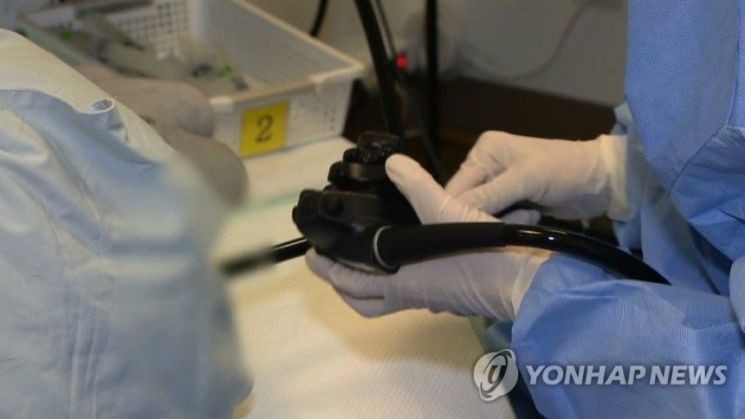
The National Evidence-based Healthcare Collaborating Agency (NECA) released this report on June 16, based on the findings of Professor Kim Hyunsoo's team at Wonju Severance Christian Hospital, part of the 'Patient-Centered Medical Technology Optimization Research Group.' The study was titled 'Proposed Optimal Age for Gastric and Colorectal Cancer Screening Based on Effectiveness and Cost-Effectiveness.'
The research team analyzed the effectiveness of gastric and colorectal cancer screening in people aged 75 and older, using health insurance claims data and national cancer screening data.
For colorectal cancer, the team analyzed health insurance claims data from 2004 to 2020, comparing the incidence of colorectal cancer in approximately 19,000 people aged 75 and older who underwent colonoscopy and about 19,000 who did not. The results showed that, up to age 79, colonoscopy reduced the incidence of colorectal cancer by 30%. However, this effect was not observed in those aged 80 and above.
Gastric endoscopy screening showed a similar trend. Analyzing national cancer screening data from 2009 to 2020, the researchers compared gastric cancer mortality rates in about 86,000 people aged 75 and older who underwent endoscopy and about 86,000 who did not. Up to age 79, gastric endoscopy reduced gastric cancer mortality by 43%. However, in those aged 80 and older, the effect of reducing gastric cancer mortality was relatively lower. Furthermore, when the upper age limit was analyzed in one-year increments, the effectiveness of gastric endoscopy was not evident from age 81 and above.
Experts who attended the clinical value assessment meeting for these research findings stated, "For those in their 80s and above, screening should not be recommended uniformly. Instead, the decision to screen should be made individually, taking into account the person's health status, life expectancy, and cancer risk." They also emphasized, "The decision-making process regarding endoscopic screening should involve thorough discussions between the patient and medical staff."
This is consistent with recommendations previously made by relevant academic societies in Korea. Currently, the national cancer screening program recommends fecal occult blood tests every one to two years for those aged 50 and older for colorectal cancer screening, and recommends colonoscopy if the test is positive. For gastric cancer, adults aged 40 and older are offered gastric endoscopy or upper gastrointestinal series every two years, with no upper age limit specified.
Academic societies have previously stated that there is insufficient evidence to support colorectal cancer screening in people aged 81 and older, and that, for gastric cancer, screening is not recommended for those aged 85 and older due to the increased risk of mortality associated with screening in this age group.
© The Asia Business Daily(www.asiae.co.kr). All rights reserved.

















