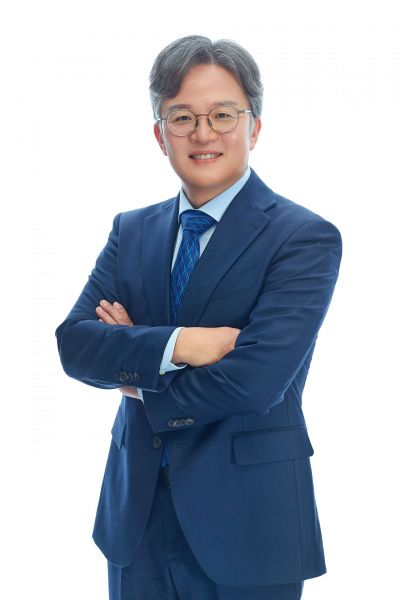
Chosun University announced on June 16 that the research team led by Professor Shin Hyunjae from the Department of Biological Chemical Engineering has been selected for the "Agro-Byproduct Eco-Circulation Technology Development (R&D)" project, a designated public competition project organized by the Rural Development Administration. The research team will carry out the project for five years, until December 2029.
This project, with Chosun University as the lead institution, was applied for in collaboration with a total of eight organizations: Seomseom Bio Co., Ltd., Lapique Co., Ltd., Earthfoam Co., Ltd., Gyeonggi-do Agricultural Research and Extension Services, Chungcheongbuk-do Agricultural Research and Extension Services, National Institute of Horticultural and Herbal Science, and the Rural Development Administration. The project will receive a total research fund of 4.4 billion won over five years, of which Chosun University will independently receive 1.812 billion won.
Over the past 20 years, Professor Shin has actively conducted research on new materials using various local plants and mushrooms, and has led high-value-added research on Sparassis crispa mushrooms and mushroom-based leather materials, being the first in the country to do so.
The research team, under the theme of "Development of Material Technology Utilizing Vegetable and Mushroom Cultivation Byproducts," plans to collaborate with the Rural Development Administration to develop technologies that recycle more than 10 million tons of agro-byproducts and mushroom cultivation byproducts generated annually nationwide into various industrial materials such as food, cosmetics, and construction materials.
Through these efforts, the team expects not only to reduce existing waste disposal costs and generate tens of billions of won in economic benefits annually, but also to contribute to establishing a resource-circulating economic model by developing products that utilize byproducts.
Professor Shin stated, "Over the next five years, we plan to go beyond simply recycling agro-byproducts that were previously discarded, by adding design and functionality to create new value." "Based on this, we will develop industrial technologies to transform these byproducts into various products such as food, food additives, cosmetics, pet products, agricultural supplies, industrial materials, and industrial raw materials, and will transfer related technologies to multiple companies to achieve practical industrialization."
© The Asia Business Daily(www.asiae.co.kr). All rights reserved.

















