Paju City Leads Nationwide Attention with Pioneering Administration for "Basic Society"
Proposes Multiple First-in-the-Nation Policies and a Local Government Model for a Basic Society
Paju City in Gyeonggi Province is drawing nationwide attention as it actively implements administrative reforms and community-oriented policies to realize a "Basic Society" centered on three pillars: basic income, basic services, and a sustainable economy. Going beyond simply expanding welfare, Paju City is presenting a new policy model at the local government level by shifting its focus to improving the fundamental quality of life for its citizens.
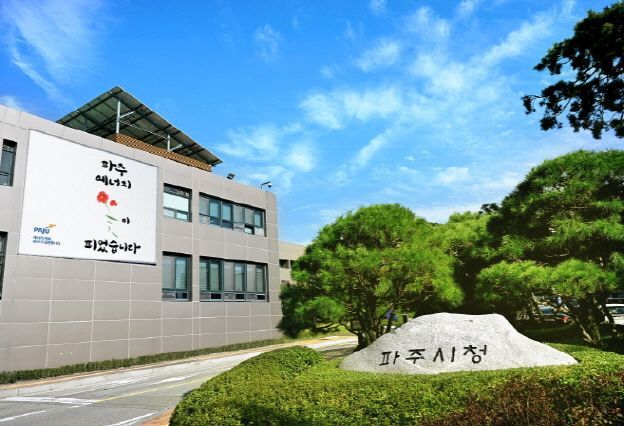
According to Paju City on June 16, the city established the "Basic Society Team" within City Hall for the first time in the country this past January. By integrating and managing functions previously scattered across welfare, economy, and transportation departments, and by creating a dedicated organization to oversee related policies, the city has significantly enhanced both the effectiveness and the connectivity of its policies.
A representative example of the Basic Society policy is the expansion of the local currency, "Paju Pay." In 2024, as the central government drastically reduced the budget for local currencies and many local governments scaled back or suspended their programs, Paju City maintained its issuance with the highest-level conditions in the country: a constant 10% incentive and an annual recharge limit of up to 1 million won.
Through this, citizens are experiencing a tangible basic income effect of up to 100,000 won per month, while local small business owners are also benefiting from increased consumer spending. The policy is evaluated as not only stimulating consumption but also establishing a virtuous cycle for the local economy.
Another notable initiative is the provision of the "Livelihood Recovery and Stability Support Fund" to all citizens. In January, Paju City provided a universal payment of 100,000 won per person to all residents in order to ease the economic burden caused by high inflation and high interest rates. This policy, which aimed to achieve both short-term livelihood stability and economic effects such as boosting consumption and revitalizing the local economy, has received very high satisfaction and is spreading nationwide.
In the field of basic transportation, the student-only school circulation bus "Paprika" has attracted attention. By creatively interpreting and applying the "limited license" and "joint transportation agreement" systems, the city found regulatory loopholes within existing laws without needing legislative amendments. This innovative approach has set a meaningful precedent nationwide by breaking the common practice of banning chartered school buses.
Paprika has greatly improved convenience for students commuting to school, earning strong support from citizens. The program has also won several awards, including at the Ministry of the Interior and Safety's Local Regulatory Innovation Competition, and has been expanded to northern Paju since this year.
Kim Kyoungil, Mayor of Paju City, stated, "A Basic Society is a structure in which every citizen's fundamental rights are guaranteed, ensuring a basic standard of living without socioeconomic polarization or inequality. Paju City will continue to take the lead in developing the Paju-style Basic Society model, and as the chair city of the Basic Society Local Government Council, we will also work to spread and institutionalize this model nationwide."
© The Asia Business Daily(www.asiae.co.kr). All rights reserved.

















