Iran's Underground Nuclear Facilities Remain Intact... Possible Nuclear Weapon Production
Impossible to Attack Without U.S. Support... Concerns of Escalation if U.S. Intervenes
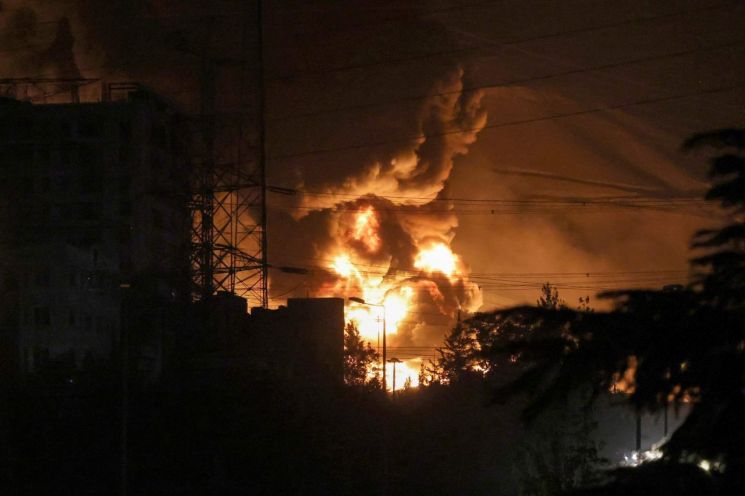 On the 15th (local time), flames rise in the city center of Tehran, the capital of Iran, due to an airstrike by Israel. Photo by AFP Yonhap News
Israel is carrying out large-scale airstrikes on Iran's nuclear facilities, but it has been reported that key underground enriched uranium storage sites have been excluded from the list of targets. This is believed to be because it would be difficult to attack these underground facilities, which are located hundreds of meters below ground, without assistance from the U.S. military. There are concerns that even if Israel strikes above-ground nuclear facilities, as long as the enriched uranium storage sites remain intact, Iran could begin producing nuclear weapons within six months.
No Damage to Iran's Fordow Underground Enriched Uranium Storage Facility
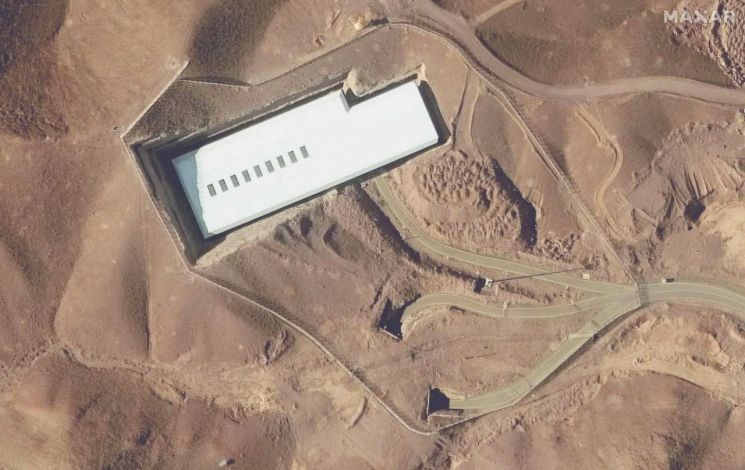 Above-ground building view of the Fordow underground nuclear facility located in Qom, Iran. Photo by Reuters Yonhap News
On June 19 (local time), Israeli airstrikes damaged Iran's Natanz nuclear facility and the Arak heavy water reactor facility. However, the Fordow underground nuclear facility, which is believed to store large quantities of highly enriched uranium, reportedly has not sustained any damage.
The International Atomic Energy Agency (IAEA) inspection team also stated on June 15 (local time) that the Fordow underground nuclear facility in Qom, Iran, was not affected by the Israeli airstrikes. In addition, there have been no reports of airstrike damage to the underground nuclear facility in Isfahan, which also houses an underground enriched uranium storage site.
The underground nuclear facilities in Fordow and Isfahan are believed to contain highly enriched uranium capable of being used for nuclear weapons, as well as thousands of centrifuges. According to the IAEA, Iran possesses 408 kg of 60% highly enriched uranium. If this uranium is enriched to 90%, it would be enough to produce about 9 to 10 small nuclear weapons. The IAEA estimates that it would take Iran approximately six months to manufacture small nuclear weapons.
The Israeli military stated that since June 13, it has carried out airstrikes on Tehran, Isfahan, and other locations in Iran, resulting in over 220 deaths and more than 1,200 injuries. At the same time, it claimed that the Fordow nuclear facility was not a target of the attacks. In contrast, the Iranian government asserted that both the Natanz nuclear facility, the largest in the country, and the Fordow facility were targeted by the Israeli military.
A Stronghold Built 800 Meters Underground... Impossible to Attack Without U.S. Support
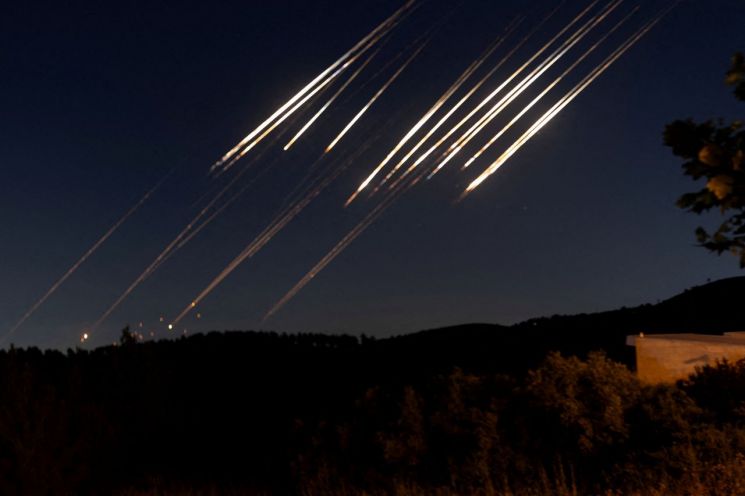
There is analysis suggesting that the reason the Israeli military, which launched airstrikes to eliminate Iran's nuclear weapons capability, did not attack the enriched uranium storage facilities is because it is waiting for U.S. approval and support.
The Fordow nuclear facility in Iran is a fortress built in a massive mountainous area, with the enriched uranium storage facility reportedly located 800 meters underground. According to CNN, it would be difficult to inflict damage on such a facility without specialized weapons like the U.S. GBU-57 bunker buster, which is designed to strike underground nuclear sites. In other words, it would be difficult to carry out an airstrike operation alone without U.S. military support.
There is also analysis that Israel is concerned that, even if it succeeds in attacking the enriched uranium storage facilities, a radioactive leak could result in widespread international condemnation. John Wolfsthal, a researcher at the Federation of American Scientists, pointed out to The New York Times that "Prime Minister Benjamin Netanyahu's administration in Israel may have been concerned about the risk of a radioactive leak."
Concerns of Wider Middle East Conflict If U.S. Intervenes... Possible Regime Change in Iran?
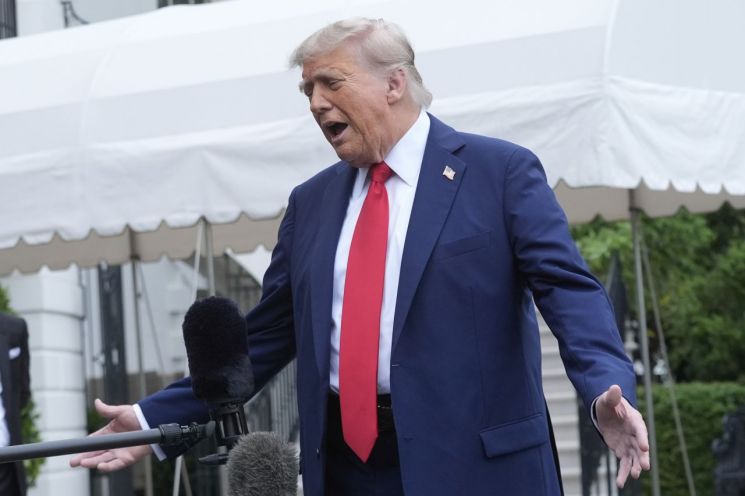
The U.S. government has stated that it will decide whether to directly intervene in the conflict between Israel and Iran depending on the possibility of future negotiations with Iran. White House spokesperson Karoline Leavitt said at a briefing on June 19, "Based on the substantial possibility that negotiations with Iran may or may not take place in the near future, we will decide within the next two weeks whether to attack Iran."
Earlier, on June 18, she pressured Iran by stating, "We know exactly where Iran's Supreme Leader is hiding," and "We have not issued the final attack order only to see what decision Iran will make." This is interpreted as an ultimatum, warning that if the Iranian government does not present an agreement satisfactory to the U.S. and Israel within two weeks, military intervention will follow.
If U.S. military intervention becomes a reality, the U.S. may attempt regime change in Iran together with Israel. Considering the prolonged U.S. economic sanctions and public opposition in Iran to an all-out war with Israel, there is a high possibility that a new regime with a more flexible policy toward the U.S. could emerge if regime change occurs. Israeli Prime Minister Benjamin Netanyahu also emphasized in a June 15 interview with Fox News that "the Iranian regime is very weak, so regime change could certainly be an outcome," adding, "We must protect not only our country but the world from this inciteful regime."
However, some are concerned that U.S. intervention could lead to a wider conflict in the Middle East. The BBC pointed out that "if the U.S. intervenes, Iran could mobilize its affiliated armed groups to attack U.S. military bases deployed throughout the Middle East," and "if the bases of U.S. allies in the Middle East, such as Saudi Arabia or the United Arab Emirates (UAE), become targets, these countries would have no choice but to join Iran's offensive, which could result in a large-scale escalation."
© The Asia Business Daily(www.asiae.co.kr). All rights reserved.



















