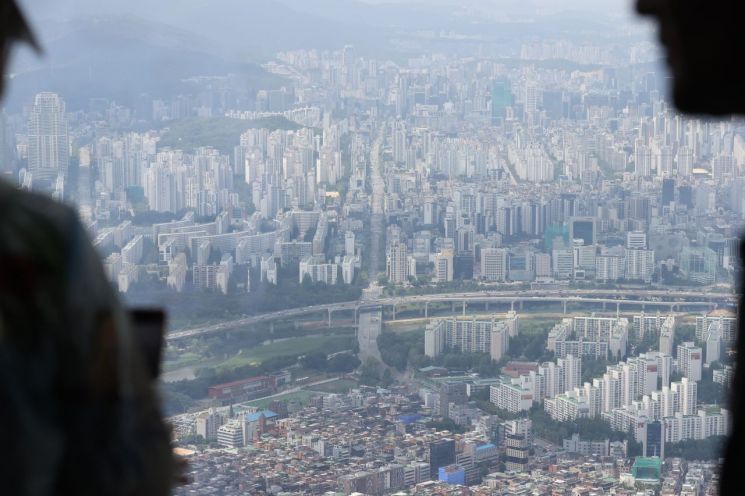
There have been calls for the new administration to boost the economy in the short term by expanding construction investment.
The Korea Research Institute for Construction Policy (KRICP) stated in its report, "Review of the New Administration's Construction Pledges and Proposals for Short-Term Measures to Revitalize the Construction Sector for Domestic Economic Stimulus," released on June 13, that "the construction industry is a key driver of domestic economic recovery, yet it has been neglected in policy." The institute added, "We propose that both short-term economic response measures and mid- to long-term industry promotion strategies be pursued together."
The report explained that, since the government intends to revive the domestic economy through expansionary fiscal policy, an increase in construction investment is necessary for a genuine economic rebound.
The report also noted that the Bank of Korea's growth forecast of 0.8% for this year is largely attributable to the sluggish construction sector, making recovery in construction a crucial task for a virtuous economic cycle. However, it pointed out that large-scale construction pledges are unlikely to yield tangible results within this year or next year due to their inherent characteristics. Therefore, it argued that, to achieve short-term effects, an expansion of supplementary budgets focused on public facility projects should be pursued, alongside measures to invigorate private urban regeneration and housing policies to improve market sentiment.
The report stated, "Fiscal policies such as expanding public construction investment, early budget execution, and revitalizing private investment projects must be carefully designed so that the construction industry can serve as a catalyst for economic stimulus."
It continued, "However, due to the late timing of the second supplementary budget and administrative limitations, it will inevitably be difficult to allocate public facility project budgets at the level the industry expects. Therefore, it is urgent to allocate the maximum possible budget for public facility projects not only in the second supplementary budget but also in next year's budget planning."
In addition, the report emphasized that, to revive the private housing market, various regulatory relaxations and tax support, including the easing of heavy taxation on owners of multiple homes, are necessary. It also stressed that institutional improvements such as reflecting actual construction costs, securing reasonable construction periods, and expanding policy finance should be implemented in parallel.
The report further noted that the new administration's industrial revitalization pledges are focused on specific sectors such as information technology (IT), energy, and space·aerospace, while the construction industry has only been mentioned in the context of "economic recovery," resulting in its neglect. Therefore, a comprehensive, government-wide mid- to long-term strategy is needed.
Jeon Youngjun, head of the Future Industry Policy Research Office at KRICP, stated, "Now is the last opportunity to improve the industry's fundamentals and overcome policy neglect. The government and the private sector must work together to promptly establish and implement a mid- to long-term strategy." He added, "Before introducing new regulations that could undermine industrial vitality, thorough review must be conducted, and a government-wide mid- to long-term strategy is needed to coordinate the increasingly diverse policies of each ministry."
© The Asia Business Daily(www.asiae.co.kr). All rights reserved.
![Clutching a Stolen Dior Bag, Saying "I Hate Being Poor but Real"... The Grotesque Con of a "Human Knockoff" [Slate]](https://cwcontent.asiae.co.kr/asiaresize/183/2026021902243444107_1771435474.jpg)
















