Celltrion's breast cancer and gastric cancer treatment 'Herzuma' (ingredient name: trastuzumab), as well as its metastatic colorectal cancer and breast cancer treatment 'Vegzelma' (ingredient name: bevacizumab), are solidifying their influence by dominating the Japanese oncology market.
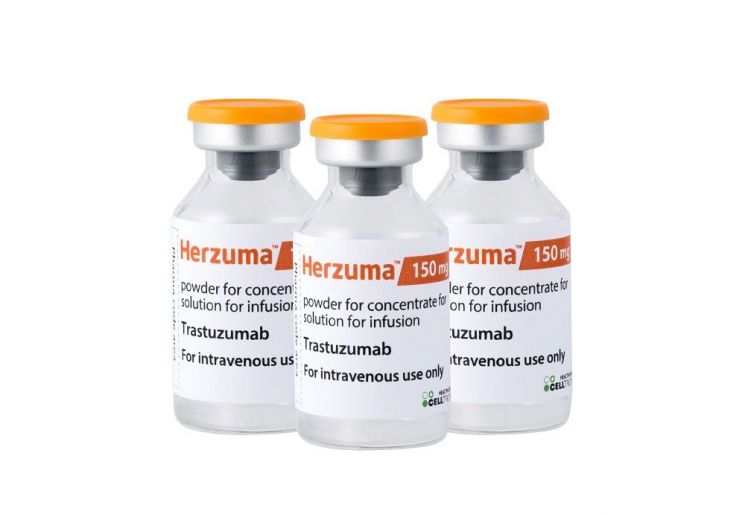
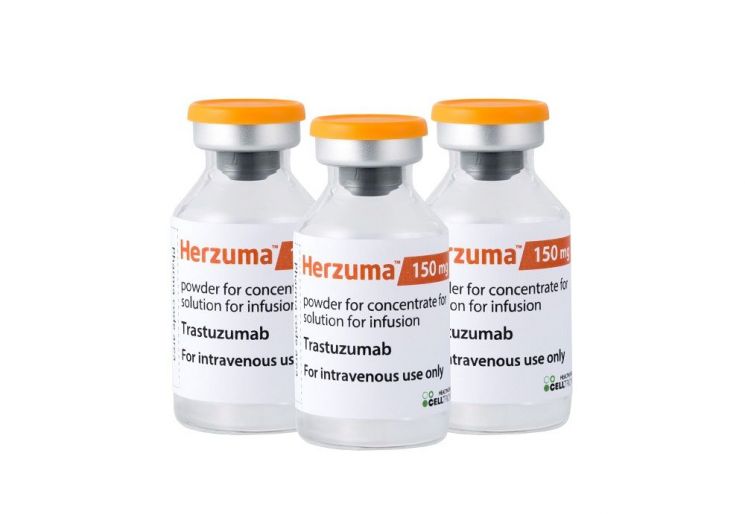
According to IQVIA and local market data as of April 2025, Herzuma recorded a 75% market share in Japan, maintaining an overwhelming lead. Since surpassing the market share of the original product for the first time in the second quarter of 2021, it has held the top spot in prescriptions for four consecutive years. Considering that there are a total of five trastuzumab treatments available in Japan, Herzuma's market dominance over competing products is evident.
Vegzelma, which entered the market later, is also showing remarkable results. Launched in Japan in January 2023, Vegzelma achieved a 29% market share as of April 2025. Notably, despite being the most recent entrant among the six bevacizumab products sold in Japan, Vegzelma has garnered significant attention locally for its strong marketing capabilities and product competitiveness. As the gap with the top-prescribed product has narrowed to just 2 percentage points, it is expected that Vegzelma could soon take the leading position in prescriptions.
Celltrion's oncology drugs have achieved such notable results in Japan, Asia's leading pharmaceutical market, due to the combination of customized sales activities by local subsidiaries and partner companies tailored to the characteristics of the Japanese pharmaceutical market, as well as the country's biosimilar-friendly policies.
In particular, Celltrion's active use of the 'Japanese Diagnosis Procedure Combination (DPC) system,' which is considered a representative biosimilar-friendly policy for oncology, played a key role in its marketing efforts. Under the DPC system, the Japanese government determines medical expenses for cancer treatments, and hospitals can increase their profits by prescribing more affordable medicines, thereby saving costs. In addition, the use of lower-priced drugs reduces both government reimbursements and patients' out-of-pocket expenses, making the DPC system a policy that typically benefits hospitals, the government, and patients alike.
In addition to oncology drugs, Celltrion's autoimmune disease products are also establishing a strong presence in Japan. As of April 2025, Celltrion's flagship autoimmune treatment 'Remsima' (ingredient name: infliximab) holds a 41% market share in Japan, ranking first in biosimilar prescriptions. 'Yuflyma' (ingredient name: adalimumab) also achieved a 12% market share during the same period, growing rapidly from 8% to 12% in just four months?an increase of more than 1.5 times?demonstrating clear results for all Celltrion products sold in Japan.
A Celltrion representative stated, "All four Celltrion treatments are demonstrating overwhelming prescription performance and increasing market dominance in Japan, which is a key pharmaceutical market in Asia. This success is the result of an effective sales strategy that leverages local marketing staff to visit hospitals throughout Japan, where pharmaceutical supply is based on a retail (sales) model." The representative added, "With plans to launch the ustekinumab autoimmune disease treatment 'Stekyma' in Japan this year, we will actively utilize the experience and know-how accumulated from selling our existing products to ensure that new products can also achieve rapid success."
© The Asia Business Daily(www.asiae.co.kr). All rights reserved.
![Clutching a Stolen Dior Bag, Saying "I Hate Being Poor but Real"... The Grotesque Con of a "Human Knockoff" [Slate]](https://cwcontent.asiae.co.kr/asiaresize/183/2026021902243444107_1771435474.jpg)

















