"Insurrection Special Prosecutor" Cho Eunseok
Investigated Shindongah Group Corruption During the DJ Administration
"Kim Keonhee Special Prosecutor" Min Jungki
Led Judicial Blacklist Investigation
"Chae Sangbyeong Special Prosecutor" Lee Myeonghyeon
Investigated Corruption Allegations Involving Lee Hoi-chang's Eldest Son
With President Lee Jaemyung’s swift appointment of three special prosecutors on June 12?covering the insurrection, Kim Keonhee, and Chae Sangbyeong cases, collectively known as the “three special prosecutors”?a wave of investigations targeting the previous administration is expected to intensify through the end of the year.
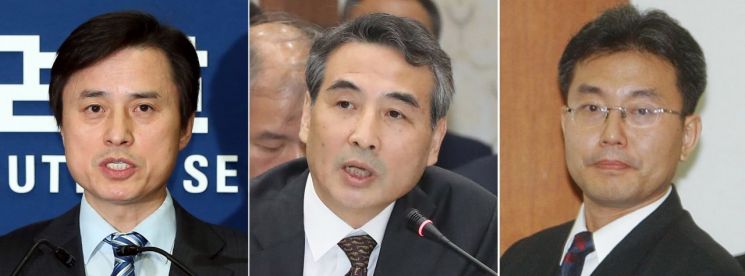
These three special prosecutors are expected to begin full-scale investigations in early July, after a preparation period of about 20 days. The investigations can last up to 170 days. The number of dispatched prosecutors can reach a total of 120, with up to 60 for the insurrection special prosecutor, 40 for the Kim Keonhee special prosecutor, and 20 for the Chae Sangbyeong special prosecutor. The special prosecutors will take the lead in the new administration’s investigative efforts, effectively replacing the prosecution, which is currently facing a “crisis of dissolution.”
The insurrection special prosecutor is drawing the most attention among the three. President Lee Jaemyung has consistently identified the “complete end of the insurrection” as the top policy priority of the new government, from his time as opposition leader, to his presidential campaign as the Democratic Party candidate, and even in his inaugural address. It is no exaggeration to say that ending the insurrection is the number one policy goal of the Lee administration.
Cho Eunseok, the former chief prosecutor of the Seoul High Prosecutors’ Office, has been appointed as the insurrection special prosecutor. He is known for his extensive experience in special investigations within the prosecution and has led major investigations under both progressive and conservative administrations.
During the DJ administration in 1998, as a rank-and-file prosecutor in the special investigation division of the Seoul District Prosecutors’ Office, Cho investigated corruption involving the Shindongah Group. This case led to the so-called “clothing lobby scandal,” in which Shindongah allegedly lobbied the prosecutor general’s wife with clothing to save Chairman Choi Soonyoung. Cho was dispatched to the special prosecutor’s office for the strike inducement case, where he indicted former public security chief Jin Hyunggu. During the presidential campaign funds investigation, he indicted Ahn Heejung, a close associate of former President Roh Moo-hyun. Under the Lee Myungbak administration, as a division chief at the Seoul Central District Prosecutors’ Office, he investigated the Yongsan incident, in which all those indicted were ultimately found guilty by the Supreme Court.
During the Park Geunhye administration, Cho served as chief of the criminal division at the Supreme Prosecutors’ Office (prosecutor general) and led the investigation into the Sewol ferry disaster. He clashed with the Blue House over whether to charge the Coast Guard with occupational negligence resulting in death. Despite opposition from the Blue House, he insisted on indictments, but was subsequently transferred to a less prominent post compared to his peers. When the Moon Jaein administration took office, Cho was recognized as a prosecutor who had suffered under the Park administration, along with then-Seoul Central District Prosecutors’ Office chief Yoon Sukyeol, and was promoted to chief prosecutor of the Seoul High Prosecutors’ Office.
After being appointed special prosecutor, Cho sent materials to the press, stating, “I will do my utmost to ensure that the efforts of the National Investigation Headquarters, the Corruption Investigation Office for High-ranking Officials, and the prosecution are not in vain, and will perform my duties as special prosecutor solely according to the logic of investigation, with the attitude of recording history.”
Min Jungki, the special prosecutor for the Kim Keonhee case, is a former judge who led the Seoul Central District Court and is known for his association with the “Wooribeop Research Society.” He was considered a close associate of former Supreme Court Chief Justice Kim Myungsoo, having attended university with him. He also chaired the additional investigation committee for the so-called “judicial blacklist” allegations during the Moon Jaein administration.
Lee Myeonghyeon, the special prosecutor for the Chae Sangbyeong case, served as a military legal officer for 25 years and was recommended by the Cho Kuk Innovation Party, not the Democratic Party. He is considered an expert in military investigations, having served as chief prosecutor at the Joint Investigation Headquarters for Military Service Corruption and as chief of the High Prosecutors’ Office in the Ministry of National Defense. In 2002, he investigated allegations of military service corruption involving the eldest son of former Grand National Party leader Lee Hoi-chang.
The key to the success or failure of the special prosecutors lies above all in their “investigative capabilities.” Special prosecutor investigations often follow preliminary investigations by the prosecution or other agencies, and significant time may have passed since the incidents, making it difficult to secure evidence or testimony. This is also why, despite the new administration’s open distrust of the prosecution, a large number of incumbent prosecutors must still be dispatched to the special prosecutors’ teams.
© The Asia Business Daily(www.asiae.co.kr). All rights reserved.

















