Doctoral Student Seyoung Jung, Master's Student Jiyoung Park, and Professor Woo Ram Eom's Team
Publication of Research on the Anti-aging Material "Exosome" in the International Journal 'ACS Nano'
The research team led by Professor Woo Ram Eom (Department of Biotechnology) at National Pukyong University has revealed the mechanism by which "exosomes," which are gaining attention as next-generation regenerative therapeutics, prevent skin aging.
Se Young Jung, a doctoral student, Ji Young Park, a master's student, and Professor Woo Ram Eom published a paper titled "Stem Cell-derived Extracellular Vesicles in Skin Anti-aging Treatments," which elucidates the mechanism of exosomes, in a world-renowned international journal in the field of nanoscience (IF: 15.8).
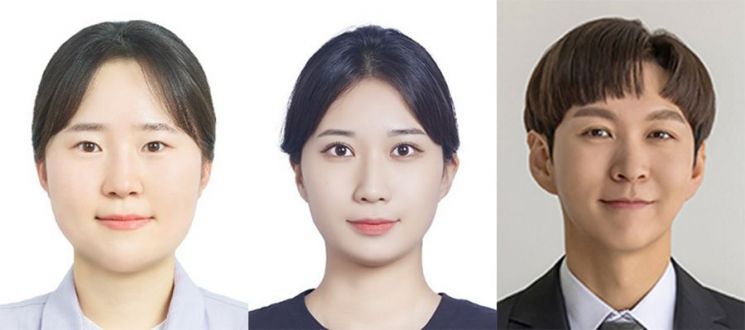 Research team (from left: Se Young Jung, master's student Ji Young Park, professor Woo Ram Eom). Provided by National Pukyong University
With the recent rapid aging of the population and increasing aesthetic demands, there is growing interest in anti-aging technologies to maintain a youthful and healthy appearance. Exosomes, which are advanced anti-aging materials derived from stem cells, are being used as key active ingredients in a variety of anti-aging products.
Exosomes have shown remarkable effects in wrinkle improvement and inflammation suppression compared to conventional preventive anti-aging ingredients, and are being used in cosmetics and medical devices. However, until now, the exact mechanism of action had not been identified, which has limited clinical approval and the development of advanced products.
Based on more than 210 previously published studies on exosomes, Professor Woo Ram Eom's research team presented findings that stem cell-derived exosomes promote collagen synthesis in the dermis and effectively suppress inflammation and oxidative stress, thereby demonstrating excellent efficacy in restoring skin elasticity and improving wrinkles.
The study also proposed methods to further enhance the anti-aging effects of exosomes on the skin by utilizing medical devices such as microneedles and hydrogels.
Professor Woo Ram Eom stated, "This study comprehensively presents the mechanism by which exosomes prevent skin aging, and I expect it will serve as an important foundational resource for utilizing exosomes in innovative therapies that fundamentally restore skin health beyond cosmetic improvement."
This research was supported by the National Research Foundation of Korea and National Pukyong University.
© The Asia Business Daily(www.asiae.co.kr). All rights reserved.

















