Genetic Factors Behind Sensitivity to Cucumber and Coriander
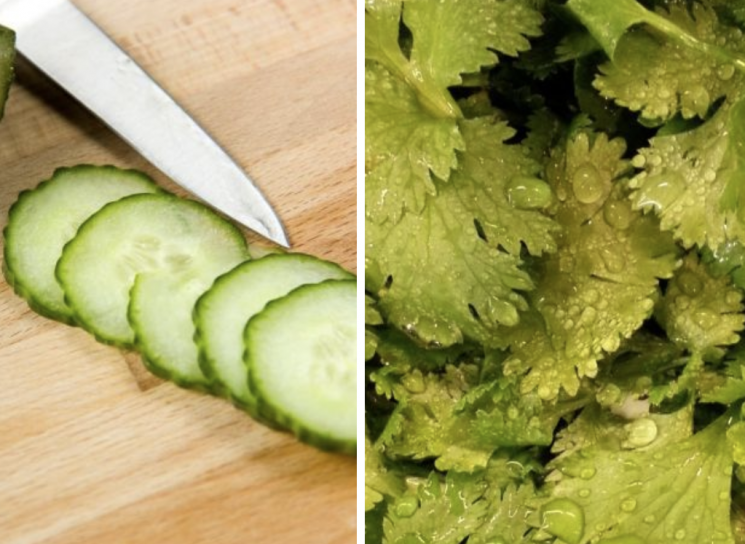
A study has found that genetic factors influence why some people dislike cucumber and coriander.
On June 11, the Ministry of Food and Drug Safety shared in a card news post that "a research team at the University of Utah in the United States has revealed that preferences for cucumber and coriander are determined by genetics."
According to this study, cucurbit vegetables contain a bitter compound called cucurbitacin, and there is a gene that makes people more sensitive to this taste.
The gene that determines preference for cucumber is the TAS2R38 gene. This gene comes in two types: bitter-sensitive and bitter-insensitive. People with the sensitive type perceive bitterness 100 to 1,000 times more strongly than those with the insensitive type.
Not only the taste but also the aroma of cucumber can be perceived differently by each individual. The aroma of cucumber comes from a compound called 2,6-nonadienol, a type of alcohol. People who dislike cucumber are known to have odor receptor genes that are particularly sensitive to this molecule.
Coriander also contains a compound called aldehyde, which gives it its characteristic aroma. This compound is used in products such as soap, lotion, and detergent, which is why some people perceive a soapy or detergent-like taste in coriander.
The taste of coriander is influenced by the OR6A2 gene. People with a variant of this gene are more sensitive to aldehyde compounds. The prevalence of this gene is lower in regions with a high preference for coriander, such as the Middle East and South Asia, and higher in East Asia, where coriander preference is lower.
© The Asia Business Daily(www.asiae.co.kr). All rights reserved.

















