Six Vice-Ministerial Appointments in Key Ministries Including Economy and Foreign Affairs
Minimizing the Administrative Vacuum Caused by the Early Presidential Election
"We promise to swiftly restore the administration damaged by the rebellion and to build an effective government capable of overcoming global protectionism."
The Office of the President emphasized this point on June 10 while announcing six vice-ministerial appointments, including the 1st and 2nd Vice Ministers of the Ministry of Economy and Finance, the 1st and 2nd Vice Ministers of the Ministry of Foreign Affairs, the 1st Vice Minister of the Ministry of Trade, Industry and Energy, and the Chief Trade Negotiator.
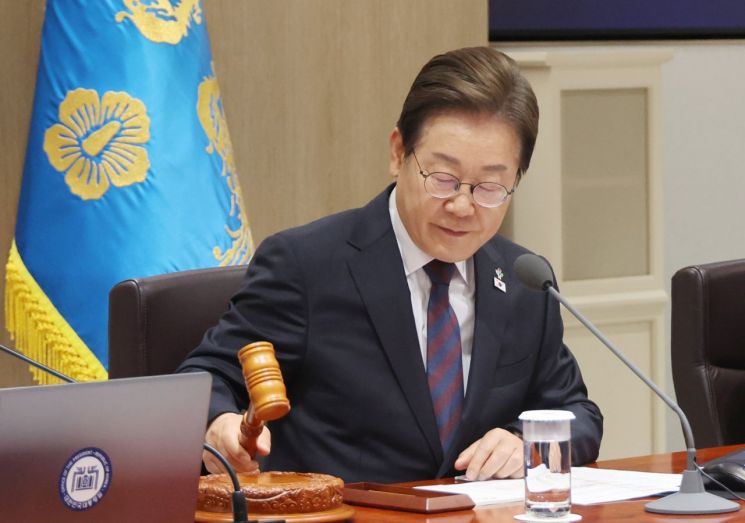
This round of vice-ministerial appointments by President Lee Jaemyung took place on the seventh day of his term, a faster pace than former President Moon Jaein, who made such appointments on his 21st day in office. This move is seen as an effort to minimize the administrative vacuum caused by the early presidential election and to respond swiftly to pressing economic and diplomatic issues, such as the upcoming G7 Summit. In particular, before appointing ministers?who must go through confirmation hearings?six vice-minister-level officials were installed in key ministries such as the Ministry of Economy and Finance, the Ministry of Foreign Affairs, and the Ministry of Trade, Industry and Energy, in order to normalize the working-level operations as quickly as possible. Kang Yujeong, spokesperson for the Office of the President, explained, "We carried out the vice-ministerial appointments to focus human resources on economic recovery and overcoming instability," adding, "By appointing experts in the economic and industrial sectors, we have prioritized resolving the economic crisis as quickly as possible."
Lee Hyungil, Commissioner of Statistics Korea, was appointed as the 1st Vice Minister of the Ministry of Economy and Finance. He previously served as Assistant Minister at the Ministry of Economy and Finance, Economic Policy Secretary at the Office of the President, and Director General for Economic Policy at the Ministry of Economy and Finance. He is also a former Senior Economist at the International Bank for Reconstruction and Development (IBRD) in the United States. Within the ministry, he has been selected three times as the supervisor employees most want to emulate, attesting to his high level of trust. Lim Kigeun, Administrator of the Public Procurement Service, was appointed as the 2nd Vice Minister of the Ministry of Economy and Finance. He has held key positions such as Director General for Fiscal Management, Director General for Budget Coordination, Director General for Economic Budget, and Director General for Policy Coordination at the Ministry of Economy and Finance. He has extensive hands-on experience in budget formulation and fiscal restructuring.
President Lee also made appointments for two vice ministers at the Ministry of Trade, Industry and Energy. Moon Sinhak, appointed as the 1st Vice Minister, has overseen energy-related policies including oil, gas, and nuclear power at the ministry. The position of Chief Trade Negotiator, who will lead tariff negotiations with the United States, goes to Yeo Hankoo, Senior Fellow at the Peterson Institute for International Economics. Yeo previously served as Director General for Trade Policy during the first Trump administration in the U.S., overseeing trade policy. He is seen as a strategic choice to proactively respond to the spread of global protectionism and increasing trade pressure from major countries.
In anticipation of the G7 Summit in Canada from June 15 to 17 (local time), the diplomatic team has also been expanded. Park Yoonju, Minister at the Permanent Mission of Korea to ASEAN, was appointed as the 1st Vice Minister of Foreign Affairs. Drawing on his extensive experience in Washington, including as Director General for North American Affairs at the Ministry of Foreign Affairs, Park is tasked with addressing issues related to North America. He is considered the right person to uphold pragmatic, national interest-focused diplomacy in key areas such as tariff negotiations, which are a top priority for the second Trump administration. Kim Jina, a professor at Hankuk University of Foreign Studies, was appointed as the 2nd Vice Minister of Foreign Affairs. Kim previously served as a policy advisor to the Korea-U.S. Combined Forces Command and was the third Korean ever to serve as a disarmament advisor directly under the UN Secretary-General, bringing an academic background to the role.
A source from the ruling party commented, "This round of vice-ministerial appointments is based on merit and practicality, aiming to minimize gaps in public affairs and diplomacy and to assemble a capable team for the G7 diplomatic stage." The source added, "These appointments also clearly signal that the personnel policy of the Lee Jaemyung administration prioritizes 'expertise' over 'loyalty' and 'practicality' over 'politics.'"
© The Asia Business Daily(www.asiae.co.kr). All rights reserved.

















