Experts Warn: "Excessive Immersion Can Hinder Relationships"
Bae Juyeon, a 23-year-old university student, describes herself as an avid fan of "identity tests." She has tried not only the MBTI, which classifies personalities into 16 types, but also the recently popular "Teto·Egen" (short for male and female hormones) test among people in their teens and twenties. Bae said, "According to the test results, I am an INFP with a strong HSP (Highly Sensitive Person) tendency, and I am an 'Egen woman,'" adding, "I get easily exhausted in relationships and experience large emotional swings, so when I go on a blind date, I always check if the other person is a T (thinking type) or F (feeling type), and whether they have an Egen style."
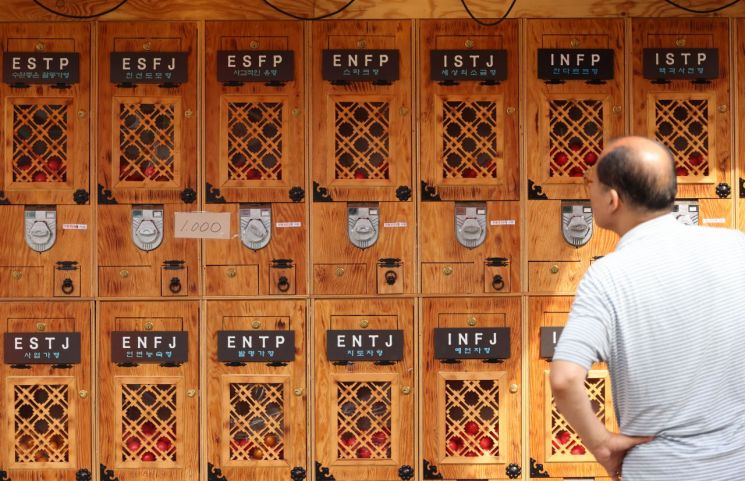
An increasing number of members of the MZ generation (Millennials and Generation Z) are immersing themselves in identity tests that define "what kind of person am I." While these are being used as tools for self-understanding, some point out that excessive self-classification may actually hinder attempts to adapt to relationships with others or to new situations.
Recently, the Teto·Egen test, which uses male and female hormones as metaphors to identify relationship styles and energy types, has gained popularity. Posts sharing test results are being uploaded on social networking services (SNS) such as Instagram and YouTube Shorts. Teto and Egen are abbreviations for the male hormone testosterone and the female hormone estrogen, respectively. Those who are active and enjoy sports are classified as Teto men or Teto women, while those who are sensitive and have a strong sense of aesthetics are classified as Egen men or Egen women.
Some people use these test results as criteria in romantic relationships or interpersonal interactions. Kim (24), who meets potential partners through a blind date application (app), said, "It's convenient because I can intuitively tell if someone's tendencies match mine when choosing a romantic partner," adding, "Since I have a strong and outgoing personality, I tend to prefer people with abundant estrogen as romantic partners." Yoon (22) said, "Based on my experiences as a teenager, I don't seem to get along well with people who have excessive testosterone."
The HSP (Highly Sensitive Person) test is also regaining attention. HSP is a concept introduced by American psychologist Elaine Aron, referring to people who are highly sensitive. These individuals react sensitively to small sounds or lights, are adept at understanding others' thoughts, and empathize deeply. The comments section of HSP-related YouTube Shorts has become a forum for people with HSP tendencies to share their thoughts. They shared reactions such as, "It's hard to work if I don't have my own space," "I cry unconditionally when I see something sad," and "Because I worry about getting more tired, HSPs tend not to express dissatisfaction as much as ordinary people."
Experts say that it is excessive to accept identity tests as absolute indicators of identity or as standards for life decisions. Park Hyeyeon, a professor at Dongduk Women's University College of Liberal Arts, said, "A person's tendencies change depending on the surrounding context or situation," and warned, "If you blindly trust the results of identity tests, there is a risk of reinforcing biases or stereotypes." Lim Myungho, a professor at Dankook University Department of Psychological Therapy, also stated, "If you believe in them blindly, you may fall into the error of overgeneralization by judging people in a dichotomous way," adding, "It is necessary to take identity tests lightly and use them only as a reference."
© The Asia Business Daily(www.asiae.co.kr). All rights reserved.

















