A new coding workflow where AI handles complex tasks
Even non-experts can create programs
"How can we verify AI code?"... Skepticism remains
A, a 31-year-old graduate student in business administration, stated that her research efficiency has improved thanks to Vibe coding. This is because AI handles the challenging coding tasks for her. She explained, "You need to know how to write programs when organizing customer survey statistics or analyzing big data. It always used to take a long time, but after using Vibe coding, those concerns disappeared."
A new programming method is gaining attention, where artificial intelligence (AI) takes care of detailed coding tasks and humans simply give instructions. In the IT industry, this approach is called "Vibe coding," meaning that you work freely with AI according to your own vibe or intuition. Vibe coding is especially helpful for people who lack programming knowledge. However, there is still skepticism within the industry, as many believe that AI-generated code cannot be fully trusted yet.
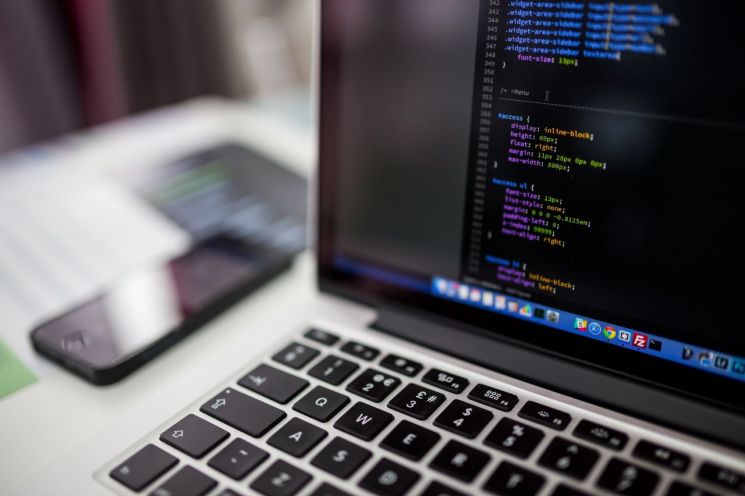
Vibe coding is considered a new coding workflow that is drawing attention in the IT industry. Developers delegate coding tasks to AI tools and focus on the overall architecture. The trend started when Andrej Karpathy, former AI Director at Tesla, defined it on his X (formerly Twitter) account in February as "a way of coding where you surrender to the vibe and forget that code even exists." As specialized AI coding chatbots like Copilot and Cursor have launched, more developers are actively embracing Vibe coding.
The Vibe coding trend is also heating up in South Korea. In April, Kakao posted an article on its company blog titled "Vibe Coding, Is This the Beginning of a New Development Paradigm?" detailing the latest trends. Online education company Fast Campus is already offering eight Vibe coding-related courses.
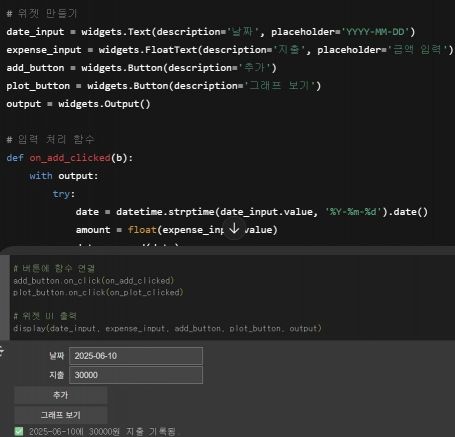
Currently, the area where Vibe coding is most actively used is in personal projects. Amateur developers, planners, and researchers who wanted to create their own programs but lacked coding skills are relying on Vibe coding. A said, "Previously, people without coding knowledge had no choice but to copy code from blogs or GitHub (a source code sharing community), or slightly modify someone else's code to create their own programs. The best thing about Vibe coding is that you can have a program tailored just for you without much effort."
"No way to verify integrity" - skepticism persists
However, many are expressing caution about the spread of Vibe coding. B, a current automation solutions developer, pointed out, "The most important task in programming is 'integrity verification,' but there is no way to guarantee the integrity of AI-generated code."
Integrity refers to the process of evaluating whether the completed code works as intended by the developer and whether there are any security or maintenance issues. B said, "Not being able to trust integrity means that unexpected problems could arise. It's fine to use Vibe coding for personal projects, but it's hard to imagine leaving factory, communication network, or automotive software to AI."
He added, "Compared to the speed at which AI writes code, human developers are much slower at verification. This could lead to a situation where developers are bogged down in code verification, increasing their workload and causing development speed to stagnate."
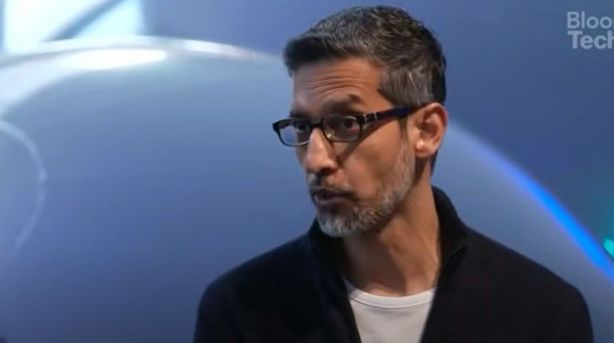 On the 5th (local time), Sundar Pichai, CEO of Google, stated that there are no plans to replace human engineers with AI. Bloomberg YouTube capture
Even leading global big tech companies at the forefront of the AI industry are cautious about fully adopting Vibe coding. On June 5 (local time), Sundar Pichai, CEO of Google, attended the "Bloomberg Tech Conference" in San Francisco, United States, and emphasized, "I enjoy Vibe coding myself, but Google will not reduce its software engineering workforce."
Pichai added, "AI's coding capabilities are certainly impressive, but there is currently no clear evidence that we have achieved AGI (artificial general intelligence). AI still makes basic mistakes, and humans remain at the core of software development."
© The Asia Business Daily(www.asiae.co.kr). All rights reserved.



















