Nationwide Apartment Pre-Sale Outlook Rises by 1.3 Points in June
Seoul Sees 18.5-Point Drop as Toheo Zone Price Surge Effect Weakens
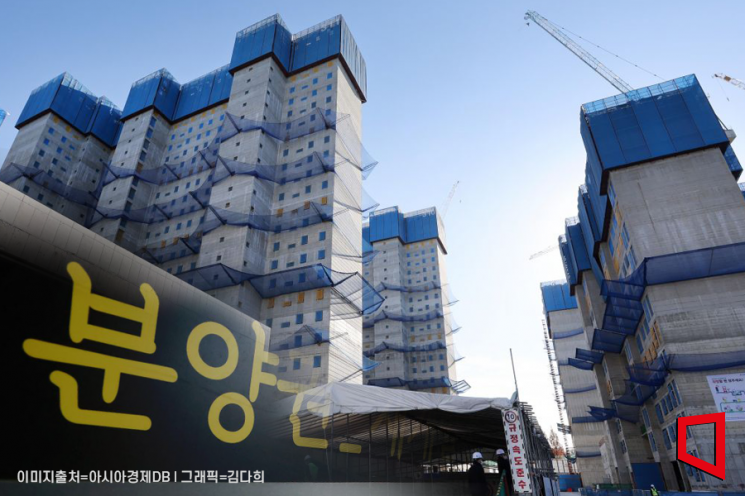
There is a forecast that the nationwide apartment pre-sale market will improve this month. However, the outlook for Seoul has significantly worsened, as the price increase effect from the expanded designation of land transaction permission zones (Toheo zones) has diminished.
The Housing Industry Research Institute announced on June 10 that, based on a survey of housing business operators, the nationwide average Apartment Pre-Sale Outlook Index for June stood at 94.6, up 1.3 points from the previous month.
This index, which ranges from 0.0 to 200.0, is a quantified indicator created by the Housing Industry Research Institute based on surveys of housing business operators about the conditions of complexes that are about to be or are currently being pre-sold. A reading above 100.0 indicates a positive outlook for pre-sales, while a reading below 100.0 suggests the opposite.
The institute explained, "The nationwide average apartment pre-sale outlook index rose by 1.3 points compared to the previous month. This appears to reflect the continued decline in mortgage rates since the beginning of this year, as well as expectations for expansionary fiscal policies from the next administration aimed at stimulating the economy." They added, "An increase in the population of people in their 30s who are of marriageable age, along with a rise in the number of newlywed households due to more marriages, and the supply shortage that has accumulated over the past four years, are all factors exerting upward pressure on housing prices."
In the Seoul metropolitan area, the index is projected to fall by 2.5 points to 104.6, while in non-metropolitan regions, it is expected to rise by 2.2 points to 92.5. The decline in Seoul is particularly notable, with the city recording a drop of 18.5 points to 103.7. Gyeonggi Province is also expected to fall by 2.8 points to 100.0, whereas Incheon is forecast to rise by 13.6 points to 110.0.
The institute stated, "Among the metropolitan areas, Seoul saw a sharp decline of 18.5 points. This is analyzed to be due to the weakening of the rapid price increase effect that had appeared during the process of lifting and re-designating Toheo zones." They further explained, "Additionally, with the upcoming implementation of the third phase of the Debt Service Ratio (DSR) regulation, there has been a temporary increase in pre-sale supply in Seoul and the metropolitan area, as new pre-sale housing projects have moved up their schedules. This also appears to have had an impact."
In non-metropolitan areas, Jeju rose sharply by 25.6 points, Daejeon by 16.7 points, North Gyeongsang by 15.4 points, and Daegu by 11.2 points. In contrast, North Chungcheong is expected to decline by 16.7 points, Gangwon by 13.3 points, South Gyeongsang by 12.9 points, and North Jeolla by 12.5 points.
Meanwhile, this month's pre-sale price outlook index was analyzed at 111.9, up 8.9 points from the previous month. The institute explained, "Amid the ongoing trend of rising housing prices in key areas of Seoul, there are concerns that the mandatory implementation of the Level 5 Zero Energy Building design standards for private apartment complexes with 30 or more units, which is scheduled to begin at the end of this month, could lead to increased construction costs."
The pre-sale supply outlook index is forecast to rise by 1.0 point from the previous month to 96.6, while the unsold inventory outlook index is expected to fall by 5.5 points to 103.3. Analysts attribute this to the resumption of pre-sale schedules as political instability is resolved, as well as expectations that the next administration will implement measures to address unsold inventory in local areas following the presidential election.
© The Asia Business Daily(www.asiae.co.kr). All rights reserved.

















