Overtourism Concerns as Foreign Tourist Numbers Surge
Political Circles Call for Fundamental Abolition of Consumption Tax Exemptions
Demands Emerge to Raise the 1,000 Yen Departure Tax per Person
There are growing calls within Japanese political circles to increase the tax burden on foreign travelers. Japan has set a goal of attracting 60 million foreign visitors annually by 2030.
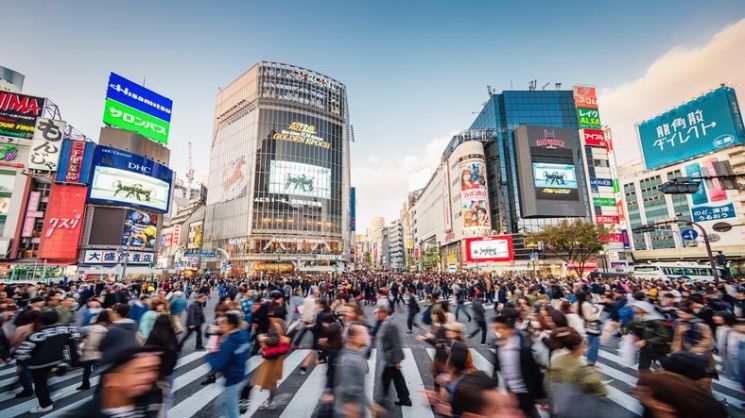 As overtourism issues arise in various parts of Japan, the idea of taxing foreign tourists is also gaining attention. Getty Images
According to the Nihon Keizai Shimbun (Nikkei) on June 9, the number of foreign tourists has surged since the easing of COVID-19 restrictions, leading to overtourism issues in various parts of Japan.
As a result, the idea of taxing foreign tourists is also gaining attention. Specifically, discussions are taking place within the Japanese government and the ruling Liberal Democratic Party regarding the abolition of consumption tax exemptions for short-term foreign visitors and the increase of the "International Tourist Tax," which is collected as a departure tax when leaving the country.
Taro Aso, a former prime minister and senior advisor to the Liberal Democratic Party, held an internal study session at the end of last month and released a proposal advocating for the fundamental abolition of consumption tax exemptions for foreigners. The proposal pointed out cases where some foreigners make bulk purchases of electronics or pharmaceuticals, stating, "This is not the direction we aim for in tourism-oriented national policy," and, "Such consumption patterns are unlikely to contribute to regional economic revitalization or the expansion of employment opportunities."
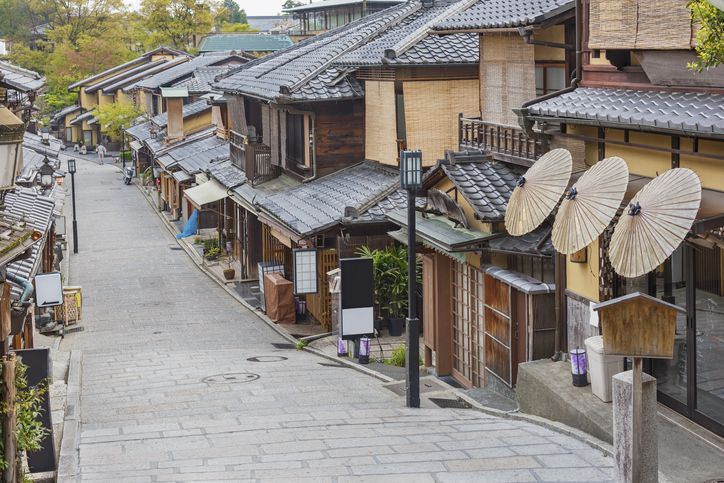 Voices are emerging in Japanese political circles calling for an increased tax burden on foreign travelers. Photo by Getty Images
Currently, the Japanese government provides tax-free benefits at the point of purchase on the day of shopping. However, starting in November next year, the government plans to check goods at airports and other locations upon departure and refund the consumption tax at that time, in order to prevent foreign travelers from reselling tax-free goods.
Separately, there have also been calls to raise the departure tax, which is currently 1,000 yen (approximately 9,380 won) per person. Liberal Democratic Party lawmaker Yumi Yoshikawa demanded in the House of Councillors Budget Committee last month that Prime Minister Shigeru Ishiba raise the departure tax.
In response, Prime Minister Ishiba indicated a positive stance, stating, "It is an obligation to taxpayers to receive an appropriate fee." The main argument for raising the departure tax is that foreign travelers should pay for their use of social infrastructure within Japan.
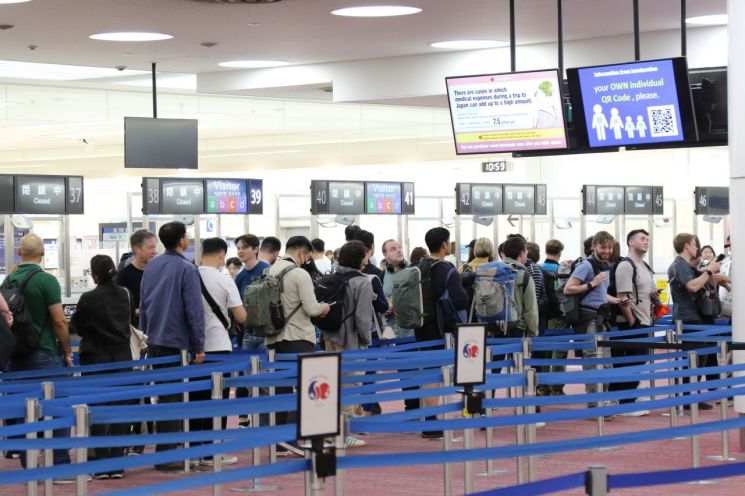 As the governments of South Korea and Japan commemorate the 60th anniversary of diplomatic normalization by operating dedicated immigration lanes for each other's citizens throughout June, many foreigners are seen waiting for immigration inspection on the first day of the system, June 1, at Tokyo Haneda Airport. Photo by Yonhap News
Meanwhile, the number of passengers on air routes between South Korea and Japan has reached an all-time high. According to aviation statistics from the Ministry of Land, Infrastructure and Transport, Incheon International Airport Corporation, and Korea Airports Corporation, a total of 11,246,131 passengers (including both departures and arrivals) traveled on air routes between South Korea and Japan from January to May this year. Of these, 7.85 million (69.8%) used Incheon Airport, while 3.39 million (30.2%) used other airports such as Gimpo and Gimhae.
The aviation industry explained that the continued weakness of the yen over the past several years has led to an increase in tourists visiting Japan, and that airlines increasing the number of flights on Japanese routes has also contributed to the rise in demand.
© The Asia Business Daily(www.asiae.co.kr). All rights reserved.



















