Chinese Group in Japan Lures Examinees for Proxy TOEIC Test
"Smart Glasses" and Microphones Used in Organized Cheating Scheme
Previously, at a TOEIC test center in Japan, a Chinese international student was caught attempting to take the test on behalf of someone else. It has now been confirmed that this examinee even used "smart glasses" to leak the answers, and that the act was part of an organized effort.
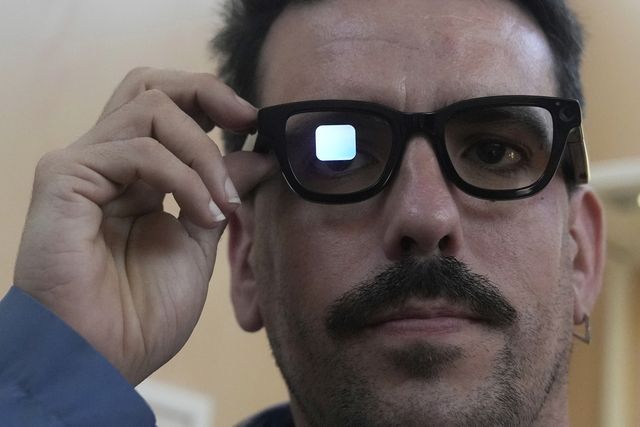 Smart glasses image. The photo is not directly related to the content of the article. Photo by AP Yonhap News
On June 6, Japanese media outlets including the Mainichi Shimbun reported that Wang, a 27-year-old Chinese international student who was arrested on charges including forgery of private documents, brought "smart glasses" equipped with communication and recording functions, as well as a small microphone, into the test center. Police also stated that 43 examinees who took the test that day registered using Wang's residential address. Since TOEIC test centers are assigned based on address, authorities suspect these individuals intended to take the test at the same location as Wang in order to receive the answers from him.
On May 18, at a TOEIC test center in Itabashi, Tokyo, Wang, a graduate student at Kyoto University, was arrested in the act while attempting to take the test on someone else's behalf. The TOEIC testing agency reported to police that "someone has been repeatedly taking the test under different names and photos," prompting an investigation. On the day of the test, Wang claimed to have "lost his test admission ticket" and tried to obtain a provisional ticket under another name, but was apprehended by police stationed at the venue. Wang was initially arrested for unlawful entry, with additional charges of document forgery later added. After Wang's arrest, it was reported that about 30% of the examinees at the test center abandoned the test and left the premises.
Wang had attached a small microphone inside the mask he was wearing at the test center and had also brought in equipment such as smart glasses. Upon examining Wang's smartphone, authorities discovered evidence that he had attempted to transmit answers via the small microphone to at least 10 people.
Wang told police that "someone on a social networking service (SNS) offered to pay me to take the TOEIC test on their behalf in Chinese," and that this led him to participate in the scheme. Police explained that Wang had also taken the TOEIC at another test center in Tokyo in March, and that on that occasion as well, more than 10 people registered using the same address as Wang.
Meanwhile, in Japan, it is known that foreign companies require job seekers to achieve a TOEIC score of 800 or higher. Local media have warned that, because of this, groups involving Chinese nationals have recently been luring examinees by offering to take the TOEIC on their behalf. An operator of a proxy test-taking business stated, "A TOEIC score of 900 costs about 1.18 million yen (approximately 1.14 million won). We take care of the ID verification. The score is guaranteed," adding, "Japan is the easiest country in which to take the TOEIC by proxy. The service is limited to Japan."
© The Asia Business Daily(www.asiae.co.kr). All rights reserved.

















