The Old House Enshrining the Hyangbulcheonwi of Samsan Ryu Jeongwon
Distinctive Features of a Noble Family Residence from the Late Joseon Period Well Preserved
The Andong Jeonju Ryu Clan Samsan Old House, which enshrines the Hyangbulcheonwi of Samsan Ryu Jeongwon (1702-1761), will be designated as a National Intangible Cultural Heritage. The National Heritage Administration announced on June 5 that it will collect opinions from various sectors for a month and finalize the designation after deliberation by the Cultural Heritage Committee.
Hyangbulcheonwi refers to a memorial tablet enshrined in a shrine for individuals who have made significant contributions to the development of Confucianism or who are highly respected, as proposed by local Confucian scholars. Ryu Jeongwon devoted his life to the study of the "I Ching" and authored works such as "Yeokhaechamgo" and "Harakjiyo." He served as a magistrate, later became the tutor of Crown Prince Sado, and held positions including Daesagan and Vice Minister of Taxation. During his tenure as a local official, he was widely praised for his exemplary governance. The National Heritage Administration explained, "He was so highly regarded in his time that he is cited as a model case eleven times in Jeong Yak-yong's 'Mokminsimseo.'"
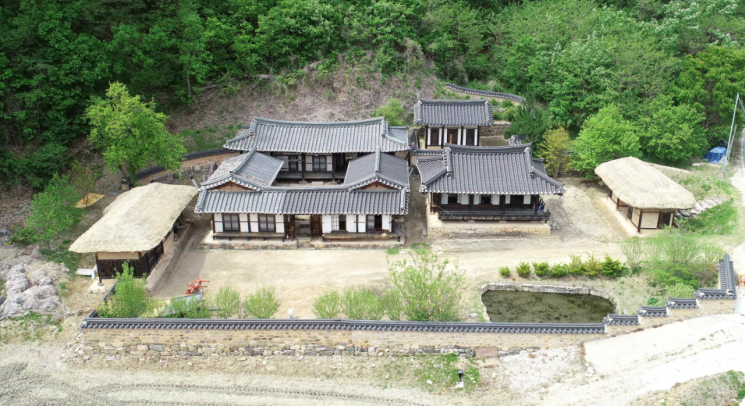
The Andong Jeonju Ryu Clan Samsan Old House, which produced more than ten independence activists including Ryu Jeongwon, is believed to have been built in the gye-yu year (1693) by his father, Ryu Seokgu, who held the title of Champan. The house name "Samsan" originates from Ryu Jeongwon choosing it as his pen name after observing three mountain peaks lined up in front of the anmaru (main floor) of the old house. Later, the village where the old house is located also came to be called by this name.
The old house consists of five buildings: the main quarters (anchae), men's quarters (sarangchae), shrine, stable, and gate quarters. It is a typical "ㅁ"-shaped courtyard house of northern Gyeongsangbuk-do, with the main and men's quarters built separately, clearly distinguishing between inner and outer spaces. Various construction materials such as doors, windows, and railings retain the characteristics of noble houses from the late Joseon period.
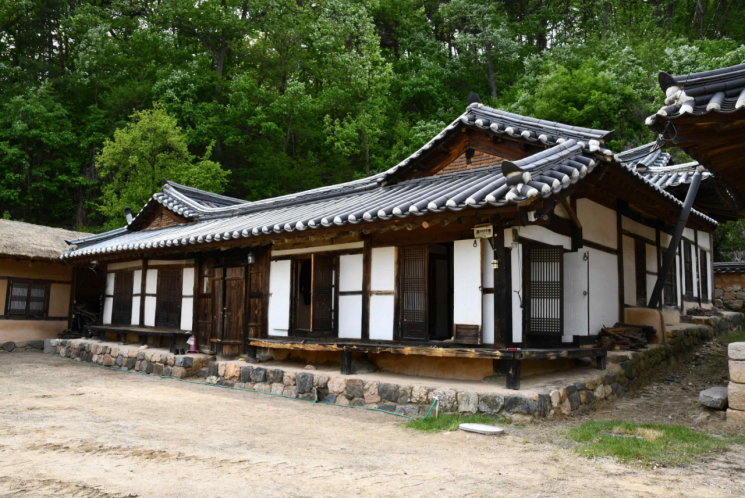
The main quarters (anchae) are divided equally between the inner room (anbang) and the main hall (daecheong), which is a different layout from the typical Andong region arrangement where the inner and upper rooms are placed on either side of the main hall. The main sleeping quarters (jeongchim) of the anchae have a straight gabled roof, while the left and right wings and the middle gate quarters are arranged in a "ㄷ"-shape below. It is believed that each space was constructed at different times.
© The Asia Business Daily(www.asiae.co.kr). All rights reserved.


















