Lutnick: "Some Subsidies Are Excessive"
Renegotiations Underway for CHIPS Act Subsidies
Tariff Decision on Aircraft Parts Expected by End of Month
On June 4 (local time), U.S. Secretary of Commerce Howard Lutnick announced that some semiconductor subsidies promoted under the country’s CHIPS and Science Act (CSA) are currently being renegotiated. There is speculation that the amount of subsidies Samsung Electronics and SK Hynix were set to receive in connection with their investments in the United States could also be subject to change.
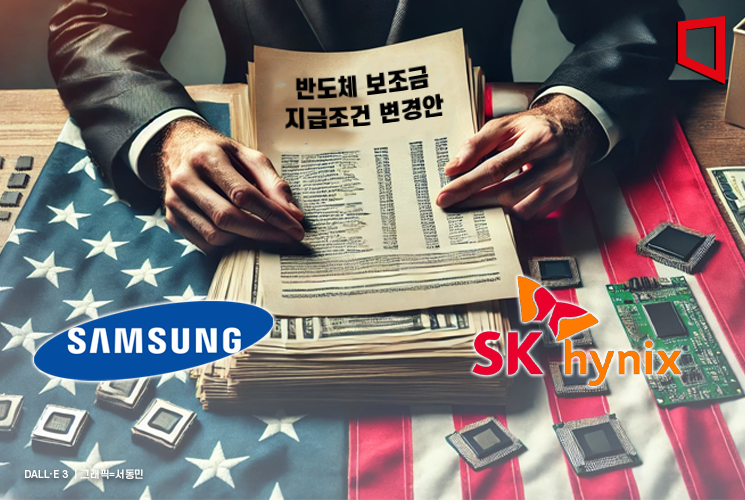
According to Reuters, Secretary Lutnick appeared before the U.S. Senate Appropriations Committee on this day and stated, "Some of the semiconductor subsidy contracts signed during the previous Biden administration were overly generous," adding, "We have been able to renegotiate a few of them." He continued, "Every agreement is getting better and better, and those that have not yet been agreed upon probably should not have been made in the first place."
These remarks are interpreted as indicating that some of the existing subsidy agreements signed by the Biden administration with corporations may be adjusted or invalidated.
Former President Biden signed the CSA in 2022 with the aim of rebuilding the semiconductor supply chain. As a measure to address the semiconductor supply instability that intensified during the COVID-19 pandemic, the act included a total of $52.7 billion (approximately 72 trillion won) in subsidies over five years to encourage the expansion of semiconductor manufacturing facilities in the United States.
Accordingly, Samsung Electronics is investing approximately $37 billion (about 51 trillion won) to build a foundry (semiconductor contract manufacturing) plant in Taylor, Texas, and the U.S. Department of Commerce agreed to provide $4.745 billion (about 6.5 trillion won) in subsidies for this investment.
SK Hynix plans to establish an advanced packaging production facility for artificial intelligence (AI) memory in Indiana, and the U.S. Department of Commerce has agreed to provide up to $458 million (about 630 billion won) in support for this project.
However, President Donald Trump has expressed a critical stance toward this subsidy payment approach. He has argued that even without providing subsidies, companies can be compelled to produce semiconductors in the United States through tariff pressure alone. He reaffirmed this position in a congressional speech on March 4, again calling for the repeal of the CSA.
On the same day, Secretary Lutnick also suggested the possibility of imposing tariffs on civilian aircraft parts, stating that the investigation under Section 232 of the Trade Expansion Act is expected to be completed by the end of this month.
According to reports by Bloomberg and AFP, Secretary Lutnick stated at the subcommittee hearing of the Federal Senate Appropriations Committee held that day, "We expect to receive the analysis results by the end of this month and to set tariff standards for aircraft parts." This is interpreted as a measure targeting Europe, in line with the Trump administration's aggressive tariff policy stance.
Since taking office, President Trump has imposed tariffs on steel, aluminum, automobiles, and auto parts under this law, and has also announced plans to impose tariffs on copper, lumber, semiconductors, and pharmaceuticals.
© The Asia Business Daily(www.asiae.co.kr). All rights reserved.

















