Honam Regional Statistics Office Announces May Consumer Prices
Fresh Food Prices Drop Sharply
City Gas and Insurance Premiums Continue to Rise
Gwangju Consumer Prices Up 1.5%
Jeonnam Up 1.8%... Services Drive Increase
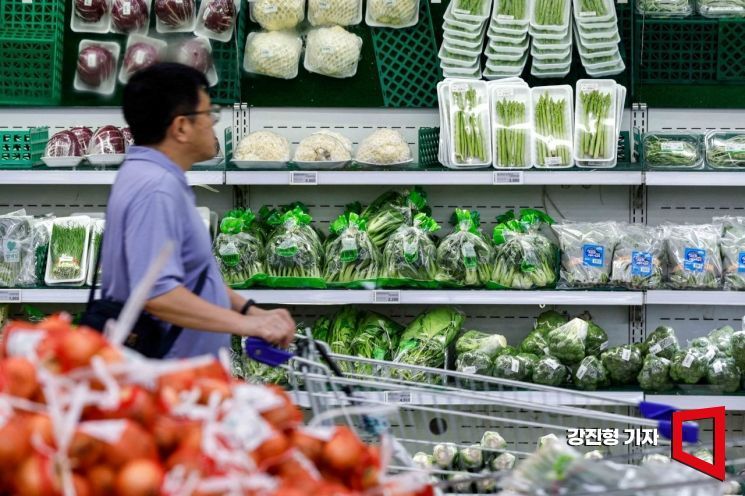 A customer visiting Hanaro Mart Yangjae Branch in Seocho-gu, Seoul, is looking at the vegetable sales counter. Photo by Jinhyung Kang
While the prices of napa cabbage, tomatoes, and watermelons have decreased, the prices of coffee and insurance premiums have risen again. In May 2025, consumer prices in Gwangju and Jeonnam fell by 0.3% compared to the previous month. However, compared to the same month last year, prices in Gwangju increased by 1.5% and in Jeonnam by 1.8%. While the cost of daily necessities and fresh food declined, service fees?such as dining out, education, and insurance?continued to rise, keeping the overall inflation trend upward.
According to the "Consumer Price Trends for May 2025" released by the Honam Regional Statistics Office on June 4, the consumer price index in Gwangju stood at 116.46 (2020=100), down 0.3% from the previous month. Compared to the same month last year, it rose by 1.5%. The living necessities price index dropped by 0.3% and the fresh food price index by 6.9% compared to the previous month.
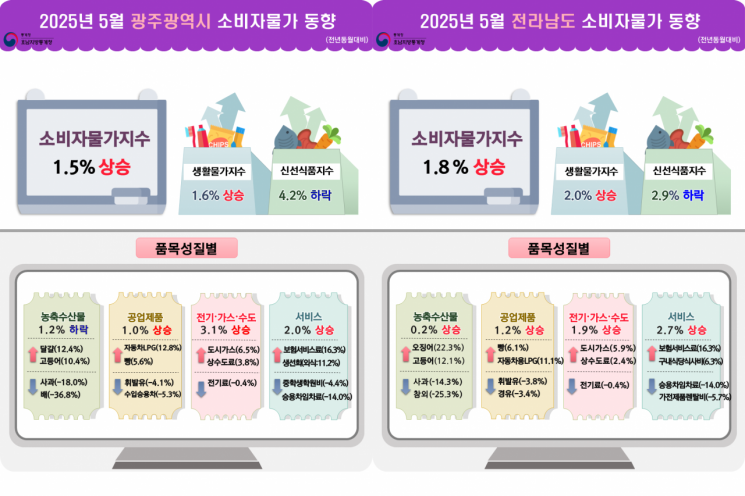 Infographic on Consumer Price Trends in Gwangju and Jeonnam in May 2025. Provided by Honam Regional Statistics Office
In Gwangju, the decline in prices of agricultural, livestock, and fishery products was significant. Prices fell sharply for fruits and vegetables, including pears (-36.8%), apples (-18.0%), tomatoes (-15.9%), oriental melons (-34.9%), and onions (-21.2%). On the other hand, prices for eggs (12.4%), mackerel (10.4%), and rice (6.4%) increased.
In the service sector, the price of raw fish (dining out) rose by 11.2%, coffee (dining out) by 6.1%, and insurance service fees by 16.3%. Overall, personal service prices increased by 2.8% compared to the previous year. Education costs rose by 1.4%, and city gas rates increased by 6.5%.
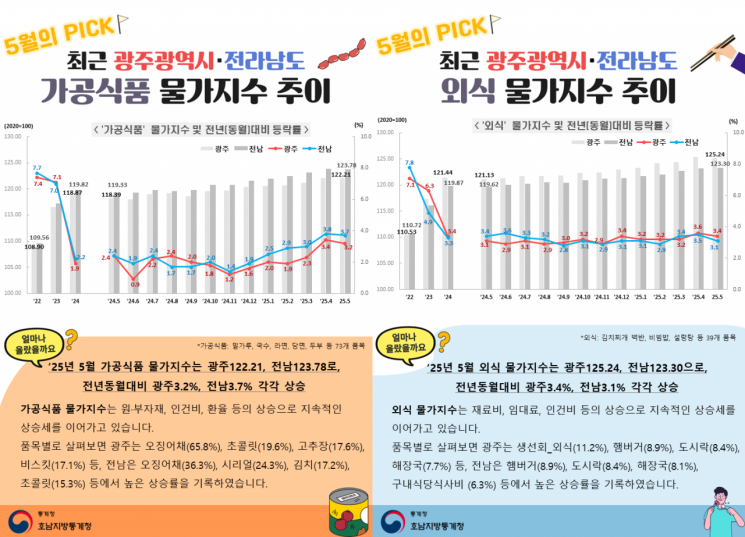 Trends in Processed Food and Dining Price Index in Gwangju and Jeonnam in May 2025. Provided by Honam Regional Statistics Office
The consumer price index in Jeonnam was 117.16, down 0.3% from the previous month and up 1.8% from the same month last year. The living necessities price index decreased by 0.3% from the previous month, and the fresh food price index fell by 5.4%.
In Jeonnam, the decline in agricultural product prices was also notable. Watermelon (-24.2%), oriental melon (-25.3%), pear (-25.3%), and tomato (-14.4%) prices dropped significantly compared to the previous month, while prices for mackerel (12.1%) and pork (4.6%) increased.
In the service sector, insurance premiums rose by 16.3%, and cafeteria meal prices increased by 6.3%. Overall, personal service prices went up by 3.3% compared to the previous year. Education costs rose by 2.4%, and city gas rates increased by 5.9%.
In the transportation sector, both Gwangju and Jeonnam saw declines in gasoline and diesel prices. In Gwangju, gasoline prices fell by 4.1% and diesel by 2.4%. In Jeonnam, gasoline prices dropped by 3.8% and diesel by 3.4%.
© The Asia Business Daily(www.asiae.co.kr). All rights reserved.



















