Development of a Deep Learning Model Utilizing
Structural Images of Immune Cells in Cerebrospinal Fluid
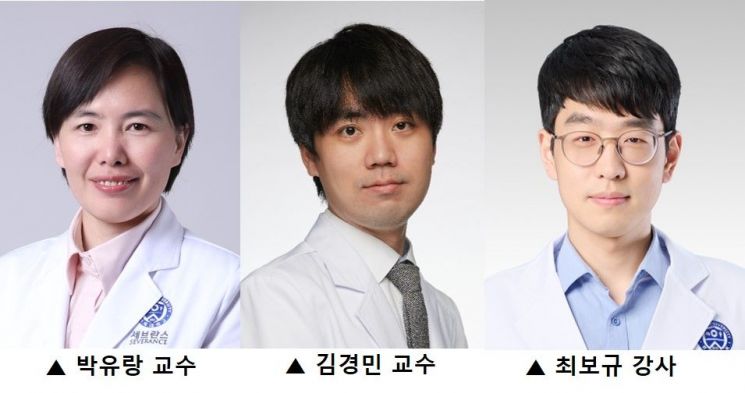
An artificial intelligence (AI) model capable of early classification of the causes of acute inflammation in the central nervous system and predicting patient prognosis has been developed.
On June 4, Yonsei Medical Center announced that a research team led by Professor Park Yurang from the Department of Biomedical Systems Informatics at Yonsei University College of Medicine, Professor Kim Kyungmin from the Department of Neurology at Severance Hospital, and Instructor Choi Bokyu from the Department of Neurology at Gangnam Severance Hospital has developed a model that can predict both the infectious cause and prognosis of central nervous system diseases by utilizing three-dimensional structural images of immune cells in cerebrospinal fluid. The prediction accuracy reached up to 99% for cause prediction and 94% for prognosis prediction, respectively.
This research, supported by the Hyundai Motor Chung Mong-Koo Foundation's healthcare R&D program, was published in the international journal 'Advanced Intelligent Systems' and was selected as the cover article for the June issue.
Acute inflammation in the central nervous system can lead to diseases such as encephalitis and meningitis. The causes are highly diverse, and symptoms and prognosis also vary depending on the cause. Among these, if the cause is bacterial or tuberculous, the mortality rate is high, and even after treatment, sequelae such as cognitive impairment, cerebrovascular disorders, and recurrent seizures may occur. Therefore, rapid diagnosis of the cause and prompt treatment are crucial.
The causes of inflammation are diverse, but are mainly due to microbial infections. Each pathogen requires a different confirmatory test, and certain tests can take several weeks or more to yield results. In actual clinical practice, empirical treatment based on symptoms is often administered while awaiting test results, which can lead to complications. Therefore, accurately identifying the cause is essential to provide appropriate treatment for patients with central nervous system infections.
The research team developed an AI-based model to predict the cause and prognosis of central nervous system infections and analyzed its effectiveness. They collected a total of 1,427 three-dimensional images of immune cells in the cerebrospinal fluid from 14 patients with central nervous system infections who visited Severance Hospital. Using these images of immune cell structures, they constructed a deep learning model to predict both the infectious cause and prognosis.
The team evaluated the performance of the deep learning model in predicting the cause and prognosis of central nervous system infections. When a single immune cell was input, the model achieved 89% accuracy in predicting the infectious cause. The prognosis prediction accuracy for patients with neurological diseases was 79%. Notably, the prediction accuracy improved as more cell images were input into the deep learning model. When five immune cells were used, the accuracy for cause prediction reached 99%, and for prognosis prediction, 94%.
The researchers also confirmed that the deep learning model predicts cause and prognosis by identifying structural differences around the cell nucleus, and that quantitative indicators such as cell mass, volume, and protein density are important factors in prediction.
Professor Park Yurang stated, "This study is the first to utilize three-dimensional images of immune cells in cerebrospinal fluid to predict the cause and prognosis of central nervous system infections. We expect that the deep learning model presented in this research could help reduce the time required for patient diagnosis and prognosis prediction."
© The Asia Business Daily(www.asiae.co.kr). All rights reserved.
![Clutching a Stolen Dior Bag, Saying "I Hate Being Poor but Real"... The Grotesque Con of a "Human Knockoff" [Slate]](https://cwcontent.asiae.co.kr/asiaresize/183/2026021902243444107_1771435474.jpg)
















