Trump Announces "50% Tariff Increase on Steel Starting June 4"
Ministry of Industry Holds Emergency Meeting with POSCO, Hyundai Steel, and Others
Industry Says "Loss of Price Competitiveness is Inevitable"
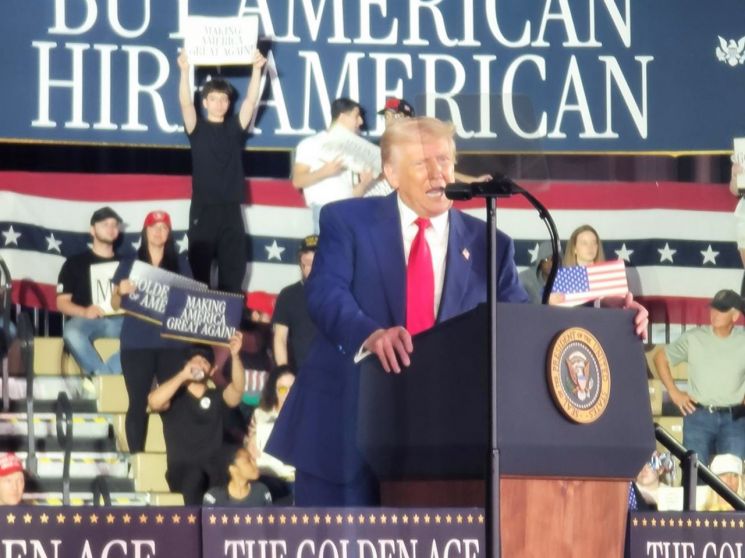
The United States has abruptly announced that it will double the Section 232 tariffs on steel and aluminum starting from June 4, putting the Korean steel industry on high alert. The Korean government has convened an emergency inspection meeting with industry representatives and has begun full-scale response measures. Industry insiders expressed concern, stating, "Even a 25% tariff was difficult to endure; a 50% tariff threatens our very survival."
On the morning of June 2, the Ministry of Trade, Industry and Energy held an emergency meeting at the Korea Iron & Steel Association in Songpa-gu, Seoul, with representatives from the steel and non-ferrous metals industries to discuss response measures to the U.S. tariff hike. The meeting was chaired by Na Seonghwa, Director General for Industrial Supply Chain Policy, and attended by major steel exporters such as POSCO, Hyundai Steel, KG Steel, Seah Steel, Dongkuk Steel, and Nexteel, as well as the Korea Nonferrous Metals Association, Novelis Korea, and Lotte Aluminium. The meeting was held entirely behind closed doors.
The meeting was prompted by an announcement made directly by U.S. President Donald Trump on May 30 (local time) at a US Steel plant located on the outskirts of Pittsburgh, Pennsylvania. President Trump stated, "It is a great honor to increase tariffs on steel and aluminum from 25% to 50%," adding, "This will take effect starting Wednesday, June 4."
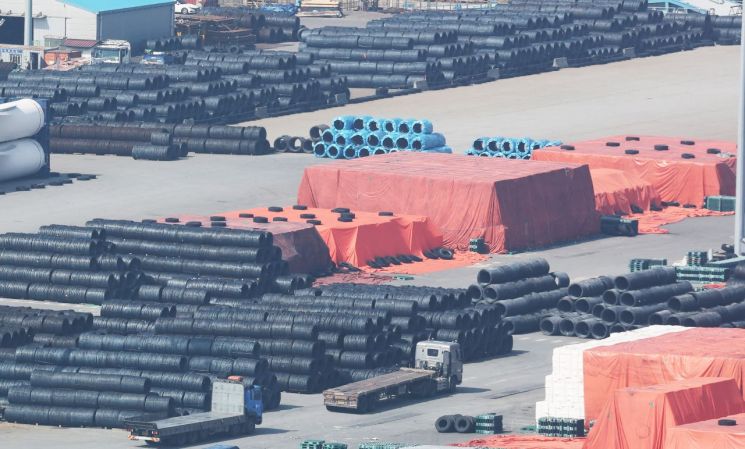
The Korean steel industry fears that, if the tariff hike becomes reality, it will inevitably lose its price competitiveness in the U.S. market, which could lead to secondary damage such as reduced export volumes and the loss of customers. An industry official said, "Profitability has already deteriorated due to high exchange rates and logistics costs. If a 50% tariff is imposed, we may have to withdraw from the U.S. market altogether."
The government is mobilizing all local subsidiaries and trade networks in the U.S. to closely determine the specific implementation and scope of the measures. A Ministry of Trade, Industry and Energy official stated, "We will strengthen public-private cooperation to minimize damage to the steel and non-ferrous industries. We will share local developments in real time and ensure that industry response measures are reflected at the Korea-U.S. negotiation table."
The government also plans to analyze the impact on each company and develop customized response strategies, and, if necessary, will activate high-level negotiation channels. In particular, the government intends to actively seek exceptions or deferrals from the U.S. side in connection with the ongoing 'July Package' negotiations.
However, it remains uncertain whether Korea will be granted any exceptions. While a temporary exemption was possible in 2018, industry insiders are concerned that, since this is a "hardline drive" to double the tariffs themselves, it will be even more difficult for Korea to obtain an exception this time.
Experts are noting the possibility that Trump-style protectionism could spread again, starting with steel and aluminum. A Korea International Trade Association official said, "This measure goes beyond a simple industrial regulation and could impact the entire global supply chain and trade order. There is also a possibility that it could expand to other strategic items such as semiconductors, batteries, and automobiles in the future."
The government does not view this measure as a short-term crisis, but rather as a significant issue that could affect the overall future trade environment. A Ministry of Trade, Industry and Energy official stated, "We will conduct a detailed analysis of the damage with the industry and secure the maximum possible exceptions or deferrals through multi-layered consultations with the U.S. side."
© The Asia Business Daily(www.asiae.co.kr). All rights reserved.


















