Supreme Court Rules Against Naturalendo Tech Shareholders in Damages Lawsuit
Korea Consumer Agency's Unlawful Announcement Not Liable for Shareholder Losses
The Supreme Court has ruled that although the Korea Consumer Agency's announcement of the "fake Baeksoo-oh" scandal in 2015, which shocked investors, was unlawful, the agency is not liable to compensate shareholders who suffered losses due to the resulting decline in the company's stock price.
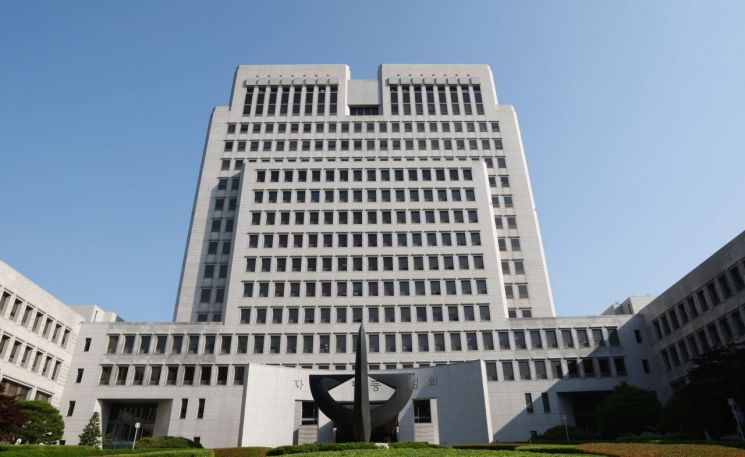
According to the legal community on June 2, the First Division of the Supreme Court (Presiding Justice Noh Taeak) finalized a lower court ruling on May 15, dismissing the damages claim filed by 19 shareholders of Naturalendo Tech against the Korea Consumer Agency, company employees, and the government.
On April 21, 2015, the Korea Consumer Agency issued a press release titled "Most Baeksoo-oh Products on the Market Are Fake." The main point of the release was that some products sold by Naturalendo Tech, which were labeled as containing Baeksoo-oh, actually contained "Iyeopwoopiso," a similar plant known to cause side effects. After the press release was distributed, Naturalendo Tech issued an official apology, and its stock price plummeted from around 86,000 won per share to about 8,500 won within a month, dropping to one-tenth of its previous value.
However, the Suwon District Prosecutors' Office, which investigated the case, cleared the company of charges in June 2015. The prosecutors acknowledged that Iyeopwoopiso was detected in the Baeksoo-oh samples, but explained that the proportion was only about 3%, making it difficult to conclude that there was intent. The Ministry of Food and Drug Safety also announced in August 2017, after two years of toxicity testing, that even trace amounts of Iyeopwoopiso mixed in the product did not pose a health risk.
In response, Naturalendo Tech shareholders filed a lawsuit in April 2018, claiming that the Korea Consumer Agency's erroneous announcement caused the stock price to crash, resulting in financial losses. Their main argument was that the agency had published false information, suggesting that Iyeopwoopiso was intentionally mixed in for cost reduction purposes without sufficient investigation.
Both the first and second trial courts ruled against the plaintiffs, stating that it was difficult to consider the Korea Consumer Agency's announcement as false information. The appellate court stated, "The Korea Consumer Agency had a need to promptly make the announcement for consumer safety," and added, "It is insufficient to recognize that the announcement was made without meeting the necessary requirements or without urgent need."
The Supreme Court, however, took a different view. It found that the Korea Consumer Agency had never verified the quantity of Iyeopwoopiso or the circumstances of its inclusion, and that there was no objective evidence to conclude that Naturalendo Tech had deliberately substituted Baeksoo-oh with Iyeopwoopiso to reduce costs. The Supreme Court stated, "The agency announced as if the company had intentionally replaced Baeksoo-oh with Iyeopwoopiso for cost reduction, implying that a significant amount of the harmful Iyeopwoopiso was mixed in," and added, "It is difficult to see that there was objective and reasonable proof or that it was in the public interest." The court indicated that there was ample ground to consider the Korea Consumer Agency's announcement as an unlawful dissemination of false information.
However, the Supreme Court upheld the lower court's decision to dismiss the shareholders' damages claim, stating that this conclusion was not incorrect. The Supreme Court determined that the victims of the unlawful false announcement should be considered the companies such as Naturalendo Tech, and that there was no causal relationship established between the Korea Consumer Agency's announcement and the shareholders' losses resulting from the stock price decline.
The Supreme Court stated, "Although there may be some inappropriate aspects in the lower court's reasoning, the conclusion that there is no sufficient causal relationship between the announcement and the damages claimed by the plaintiffs is justified."
© The Asia Business Daily(www.asiae.co.kr). All rights reserved.

















