National Heritage Administration Establishes "Natural Heritage Protection Plan"
Enhancing Protection Capabilities and Creating Future Value
Building a Virtuous Cycle of Conservation and Utilization for Enjoyment and Succession
The National Heritage Administration announced on June 2 that it has established the "2025-2029 Natural Heritage Protection Plan" based on the "Act on the Conservation and Utilization of Natural Heritage," which was enacted in March 2023.
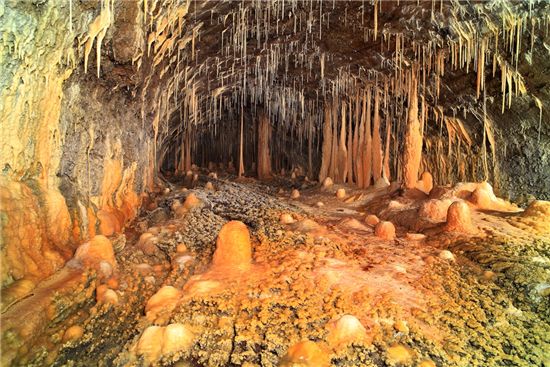 Jeju Lava Caves Listed as UNESCO World Natural Heritage Site
This is the first legally mandated plan for the systematic conservation, management, and utilization of natural heritage. Natural heritage, which was previously classified as "monuments" under the former "Cultural Heritage Protection Act," has established its own independent domain with the introduction of the "national heritage system" last year. The plan outlines the vision and policy direction for the next five years. Under the vision of "Natural heritage preserved together, future heritage continued together," the plan aims to "enhance protection capabilities," "create future value," and "establish a virtuous cycle of conservation and utilization." An official explained, "The intention is to manage natural heritage not simply as objects of preservation, but as integrated assets to be enjoyed by the public and passed on to future generations."
To secure practical protection capabilities, the National Heritage Administration will specify the "Natural Heritage Management Agreement," which encourages protection activities by natural heritage management organizations, and "resident support," which improves the living environment of residents in natural monuments and scenic sites. The administration will also establish a system for customized conservation and management of various forms of natural heritage, including flora and fauna, geology, scenic sites, and traditional landscaping. In addition, to address the increasingly severe climate crisis, the administration will establish a government-wide response system and set up a proactive and immediate response system through "continuous environmental monitoring of open caves."
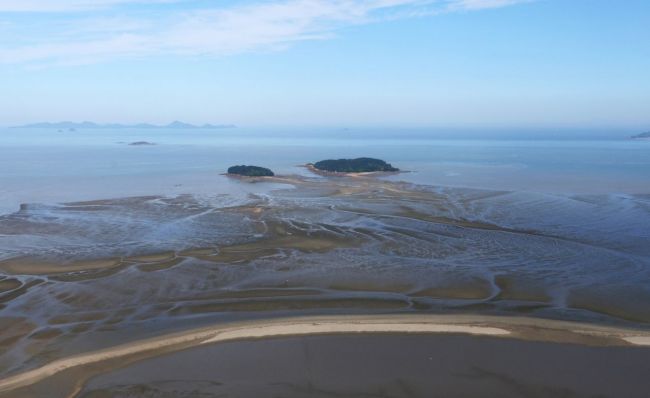
There are three main strategies for creating future value. First, the administration will newly identify and expand protection areas, including the Demilitarized Zone (DMZ), insular geological heritage, and modern and contemporary scenic sites. Second, it will form "village-centered protection councils" for natural heritage closely related to residents’ lives and implement "regional natural heritage-linked conservation and utilization projects." Third, it will build a database of "digital natural heritage materials" to serve as basic data for real-time monitoring and immediate restoration.
The virtuous cycle of conservation and utilization will be promoted through the development and distribution of "historical and cultural linked content," the installation of "panorama views" for full landscape appreciation, and customized content for people with disabilities and the elderly. In addition, in cooperation with local governments, the administration will develop regionally specialized tourism brands such as the "natural heritage certification and visitation campaign" and the "old scenic trail exploration program," and will strengthen the conservation and management of UNESCO World Natural Heritage sites such as Jeju Volcanic Island and Lava Caves.
Choi Eungcheun, head of the National Heritage Administration, stated, "This marks a shift from preservation-focused policies to an integrated strategy centered on resident participation and public consensus," adding, "We will secure the necessary budget and actively cooperate with relevant agencies to successfully establish a natural heritage protection system."
© The Asia Business Daily(www.asiae.co.kr). All rights reserved.

![Clutching a Stolen Dior Bag, Saying "I Hate Being Poor but Real"... The Grotesque Con of a "Human Knockoff" [Slate]](https://cwcontent.asiae.co.kr/asiaresize/183/2026021902243444107_1771435474.jpg)















