Embrain Trend Monitor Survey on Used Clothing Usage
6 out of 10 Respondents Say "Secondhand Clothing Is Now Familiar"
81.4% Appreciate Lower Prices Compared to Retail
Younger Generations Sell Used Clothing for "Resale" Purposes
As a culture of seeking cost-effectiveness (value for money) spreads, the so-called "secondhand" market for used goods is becoming increasingly active, especially among younger generations such as those in their teens and twenties. In particular, interest in secondhand clothing?which offers both affordable prices and the satisfaction of value-driven consumption?is on the rise.
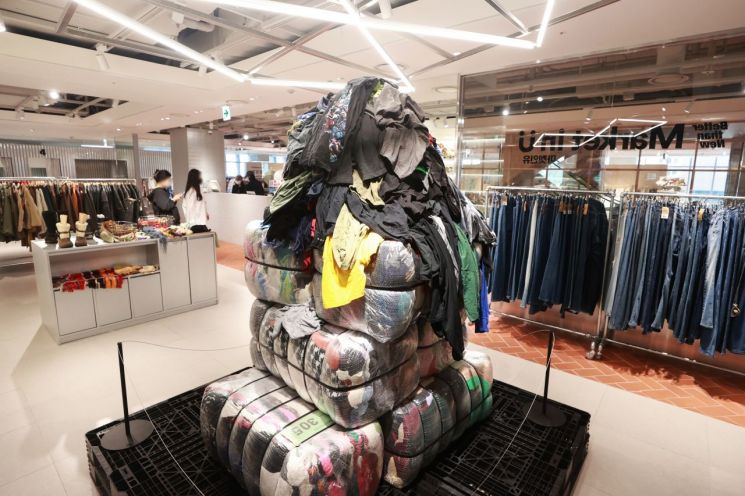 Customers visiting the used goods specialty store 'Second Boutique' are browsing various secondhand items. Photo by Yonhap News
According to the results of a "Used Clothing (Fashion) U&A Survey" conducted by market research firm Embrain Trend Monitor on May 31, targeting 1,000 men and women nationwide aged 13 to 59, 61.7% of all respondents said, "People these days are becoming accustomed to secondhand clothing." Additionally, 43.2% responded that "interest in secondhand clothing (fashion) has increased recently." Notably, the proportion of those who had purchased used goods within the past year was higher among those in their twenties compared to other age groups. Specifically, the purchase rates were 64.0% for teens, 68.0% for those in their twenties, 62.0% for those in their thirties, 59.0% for those in their forties, and 51.0% for those in their fifties.
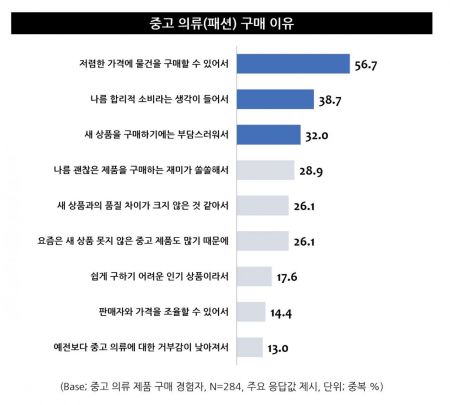
Secondhand clothing received positive evaluations in terms of cost-effectiveness. A total of 79.1% of respondents viewed secondhand clothing as "a rational way to purchase desired products at a lower price." Additionally, 81.4% agreed that "it is good to be able to buy at a price lower than the original retail price." Among those with experience purchasing secondhand clothing, the most frequently cited reason was "being able to buy at a low price" (56.7%, multiple responses allowed). This was followed by "purchasing secondhand products seems to be a rational form of consumption" (38.7%) and "buying new products feels burdensome" (32.0%).
By age group, it was notable that those in their twenties were particularly likely to purchase secondhand clothing in order to find "limited edition" or "popular items" with high scarcity value. The proportion of respondents who used secondhand transactions to buy hard-to-find popular items was higher among teens (19.4%) and those in their twenties (28.2%) compared to those in their thirties (18.3%), forties (9.8%), and fifties (6.0%). Similarly, the percentage of those seeking limited editions was 12.9% for teens, 15.5% for those in their twenties, 5.0% for those in their thirties, 9.8% for those in their forties, and 4.0% for those in their fifties.
The main channels for purchasing secondhand clothing were used goods trading platforms such as Danggeun Market and Junggonara. A total of 79.2% of respondents (multiple responses allowed) reported using these platforms. Due to concerns about product quality, buyers showed a preference for "direct transactions" (71.5%), where they meet in person to complete the exchange. The most frequently cited concern when purchasing secondhand clothing was "the product may not be in good condition" (50.8%). Other significant concerns included "transaction fraud" (44.7%) and "counterfeit or fake products" (37.7%).
More than half of respondents (50.4%) had experience selling secondhand clothing. The proportion who had sold secondhand clothing within the past year was higher among younger age groups: 32.0% for teens, 36.0% for those in their twenties, 37.0% for those in their thirties, 26.0% for those in their forties, and 18.5% for those in their fifties. The most commonly cited reason for selling was "the product is too good to simply throw away" (47.8%, multiple responses allowed), followed by "to dispose of clothes I don't usually wear" (45.8%). Embrain analyzed that this indicates secondhand transactions are being recognized not just as a means of disposal, but as a value-driven form of consumption centered on "reuse."
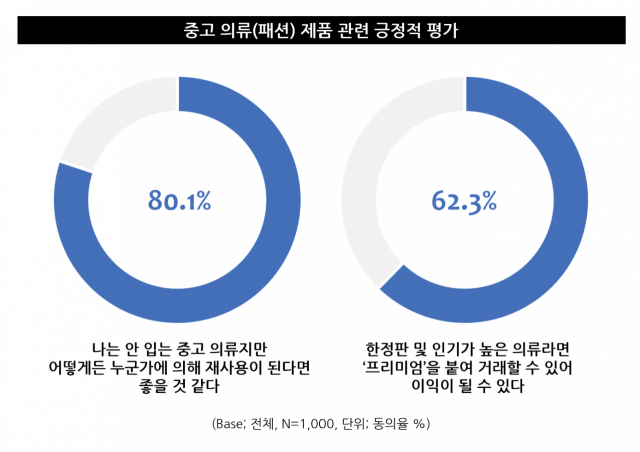
Additionally, those in their teens, twenties, and thirties were more likely to perceive that "many secondhand clothing items these days are sold at premium (resale) prices" (57.5% for teens, 65.0% for those in their twenties, 66.0% for those in their thirties, 53.5% for those in their forties, and 47.0% for those in their fifties). There was also a strong awareness that if the item is a limited edition or a popular product, it can be sold at a "premium" for profit (61.5% for teens, 68.5% for those in their twenties, 64.0% for those in their thirties, 60.0% for those in their forties, and 57.5% for those in their fifties).
As interest in the secondhand clothing market increases, the outlook for future market growth is also positive. A total of 64% of respondents predicted that "the popularity of platforms specializing in secondhand clothing will increase in the future," and 69.3% expressed hopes that "it would be good if secondhand transactions became the norm in the fashion sector as well." However, a significant number also responded that "there are still too many quality differences depending on the product when it comes to secondhand clothing" (58.1%) and "it seems better to buy new products rather than secondhand clothing" (54.0%). An Embrain representative stated, "In order for the secondhand clothing market to continue growing, product quality management and ensuring reliability will be key factors."
© The Asia Business Daily(www.asiae.co.kr). All rights reserved.

![Clutching a Stolen Dior Bag, Saying "I Hate Being Poor but Real"... The Grotesque Con of a "Human Knockoff" [Slate]](https://cwcontent.asiae.co.kr/asiaresize/183/2026021902243444107_1771435474.jpg)

















