Measurement Results at Eight Sewage Treatment Plants in the Province Show Minimal Harmful Effects
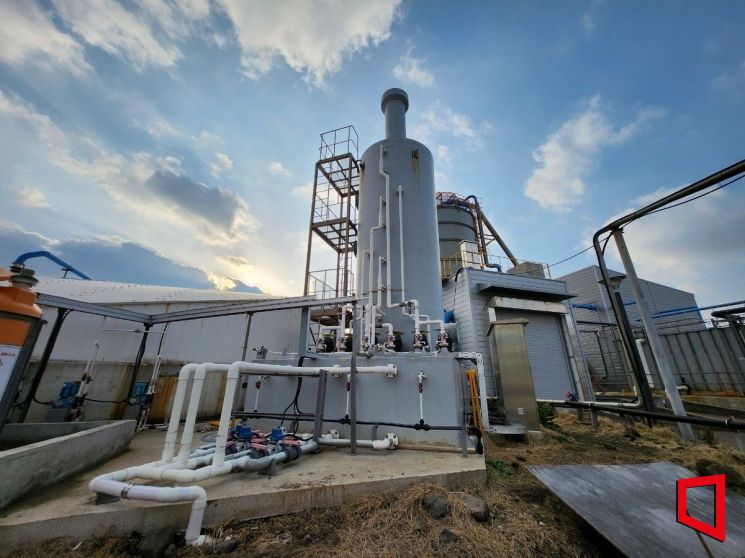
The Jeju Special Self-Governing Province Waterworks and Sewerage Headquarters announced on May 30 that an investigation into harmful substances in exhaust gases from deodorization facilities at local sewage treatment plants confirmed there is no risk of harm to human health from deodorizing chemicals.
This investigation was conducted to address residents' concerns regarding the toxicity of deodorizing chemicals used in sewage treatment plants. In March, the Waterworks and Sewerage Headquarters commissioned the Korea Industrial Health Association to examine potentially harmful substances (hydrogen chloride and sodium hydroxide) that could be present in exhaust gases from deodorization facilities at eight sewage treatment plants in the province.
The results showed that at all eight sewage treatment plants, the measured values were significantly lower than human exposure standards.
Based on the highest measured values at each sewage treatment plant, hydrogen chloride levels were as follows: Jeju (0.0024), Eastern (not detected), Western (0.003), Bomok (0.0024), Saekdal (not detected), Daejeong (0.0046), Namwon (not detected), and Seongsan (0.0024). The average measured value for the eight plants was 0.00185, which is less than 1/500 of the human exposure standard (1 ppm).
For sodium hydroxide (caustic soda), the measured values were: Jeju (0.0334), Eastern (0.0703), Western (0.0459), Bomok (0.0965), Saekdal (0.1102), Daejeong (0.1036), Namwon (0.0642), and Seongsan (0.0942). The average measured value for the eight plants was 0.0773, which is less than 1/25 of the human exposure standard (2 ppm).
This investigation was conducted in accordance with Article 125 of the Industrial Safety and Health Act and Ministry of Employment and Labor Notice No. 2020-44 (Notice on Work Environment Measurement and Accuracy Control). Measurements were taken at the points of maximum exhaust gas exposure within the sewage treatment plants using regional sampling methods. A total of three locations were selected: the deodorization facility exhaust outlet, the plant boundary closest to residential areas, and one additional point.
For hydrogen chloride, measurements were taken continuously for more than six hours. For sodium hydroxide, which has a set maximum exposure standard, measurements were taken over a short period (15 minutes) during the peak exposure time (9:00 a.m. to 12:00 p.m.).
Jwa Jaebong, head of the Jeju Waterworks and Sewerage Headquarters, stated, "The measured values are extremely low compared to human exposure standards, so there is no concern about harmful effects on human health from the deodorizing chemicals used at sewage treatment plants. We will continue to prioritize residents' health and thoroughly manage facility inspections and safety."
© The Asia Business Daily(www.asiae.co.kr). All rights reserved.

















