PURADAK and 60Gye Chicken franchise headquarters, which forced over 700 franchisees to purchase consumables such as receipt printing paper and food label stickers exclusively from the head office, have been sanctioned by the Korea Fair Trade Commission (KFTC).
On May 30, the KFTC issued corrective orders against Idus F&B and Jang’s Food for violations of the “Fair Franchise Transactions Act.”
Idus F&B operates the PURADAK franchise business, which as of the end of 2023 recorded sales of 140.2 billion KRW and had 714 franchise locations. Jang’s Food, which operates the 60Gye Chicken franchise, reported sales of 150.1 billion KRW and 661 franchise locations.
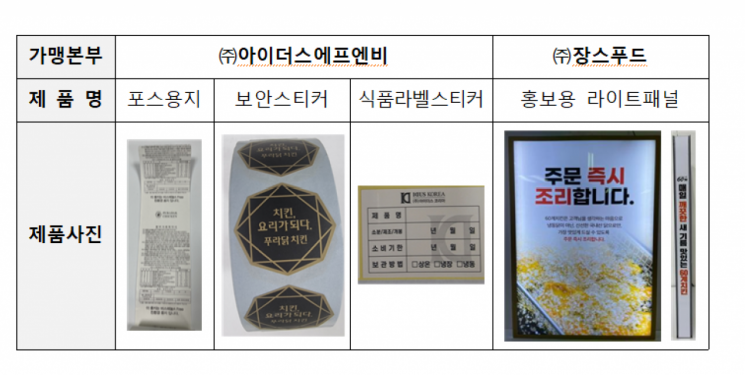
According to the KFTC’s investigation, from July 2018 to February last year, Idus F&B designated items such as POS receipt paper, chicken box sealing stickers, and food label stickers for indicating expiration dates and storage methods as mandatory items, and forced franchisees to purchase these items exclusively from the headquarters.
If a franchisee of Idus F&B purchased and used these items from sources other than the headquarters, the company entered into franchise agreements that allowed it to either suspend product supply or impose a penalty equivalent to 5% of the previous month’s sales.
Jang’s Food was also found to have forced franchisees, from November 2022 to July last year, to purchase promotional light panels?used for displaying franchise or product promotion posters on glass walls of franchise stores?exclusively from the headquarters.
Jang’s Food entered into franchise agreements that allowed it to suspend the supply of goods and materials or terminate the franchise agreement if a franchisee purchased and used promotional light panels from sources other than the headquarters.
Mandatory items are those that the franchisor requires franchisees to purchase exclusively from designated suppliers, ostensibly to maintain brand consistency. According to the Fair Franchise Transactions Act, for such designation to be legitimate, the item must be essential to franchise operations, necessary for trademark protection and product consistency, and must be disclosed in advance in the franchise disclosure document before the franchise agreement is signed.
The KFTC determined that these practices constituted coercive acts prohibited under Article 12 of the Fair Franchise Transactions Act, as they forced franchisees to purchase products unrelated to the uniformity of the franchise business or the taste and quality of core products such as chicken.
The KFTC stated, “Even if the franchisor did not actually impose substantial disadvantages such as supply suspension or contract termination, the mere existence of franchise agreement clauses requiring franchisees to purchase specific products exclusively from the franchisor or designated sources, and allowing penalties for violations, is itself coercive.”
© The Asia Business Daily(www.asiae.co.kr). All rights reserved.
![Clutching a Stolen Dior Bag, Saying "I Hate Being Poor but Real"... The Grotesque Con of a "Human Knockoff" [Slate]](https://cwcontent.asiae.co.kr/asiaresize/183/2026021902243444107_1771435474.jpg)










