Sergey Shoigu, Secretary of the Russian Security Council, stated on May 29 (local time) that the "Comprehensive Strategic Partnership Treaty" between Russia and North Korea (the North Korea-Russia Treaty) is a broad agreement that also applies on the battlefield, adding that North Korean troops fought in the Kursk region as if they were defending their own country.
According to TASS, Secretary Shoigu made these remarks at a press conference during the 13th International Meeting of High Representatives for Security Issues, held in Moscow, Russia, emphasizing that cooperation between the two countries has significantly strengthened since the signing of the North Korea-Russia Treaty in June of last year.
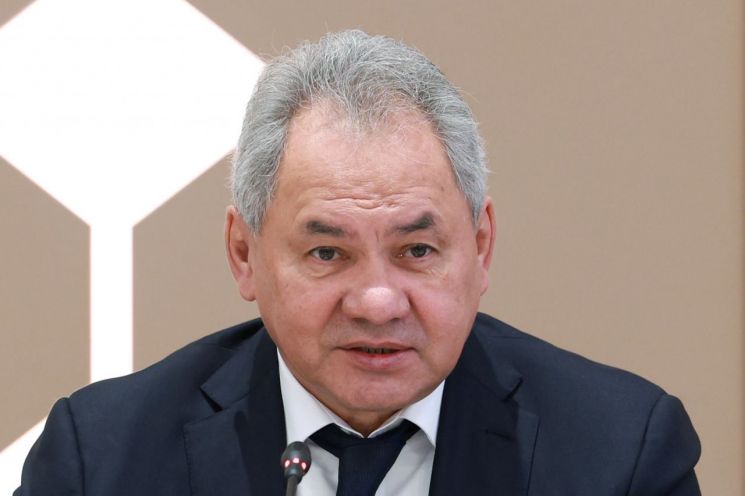
Shoigu stressed, "Today, the relationship between us and North Korea is developing very dynamically," and added, "This treaty does not exist only on paper, but is a genuine agreement that exists even on the battlefield, where we fight shoulder to shoulder in the same trench."
He also mentioned the deployment of North Korean troops to the Kursk region on Russia's southwestern border, who participated in operations to repel Ukrainian forces alongside Russian troops, expressing his gratitude by saying, "They fought as if they were liberating their own land." Secretary Shoigu had also expressed his appreciation for the deployment to Kursk during a meeting with Ri Changdae, North Korea's Minister of State Security, who attended the event the previous day.
He further claimed that the two countries could have established such a relationship earlier, arguing that "the sanctions isolating North Korea are absolutely wrong."
Regarding Germany's decision on May 26 to lift the ban on Ukraine's use of long-range weapons, Shoigu warned that "we also have something to lift," indicating that Russia may take countermeasures.
Meanwhile, according to RIA Novosti, Russian Foreign Minister Sergey Lavrov stated at a Eurasian security forum that day that "the United States is strengthening the nuclear component in its military cooperation with South Korea and Japan," and that "North Korea is facing increasingly strong pressure from the West." He argued that "as a result, not only the security situation on the Korean Peninsula but also the situation across the entire eastern part of the Eurasian continent is becoming more complicated."
© The Asia Business Daily(www.asiae.co.kr). All rights reserved.

















