Unauthorized Departure During Self-Quarantine... Partial Conviction in First and Second Trials
Supreme Court: "No Error in Lower Court's Legal Interpretation"
Min Kyungwook, a former lawmaker of the United Future Party (the predecessor of the People Power Party), who was put on trial for violating quarantine guidelines by leaving his home without permission during the COVID-19 pandemic, has had his conviction finalized by the Supreme Court.
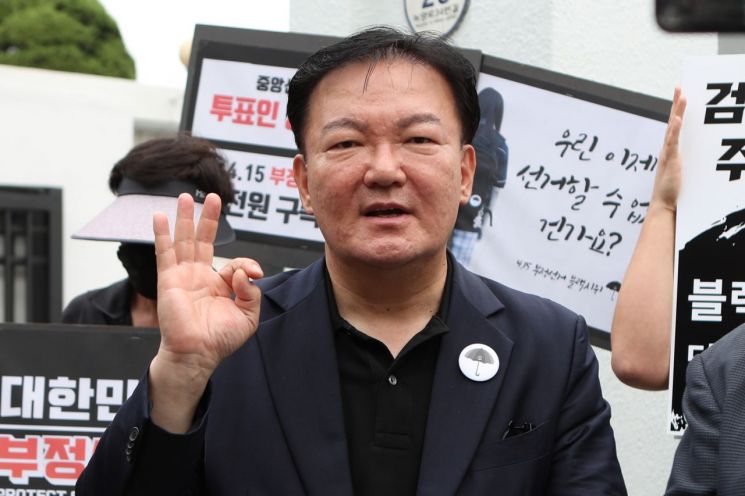
On May 29, the Supreme Court's Third Division, presided over by Justice Noh Kyungpil, upheld a sentence of a 700,000 won fine and one year of probation for Min, who was indicted on charges of violating the Infectious Disease Control and Prevention Act.
Min was prosecuted for leaving his home without authorization while under self-quarantine after returning from a visit to the United States in March 2021, in order to attend a trial related to the National Assembly's fast-track bill conflict at the Seoul Southern District Court. He was also charged with leaving his residence, which was designated as his quarantine location, without permission after visiting a site where COVID-19 cases had occurred during the Liberation Day rally at Gwanghwamun, Seoul, in August 2020.
The courts of both the first and second instances sentenced Min to a 700,000 won fine and one year of probation. The court stated, "The private vehicle used by Min cannot be considered as his designated home as specified in the quarantine notice," and added, "Even if he traveled alone by car, leaving the designated location constitutes a violation of self-quarantine measures."
The court further noted, "If permission is obtained from the local government head, it is possible to leave or move from the quarantine location, but the defendant did not inquire with the local government head or the relevant public health center." However, regarding the charge of leaving his residence in 2020, the court found, "There is insufficient evidence to recognize that the defendant was a suspected infectious disease carrier at that time."
The Supreme Court stated, "There is no error in the lower court's judgment that would constitute a violation of the rules of logic and experience, nor any misunderstanding regarding the establishment of the offense of violating the Infectious Disease Control and Prevention Act or the legal principles concerning justifiable acts."
© The Asia Business Daily(www.asiae.co.kr). All rights reserved.

















