Barra Reaffirms Commitment to Selling Only Battery-Powered Vehicles
Mary Barra, CEO of the American automaker General Motors (GM), pointed out that China's lead in the electric vehicle market is not due to technological prowess, but rather because of government subsidies.
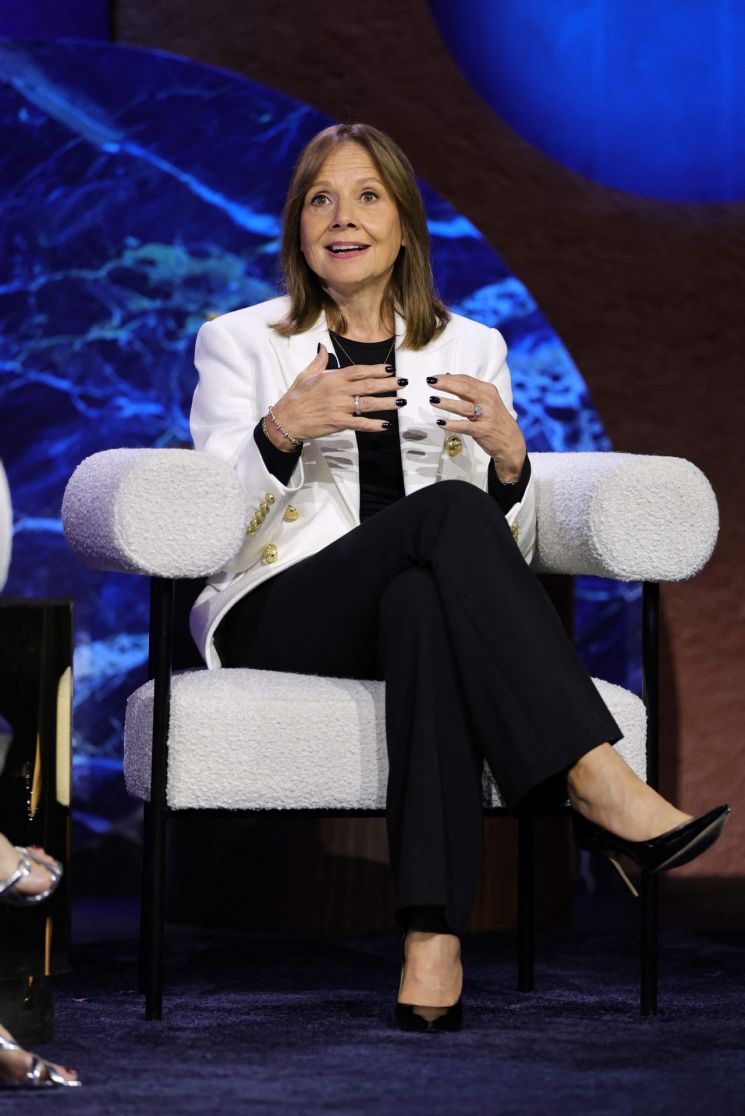
On the 28th (local time), at an event hosted by the Wall Street Journal (WSJ), Barra argued that American car brands are at a disadvantage because of subsidies and taxes from foreign governments. She said, "For decades, the global auto market has not been a level playing field due to tariff and non-tariff barriers," and added, "Tariffs are one of the tools that the administration can use to ensure fair competition."
Barra went on to emphasize that China's lead in the electric vehicle market is a result of Chinese government policy. She stated, "Rather than having a technological advantage, Chinese electric vehicles benefit from large-scale subsidies, which inevitably puts American companies at a disadvantage in terms of price competition."
Barra also reiterated her commitment to the goal of selling only battery-powered vehicles in the future. However, she noted that the pace of this transition depends on U.S. emissions regulations and the growth of battery charging infrastructure. She said, "I believe a full transition to electric vehicles is possible. It depends on how ready the infrastructure is, but ultimately, I believe we will reach that goal because I think electric vehicles are superior."
Barra mentioned that GM has been cooperating with the Trump administration's tariff policies, citing the removal of overlapping tariffs on raw materials and automobile imports, and the allowance of tariff-free treatment for Canadian and Mexican parts that meet the United States-Mexico-Canada Agreement (USMCA) requirements, as examples of "instances where the Trump administration took time to understand the industry."
Regarding GM's favorable stance toward the Trump administration's tariffs, WSJ analyzed, "Even though Barra advocated for President Trump's trade policies, GM is still facing up to $5 billion in tariff burdens," and added, "This is mainly because about half of the vehicles GM sells in the United States are produced at overseas assembly plants."
© The Asia Business Daily(www.asiae.co.kr). All rights reserved.

















