Household Income Rises 4.5% Per Month on Average
Labor Income Increases Due to Last Year's Base Effect
First Quintile Household Income Falls by 1.5%
Income Quintile Ratio Up by 0.34 Points
Consumption Expenditure Still Growing, but at a Slower Pace
Average Propensity to Consume Drops by 2.1 Percentage Points
Although both the average monthly household income and expenditure increased in the first quarter, a closer look at the detailed indicators reveals the harsh reality faced by households amid the economic downturn. Real consumption expenditure, excluding the impact of rising prices, turned to a decrease for the first time in seven quarters, and as consumption expenditure relative to disposable income declined, the average propensity to consume also fell for the third consecutive quarter. While household income increased for the second to fifth quintiles, income for the first quintile decreased, highlighting the worsening difficulties for the lowest-income group.
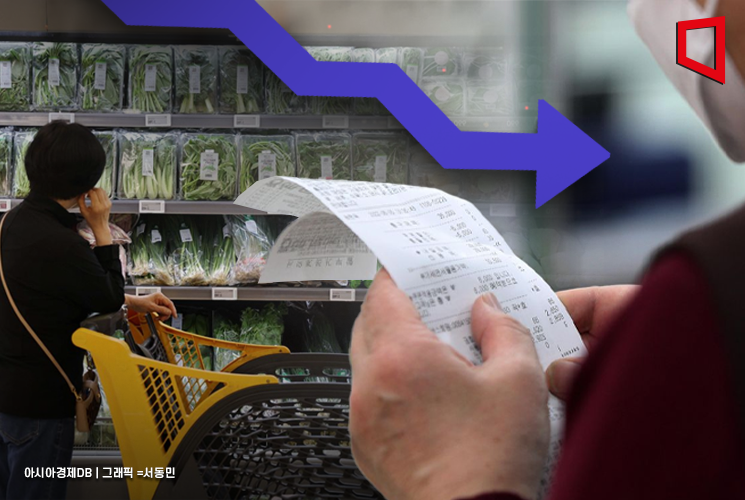
Households Cut Back on Car and Clothing Purchases Due to Tight Budgets
According to the "2025 First Quarter Household Income and Expenditure Survey" released by Statistics Korea on the 29th, the average monthly household income in the first quarter was 5,351,000 won, a 4.5% increase from the same period last year. The average monthly household income has been on the rise for seven consecutive quarters since the third quarter of 2023 (3.4%). Real income, adjusted for inflation, increased by 2.3%, marking four consecutive months of growth.
Labor income, which accounts for more than half of household income, rose by 3.7% to 3,412,000 won. This marks the fourth consecutive quarter of increase since the second quarter of last year (3.9%). This was influenced by the base effect from a decrease in labor income due to lower bonuses in the first quarter of last year. Business income (902,000 won) and transfer income (879,000 won) increased by 3.0% and 7.5%, respectively.
Average monthly household expenditure in the first quarter was 4,072,000 won, up 2.2%. Consumption expenditure increased by 1.4% to 2,950,000 won, while non-consumption expenditure rose by 4.4% to 1,123,000 won. Consumption expenditure has been increasing for 17 consecutive quarters. However, the rate of increase has continued to slow since the second quarter of last year (4.6%), resulting in only a slight increase in the 1% range in the first quarter.
Looking at the details of consumption expenditure, spending increased in housing·water·utilities (5.8%), other goods·services (5.6%), and food·non-alcoholic beverages (2.6%), but decreased in transportation·mobility (-3.7%), clothing·footwear (-4.7%), and alcoholic beverages·tobacco (-4.3%). Purchases of durable goods such as cars declined, and consumption of semi-durable goods such as clothing and footwear also decreased.
Real consumption expenditure, adjusted for inflation, dropped by 0.7%. This marks the first decline in seven quarters since the second quarter of 2023. A Statistics Korea official explained, "The increase in nominal consumption expenditure was small, and the impact of rising prices was significant," adding, "When the effect of inflation is excluded, real consumption expenditure decreased."
The average monthly disposable income per household in the first quarter was 4,228,000 won, up 4.5%, marking seven consecutive quarters of growth. However, as consumption expenditure did not increase in line with disposable income, the average propensity to consume fell by 2.1 percentage points to 69.8%. This negative trend in the average propensity to consume has continued for three quarters.
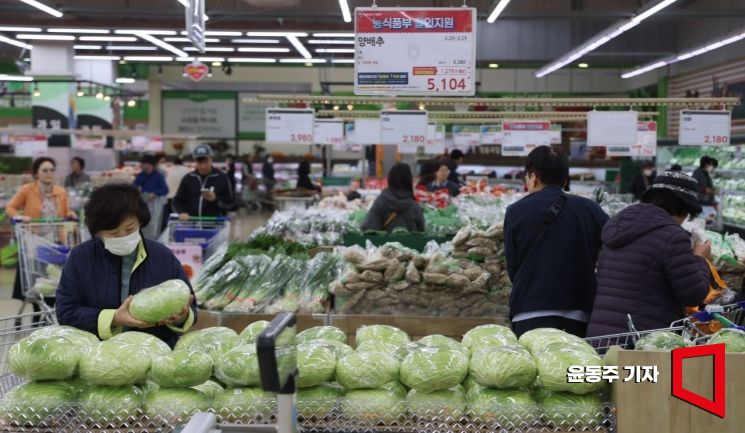
Only First Quintile Household Income Fell... Proportion of Self-Employed and Elderly Households Down
By income quintile, household income increased for the second to fifth quintiles, but decreased for the first quintile. The average monthly income for first quintile households was 1,140,000 won, a decrease of 1.5%. For fifth quintile households, average monthly income was 11,884,000 won, an increase of 5.6%. The income quintile ratio was 6.32, up 0.34 points.
For first quintile households, labor income (-0.1%), business income (-7.7%), property income (-29.3%), and transfer income (-1.0%) all decreased. Due to a change in household composition, the proportion of self-employed households in the first quintile decreased, leading to a drop in business income, and as the number of households with members aged 60 or older decreased, pension-related transfer income also fell. For fifth quintile households, labor income (4.1%), business income (11.2%), property income (5.2%), and transfer income (4.2%) all increased.
The disposable income of first quintile households was 921,000 won, down 3.6%, but their average propensity to consume rose by 10.2 percentage points to 147.6%. For fifth quintile households, disposable income increased by 5.9% to 9,180,000 won, while the average propensity to consume fell by 2.1 percentage points to 56.7%.
A Statistics Korea official stated, "Although income for the first quintile decreased, they continued to spend on necessities such as housing·water·utilities, food·non-alcoholic beverages, health, and food·accommodation," adding, "For fifth quintile households, the largest reduction in spending was in transportation·mobility, such as car purchases."
Government: "Strengthening Job Creation and Support for Vulnerable Groups"
Based on the results of the first quarter household income and expenditure survey, the government plans to implement supplementary budgets for livelihood support without delay, including 1.6 trillion won in small business burden relief credits and 400 billion won in subsidies to support discounts on local gift certificates. Efforts to create jobs and support vulnerable groups will also be strengthened.
The Ministry of Economy and Finance stated, "Through a joint task force (TF) with relevant ministries, we will closely monitor employment conditions and continue to support the creation of quality jobs in the private sector," adding, "We will also continue to expand employment and social safety nets to provide comprehensive and detailed support for vulnerable groups such as youth, people with disabilities, and the elderly."
© The Asia Business Daily(www.asiae.co.kr). All rights reserved.


















