Three Regional Industrial Complexes to Be Transformed into Cultural Multiplex Spaces
Gumi Bangrim Factory Reborn as a Cultural Landmark
Changwon to Feature Machinery and Defense-Themed Exhibition Hall
Wanju to Become a Hub for Hydrogen and Craft Experiences
"From Labor to Leisure" Industrial Complex Renewal Designed by Youth
Industrial complexes are being reborn as cultural spaces. On May 29, three government ministries?the Ministry of Land, Infrastructure and Transport, the Ministry of Trade, Industry and Energy, and the Ministry of Culture, Sports and Tourism?held the launch ceremony for the "2025 Cultural Leading Industrial Complex Development Project" at Seoul Station Gateway Tower. With this, they are officially initiating a large-scale project to transform industrial complexes in three regions?Gumi, Changwon, and Wanju?into cultural multiplex spaces.
This project is a core initiative of the "Industrial Complexes Embracing Culture" plan announced by the government in September of last year. The goal is to designate a total of 10 cultural leading industrial complexes by 2027 and to restructure them as vibrant spaces that attract young people. This year, the first three sites selected are Gumi National Industrial Complex, Changwon National Industrial Complex, and Wanju General Industrial Complex.
Gumi: Bangrim Factory as a Landmark... "Cultural Street" Amid Industrial Heritage
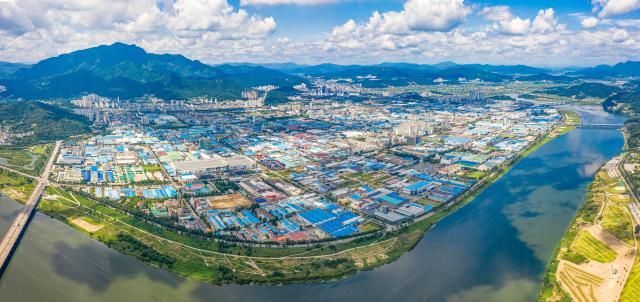
Gumi National Industrial Complex has set its vision as "A home where industrial heritage and culture coexist, and where young people want to live (GIP1969 Industry Playground)." The plan is to preserve and utilize Bangrim Factory as a landmark, create a park, performance plaza, and underground parking in the vicinity, and establish a cultural street (1st District Road) extending to the Nakdong River waterfront. By installing media facades and holding monthly festivals, the industrial complex will be transformed into a cultural hub.
Under the vision of "Meta Cultural Industrial Complex Embracing Machinery and Defense," Changwon Industrial Complex will feature an experience exhibition hall themed around precision machinery and defense industries as its landmark, and will promote industrial tourism in connection with local companies. The project also includes improving the landscape along the Namcheon Stream and expanding the Bongam Bridge to enhance transportation, as well as expanding cultural events such as the Workers' Arts Festival within the complex.
Wanju Industrial Complex aims to be a "leading cultural convergence industrial complex where people work, enjoy, and grow." The plan includes creating a landmark where visitors can experience the automobile and hydrogen industries, remodeling the workers' welfare center into an educational space, transforming a park into a cultural rest area, and converting a nearby closed school into a cultural communication hub. There will also be food festivals and craft and music experience programs.
"Integration of Industry, Culture, and City"... Government Emphasizes 'One Team'
The launch ceremony was attended by local government leaders, as well as officials from the Korea Industrial Complex Corporation, the Korea Institute of Design Promotion, and the Regional Culture Promotion Agency, which are the main organizations in charge of the project. A "Youth Design Living Lab," involving about 200 young workers, will be operated to redesign spaces within the complexes from a youth perspective and to allow direct proposals for lifestyle and leisure content.
The government plans to designate additional cultural leading industrial complexes each year beyond these three locations. Oh Seungcheol, Director General for Industrial Policy at the Ministry of Trade, Industry and Energy, stated, "We will foster industrial complexes as regional landmarks and future growth hubs." Lee Jeongwoo, Director General for Culture and Arts Policy at the Ministry of Culture, Sports and Tourism, emphasized, "We will enhance workers' cultural pride and transform aging industrial complexes into vibrant spaces." Lee Sangjoo, Director General for Land and Urban Policy at the Ministry of Land, Infrastructure and Transport, added, "We will actively promote the transition from traditional industries to advanced industries, alongside improvements to infrastructure."
© The Asia Business Daily(www.asiae.co.kr). All rights reserved.

















