Some foreign airlines based in Europe or Southeast Asia showed inadequate international flight punctuality last year. Among domestic airlines, low-cost carriers operating many short-haul routes departing from Incheon Airport frequently failed to adhere to scheduled departure times.
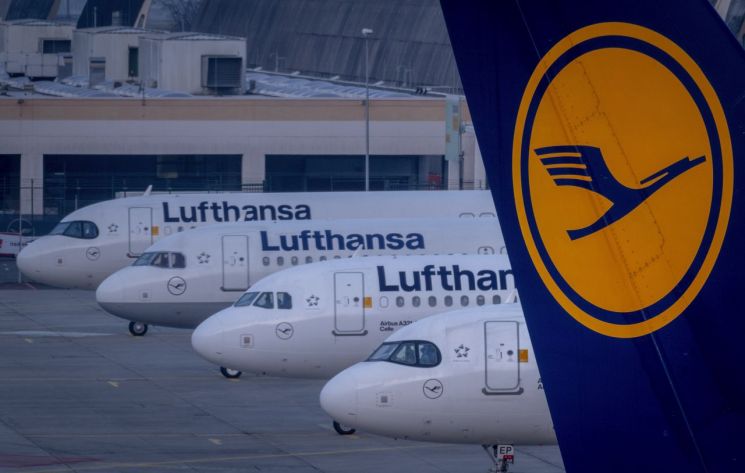
According to the 2024 Air Traffic Service Evaluation results released by the Ministry of Land, Infrastructure and Transport on May 29, Lufthansa was the only airline to receive an E grade (poor) in the operational reliability category. Operational reliability primarily uses punctuality as a key evaluation indicator. Air France received a D (below average)+, and VietJet Air received a C (average). The Ministry explained that these relatively low grades were due to factors such as restrictions on available air routes caused by the Russia-Ukraine war and increased airspace congestion resulting from higher flight volumes.
Among domestic airlines, Air Busan, All Nippon Airways, and Qatar Airways, which operate many routes departing from regional airports, received an A grade (excellent). In contrast, Air Seoul received a D grade, while Eastar Jet and Jin Air were rated C. Many routes departing from Incheon Airport experienced delays due to issues such as aircraft connections, resulting in lower scores.
Korean Air, Asiana Airlines, Air Premia, Jeju Air, and T'way Air received a B grade (good). The Ministry explained that, regardless of whether the airline was domestic or foreign, the increase in the number of flights led to greater airport and airspace congestion, which in turn caused a slight decline in punctuality. The average grade for all 53 airlines evaluated (10 domestic, 43 foreign) was B.
In contrast, for domestic flights, Korean Air, Asiana Airlines, Aero K, and Air Busan all received an A grade (excellent). Both Eastar Jet and Air Seoul showed improvement compared to the previous year, and all airlines received a grade of good or higher.
In the user protection fulfillment category, which evaluates the airlines' proactiveness in providing remedies for damages, all domestic airlines received an A grade. No foreign airline received a grade of poor or lower. However, Southeast Asian and Chinese airlines such as Malaysia Airlines, AirAsia X, Spring Airlines, and VietJet Air received grades of average or lower. In terms of safety, Jeju Air, which was involved in a fatal accident, received an F grade (very poor). T'way Air, which has received multiple fines, was graded E. The overall average dropped from A to B.
In the promptness evaluation conducted for six airports (Gimpo, Gimhae, Daegu, Incheon, Cheongju, Jeju), Daegu Airport received an A grade. Incheon Airport (A) and Jeju Airport (B) maintained the same grades as last year. For user convenience, all airports received a grade of B or higher, and baggage handling accuracy was within the appropriate quality control range, so all airports received an A grade.
Park Joonsang, Director of the Aviation Industry Division at the Ministry of Land, Infrastructure and Transport, said, "Starting with this year's evaluation, we will further refine the process by including airlines' delay rates and delayed times in the assessment, thereby encouraging improvements in air traffic services that meet public expectations."
© The Asia Business Daily(www.asiae.co.kr). All rights reserved.
![Clutching a Stolen Dior Bag, Saying "I Hate Being Poor but Real"... The Grotesque Con of a "Human Knockoff" [Slate]](https://cwcontent.asiae.co.kr/asiaresize/183/2026021902243444107_1771435474.jpg)
















