Zespri Holds Press Conference in Songpa-gu, Seoul on May 28
Fruit Consumption in South Korea Drops 40% Compared to Ten Years Ago
"Adding One SunGold Kiwi to the Diet Improves Vitamin C Deficiency"
Seven out of ten people in South Korea do not meet the recommended daily intake of essential nutrients such as vitamin C or vitamin E.
On May 28, at a press conference held at Sofitel Ambassador Seoul in Songpa-gu, Seoul, Zespri announced the results of a study on "healthy diets focused on nutrient density" in celebration of World Nutrition Day.
According to this study, conducted by the Korean Nutrition Society, the average fruit intake per person in South Korea in 2023 was approximately 113 grams, which represents a decrease of about 40% compared to ten years ago.
Shin Sanga, a professor in the Department of Food and Nutrition at Chung-Ang University and a member of the Korean Nutrition Society, explained, "The World Health Organization (WHO) recommends consuming more than 500 grams of fruits and vegetables per day, but currently, only 22% of people in South Korea consume enough fruits and vegetables." She added, "Among young adults aged 19 to 29, only 6.3% meet this recommendation."
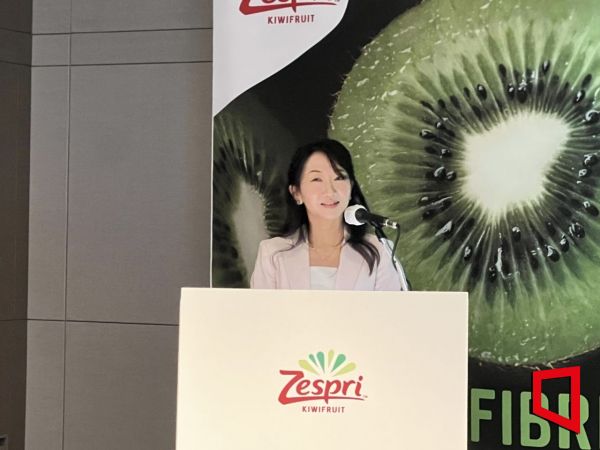 Kokhwi Eung, General Manager of Zespri International Marketing, is speaking at a press conference held on the 28th at Sofitel Ambassador Seoul in Songpa-gu, Seoul. Photo by Han Yeju
Professor Shin continued, "As fruit consumption has decreased, about seven out of ten people in South Korea are experiencing insufficient intake of nutrients such as vitamin C or vitamin E." She emphasized, "Regularly consuming enough fruit is a way to improve not only obesity but also various metabolic indicators."
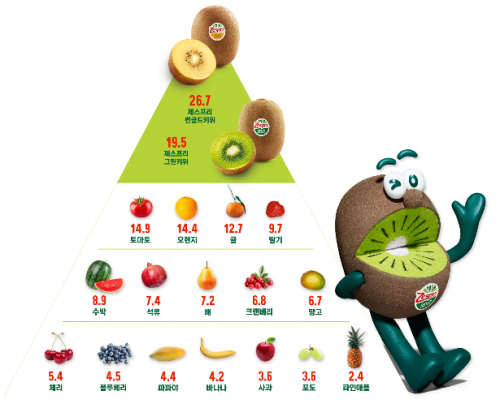
In another study presented by the Korean Nutrition Society on the same day, it was found that adding one SunGold kiwi, which has a high nutrient density, to a regular diet significantly improved vitamin C deficiency across most age groups regardless of gender. Deficiencies in vitamin E, folate, and dietary fiber were also reduced by an average of 23%. In particular, for vitamin C, adding just one SunGold kiwi far exceeded the daily intake standard, greatly improving vitamin C deficiency. Gold kiwis contain 152 mg of vitamin C, 1.1 mg of vitamin E, and 82 mcg of folate per 100 grams (about one kiwi).
Hee-Won Jung, a professor at Asan Medical Center who has led the "slow aging" trend, also attended the press conference and stated, "Vitamins and antioxidants are most effectively consumed through whole fruits, rather than in processed forms such as supplements or liquid fructose." She recommended eating kiwifruit, which is densely packed with these nutrients. She also advised consuming the skin of the kiwi, as it contains high amounts of dietary fiber, vitamins, and antioxidants.
Kokhwi Eung, General Manager of Zespri International Marketing, explained, "As a brand representing health and well-being, Zespri aims to raise awareness of the issue of hidden hunger and help consumers make smarter dietary choices."
Currently, Zespri International supplies kiwifruit to over 50 countries worldwide, and as of last year, South Korea ranked as the fifth-largest market after China, Japan, Spain, and Germany. Kokhwi Eung noted, "Korean consumers have a high level of interest and enthusiasm for healthy eating and better lifestyles, which aligns closely with Zespri's values." He added, "South Korea currently accounts for about 85% of the domestic kiwi market share and is one of the fastest-growing strategic markets for us."
© The Asia Business Daily(www.asiae.co.kr). All rights reserved.


















