Superior to Cricket Substrate... Expected Immune and Anticancer Benefits
County Pursues Entry into the Global Health Food Market Based on Patented Technology
The amount of cordycepin, a compound known for its anticancer properties, was found to have increased more than 25 times in Cordyceps militaris cultivated using abalone as a substrate.
On May 28, Wando County announced that an analysis of the cordycepin content in the fruiting bodies of Cordyceps militaris grown on abalone substrate showed levels approximately 25 times higher than those cultivated on the commonly used brown rice substrate.
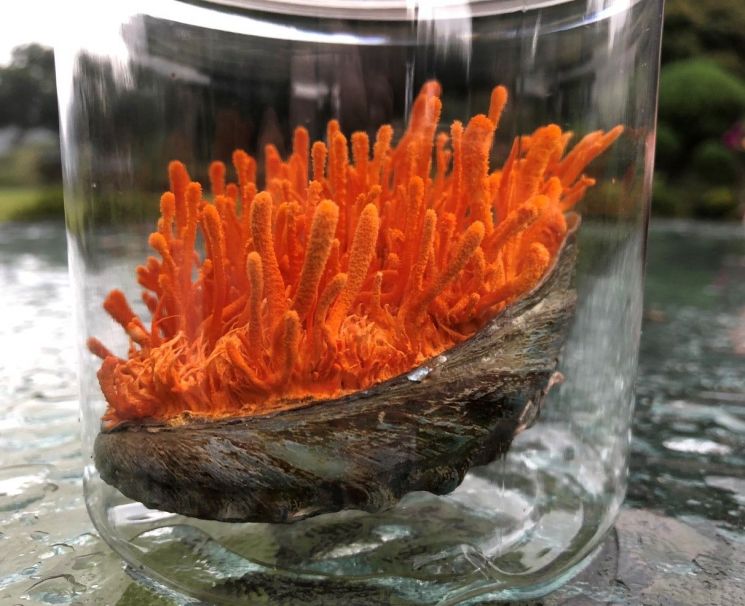 The image shows Cordyceps militaris cultivated using Wando abalone as a substrate. Provided by Wando County.
The analysis was conducted by the Department of Pharmacy at Chungbuk National University. Based on these results, Wando County plans to actively pursue the development of functional food ingredients. Traditionally, Cordyceps militaris is cultivated on brown rice substrate, but recent methods using edible insects such as crickets have been reported to be effective in increasing cordycepin content. However, in this experiment using abalone substrate, the cordycepin levels were found to be significantly higher than those obtained with cricket substrate.
The county is focusing on the possibility that the unique, highly nutritious components of abalone may have promoted the synthesis of bioactive substances in Cordyceps militaris. Since both Cordyceps militaris and abalone are recognized as valuable ingredients in the health functional food market, the combination of these two materials is expected to create a synergistic effect.
Cordycepin is a key active ingredient in Cordyceps militaris. In addition to its anticancer, anti-inflammatory, and antibacterial effects, various studies have reported its functions in inhibiting cellular aging, activating immune cells, and regulating blood sugar. This compound is particularly noted for its immune-boosting and anticancer cell growth inhibition effects, and is being treated as a core substance in related biopharmaceutical research.
The county highly values the industrial potential of Cordyceps militaris cultivated with abalone and plans to develop advanced functional health foods based on related patented technologies in the future.
An official from the Wando Agricultural Technology Center stated, "We expect that the cultivation technology utilizing abalone, a specialty product of Wando, will create new added value."
Meanwhile, Wando County and CNG Organic Farming Association jointly developed the Cordyceps militaris cultivation technology using abalone last year, secured a domestic patent, and are currently in the process of applying for an international patent (PCT).
© The Asia Business Daily(www.asiae.co.kr). All rights reserved.

















