Suspicious Transactions Uncovered in Seoul
Cases Involve Disguised Gifting, Corporate Fund Misuse, and Loan Regulation Violations
An individual who purchased an apartment in Gangdong-gu, Seoul, valued at over 2 billion KRW, was found by a government investigation to have had less than 100 million KRW in personal funds. The buyer utilized a rental deposit and borrowed funds from their mother but did not respond to the government's request for clarification. Due to suspicions of disguised gifts, the case was referred to the National Tax Service.
The Ministry of Land, Infrastructure and Transport announced on May 28 the results of a joint on-site inspection and planned investigation conducted with related agencies on abnormal housing transactions in Seoul during January and February of this year. In the Gangdong-gu apartment case, the buyer submitted a funding plan indicating a rental deposit of 1 billion KRW and borrowed funds of 1.3 billion KRW to purchase an apartment worth approximately 2.38 billion KRW. During the actual transaction investigation, only documents related to the borrowed funds were provided. The buyer did not submit documentation for the sales contract, rental deposit, or personal funds, despite the authorities' request for clarification. The 1.3 billion KRW in borrowed funds was obtained from the buyer's mother, raising suspicions of disguised gifting.
Another case involved an individual who purchased an apartment in Gangnam-gu for 4.5 billion KRW, borrowing 700 million KRW from family-owned companies and failing to properly account for the transactions. The buyer borrowed 200 million KRW from a company where his wife is an internal director, 300 million KRW from a company where his father is an internal director, and 200 million KRW from a company where his mother is an internal director. All of these companies are separate entities. Due to suspicions of corporate fund misappropriation, the case was referred to the National Tax Service. There was also a case in which an individual used 1.4 billion KRW, borrowed under the pretense of business operating funds, to purchase an apartment in Seocho-gu for 4.35 billion KRW. This was deemed a misuse of loan funds for purposes other than intended and was reported to the Financial Services Commission.
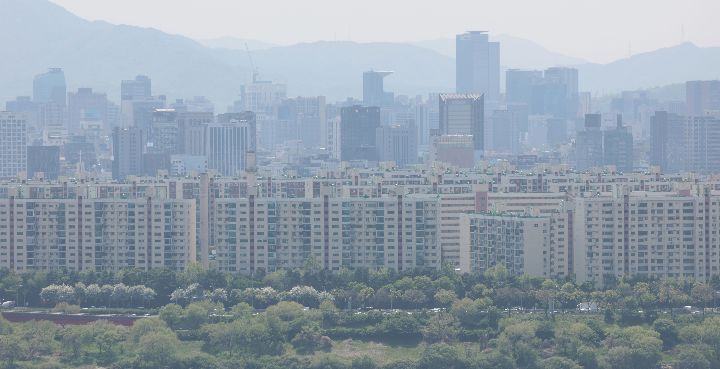
There were also cases where individuals changed their registered address to increase the amount of mortgage loans they could receive. In one instance, after purchasing an apartment in Dongjak-gu from their grandmother for 1.38 billion KRW, the buyer signed a jeonse (long-term lease) contract with the grandmother as the tenant for 650 million KRW. The LTV (loan-to-value) limit was 70%, so the maximum loan available for this apartment was about 1.03 billion KRW. However, after deducting the jeonse deposit, only 380 million KRW could be borrowed. To circumvent this, the grandmother moved out of the registered address before the loan was issued and moved back in afterward, enabling the buyer to secure the loan. This suspected violation of loan regulations was reported to the Financial Services Commission.
The Ministry of Land, Infrastructure and Transport, together with the Seoul Metropolitan Government, relevant district offices, and the Korea Real Estate Board, conducted on-site inspections of 80 major apartment complexes in the Gangnam 3 districts, as well as in Mapo, Yongsan, and Seongdong districts, over the past 11 weeks. Detailed planned investigations were carried out on suspicious transactions from January and February. As a result, 108 transactions were identified as suspicious. Since multiple violations were found in some transactions, the total number of suspected illegal acts reached 136.
Specifically, cases involving disguised gifting or misappropriation of corporate funds accounted for 82 cases, the highest number. These were reported to the National Tax Service for analysis and collection of any unpaid taxes. There were also 38 cases where the price or contract date was falsely reported. These were referred to the relevant local governments, and the parties involved will be fined up to 10% of the acquisition price. Violations of loan regulations and misuse of loan funds accounted for 15 cases, and there was also one case of illegal inflow of overseas funds.
Additionally, a planned investigation into housing and pre-sale rights transactions in the Seoul metropolitan area last year uncovered 688 suspected illegal transactions (555 involving housing and 133 involving pre-sale rights). Relevant agencies, including the National Tax Service and the Financial Services Commission, were notified. Regular monitoring of unregistered apartment transactions, conducted annually, identified 499 cases, for which further investigation and administrative action were requested.
Kim Kyucheol, Director General for Housing and Land at the Ministry of Land, Infrastructure and Transport, stated, "To stabilize the real estate market, it is essential to strictly crack down on illegal and unfair practices that disrupt transaction order and to establish a fair and transparent transaction system. We will thoroughly block speculative demand through continuous monitoring of abnormal transactions as well as joint on-site inspections and planned investigations with relevant ministries and local governments."
© The Asia Business Daily(www.asiae.co.kr). All rights reserved.


















