30-Year Bond Yield Drops to 2.854% After Approaching 3.2% Last Week
Foreign Media Report Japanese Finance Ministry Considering Issuance Reduction
Market Survey Launched to Assess Demand for Long-Term Bonds
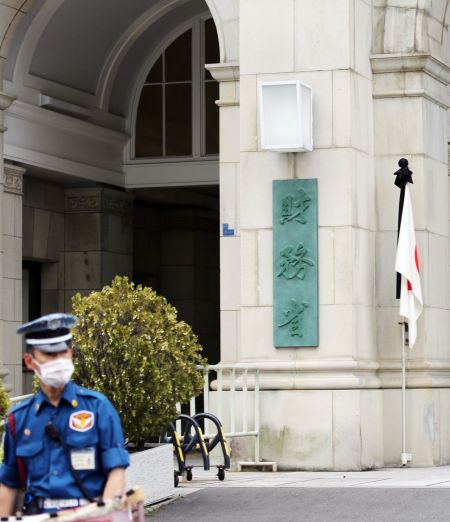
After foreign media reported that the Japanese government is considering reducing the issuance of super-long-term bonds, the yield on Japan's 30-year government bond fell to the 2.8% range. Amid concerns over oversupply this month and heightened volatility, the Japanese government bond market appears to have regained some stability, at least temporarily.
According to CNBC in the United States, the yield on Japan's 30-year government bond closed at 2.854% on the 27th (local time). This represents a drop of more than 30 basis points (bp, 0.01 percentage point) from last week, when it surged to 3.169%. On the same day, the yield on the 20-year bond closed at 2.358%, and the 40-year bond at 3.327%.
The stabilization of government bond yields appears to have followed an exclusive report by Reuters in the United States the previous day, which stated that the Japanese Ministry of Finance is considering reducing the issuance of 30-year and 40-year bonds.
In fact, the Financial Times (FT) in the United Kingdom and other outlets reported that the Japanese government has recently begun conducting a survey of market participants, including bond dealers, to assess demand for government bonds. An anonymous source told FT, "This measure appears to be a preliminary step to confirm the structural lack of demand for long-term government bonds," adding, "A decision to reduce issuance may follow." FT described the Japanese government's move as "an unusual measure."
Several factors contributed to the sharp rise in Japan's long-term bond yields this month. These include the possibility that the Bank of Japan (BOJ), the central bank, may reduce its bond purchases, which in turn dampened investor sentiment toward bonds; the failure of the 20-year government bond auction to attract sufficient interest; and delays in the government's discussions on stimulus measures. These factors combined to increase market volatility.
As a result, the Japanese government has been able to breathe a sigh of relief. On May 17, S&P Global stated in a report, "As the yield on Japan's 30-year bond has risen to near record highs, the government's borrowing costs have increased significantly," highlighting the burden of interest expenses. The report continued, "Such a situation could put pressure on public finances, which may limit the government's capacity to invest in growth-promoting initiatives," and noted, "The risk of a trade war could further complicate the situation."
© The Asia Business Daily(www.asiae.co.kr). All rights reserved.
![Clutching a Stolen Dior Bag, Saying "I Hate Being Poor but Real"... The Grotesque Con of a "Human Knockoff" [Slate]](https://cwcontent.asiae.co.kr/asiaresize/183/2026021902243444107_1771435474.jpg)
















