Domestic LPs Remain Cold,
Internal Morale Also Declining
MBK Partners, the largest private equity fund (PEF) manager in South Korea, has been keeping a low profile and staying out of major acquisition battles. The company is facing a prolonged period of difficulties, as public criticism over Homeplus intensifies daily and its chairman has even been subject to a prosecutorial search and seizure.
According to the investment banking (IB) industry on May 28, MBK has recently refrained from participating in large-scale mergers and acquisitions (M&A) deals. For SK Siltron, considered the biggest deal of the first half of the year, only Hahn & Company and STIC Investments have entered the bidding. MBK did make a solo bid for the sale of CJ CheilJedang's bio business unit, which had an asking price of up to 6 trillion won, but did not pursue the deal aggressively. Due to differences over price and other factors, MBK repeatedly entered and withdrew from the process, and CJ ultimately decided to cancel the sale. With MBK, the largest player, stepping back from these deals, the overall mood in the large-scale M&A market has become subdued.
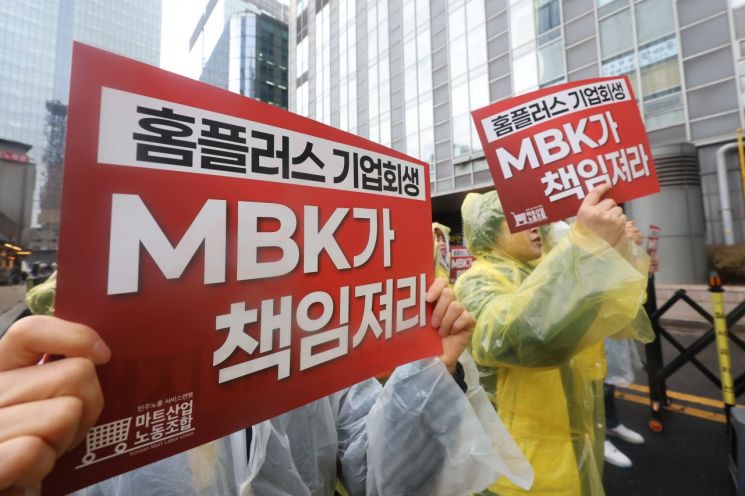
MBK itself is also finding it difficult to focus on deals. Public criticism over Homeplus is intensifying every day. With regulatory pressure mounting, there is a growing sentiment of demonization against private equity funds. On May 17, MBK Partners Chairman Michael Kim was subject to a prosecutorial search and seizure while entering Incheon International Airport. Subsequently, prosecutors imposed an overseas travel ban on both Chairman Michael Kim and Vice Chairman and Co-CEO Kim Kwangil of MBK and Homeplus, respectively.
Domestic limited partners (LPs) are also casting a wary eye toward MBK. MBK is scheduled to complete the formation of its sixth fund next month. Of the $7 billion (about 10 trillion won) target, it had raised about $5 billion by the end of last year. Although $2 billion remains, domestic LPs appear to be hesitant. Last year, MBK failed to secure commitments in fundraising competitions from institutions such as the Korea Scientists and Engineers Mutual-aid Association and the Yellow Umbrella Mutual Aid Fund. The National Pension Service invested 300 billion won but attached a condition prohibiting hostile M&A investments. Commercial banks are also reportedly reluctant to invest in this fund.
Recently, MBK issued a capital call to LPs to repay part of the 1.6 trillion won it borrowed from NH Investment & Securities, but most domestic LPs reportedly did not respond. It is said that only overseas LPs, such as China Investment Corporation (CIC), accepted the call. MBK used the funds raised through the capital call to repay about 1 trillion won in loans, while refinancing the remaining 600 billion won as a mid- to long-term loan.
Amid this cooling atmosphere, internal sentiment at MBK is also reportedly unsettled. In March, CEO Park Taehyun stepped down and took a sabbatical. It is known that he effectively resigned after a conflict that arose when he opposed the Korea Zinc management dispute. There are also rumors of growing discord among top management. Even among the founding members who have been with MBK since its inception, clashes are said to be occurring. An IB industry official explained, "The Homeplus situation has angered the entire nation, so someone inevitably has to take responsibility. There are widespread rumors that top management is in conflict over who should step up and take the blame."
© The Asia Business Daily(www.asiae.co.kr). All rights reserved.

















