Non-union Drivers and Chartered Buses to Maintain 70% Operations
Institutions and Citizens Asked to Adjust School and Work Commutes
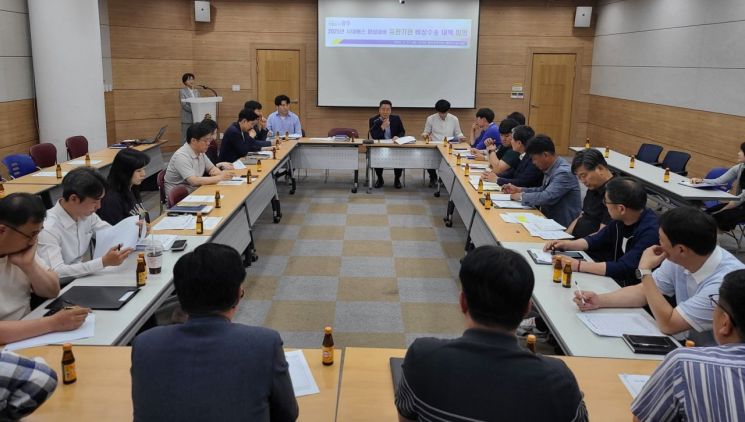 Gwangju City held the "2025 City Bus Strike Emergency Transport Countermeasures Meeting" on the 27th at the City Hall Seminar Room 1, attended by 23 participants including representatives from Gwangju City, autonomous districts, the City Office of Education, Gwangju Transportation Corporation, and city bus companies. Photo by Gwangju City
With the Gwangju city bus union announcing a strike scheduled for the 29th, the city is taking thorough measures to minimize inconvenience for citizens, including preparing emergency transport countermeasures.
On the 27th, Gwangju City held the "2025 City Bus Strike Emergency Transport Countermeasures Meeting" at City Hall Seminar Room 1. The meeting was attended by 23 participants, including representatives from Gwangju City, the five autonomous districts, the Gwangju City Office of Education, Gwangju Transportation Corporation, and city bus companies.
The main topics discussed were: maintaining 70% of city bus operations in preparation for the strike; operating a 24-hour situation room; expanding the operation of alternative transportation; establishing a cooperative system among relevant organizations; and public outreach to citizens.
According to the Bus Transportation Business Association, the city expects that even if the strike proceeds, approximately 700 out of the 1,000 buses (70%) that normally operate will still be running. This is because about 1,020 drivers (42%) out of the total 2,400, including non-union members who are not participating in the strike, will be able to operate the buses.
If the strike is prolonged and the number of city buses in operation inevitably decreases due to accumulated driver fatigue, the city plans to deploy chartered buses and other alternatives. During the strike period, as a decrease in city bus operations is unavoidable, the city will adjust bus routes and timetables based on the number of passengers per route and commuting hours.
The city will also expand the operation of urban rail and taxis. In cooperation with autonomous districts, the Office of Education, institutions, and companies, the city plans to actively promote measures such as extending school commute hours, expanding flexible work hours, and encouraging carpooling campaigns.
A field inspection team, including Gwangju City, autonomous districts, and the police, will be formed to prevent union members from interfering with non-union drivers operating buses at city bus terminals and turnaround points.
To reduce inconvenience and confusion for citizens, the city plans to post updates on the strike situation, revised city bus schedules, and requests for cooperation at bus stops and to disseminate information through various online and offline media channels.
Bae Sangyoung, Director of Public Transportation, said, "We are working closely with relevant organizations to prepare for the strike and are doing our utmost to minimize inconvenience for citizens," and added, "We also ask citizens to actively cooperate by carpooling and walking short distances."
Meanwhile, whether the city bus strike in Gwangju will proceed will be determined based on the results of the union members' vote held from the 27th to the 28th and the outcome of the second mediation by the Gwangju Regional Labor Relations Commission on the 28th. The union is demanding an 8.2% wage increase and an extension of the retirement age from 61 to 65, while management is maintaining its position to freeze wages at last year's level.
Regarding the issue of ordinary wages, which is a point of contention in other cities such as Seoul, Incheon, and Busan, in Gwangju, bonuses and other payments have been included in ordinary wages since 2014, so this issue is not part of this year's negotiations. The average annual salary of Gwangju city bus drivers is similar to that of Daejeon and Daegu, and during the strike period, drivers will not receive pay in accordance with the "no work, no pay" principle.
© The Asia Business Daily(www.asiae.co.kr). All rights reserved.

















