Estonia, the Top Performer in OECD Academic Assessment in Europe
Active "Digital Inclusion" Policies
Joining the Wave of AI Innovation
As measures to ban the use of mobile phones in schools are spreading worldwide, one country has drawn attention by taking the opposite path and emerging as an "educational powerhouse." This is the story of Estonia, one of the three Baltic states in Northern Europe.
On the 26th (local time), the British daily The Guardian reported that Estonia, located on the shores of the Baltic Sea, has recently been in the spotlight for its education policies that actively utilize digital technology.
Estonia, a former Soviet state with a population of just 1.4 million, has recently risen to prominence as an educational powerhouse by overtaking neighboring Finland in several areas in the Organisation for Economic Co-operation and Development (OECD)'s Programme for International Student Assessment (PISA). In the most recent PISA conducted in 2022, Estonia ranked first in Europe in mathematics, science, and creative thinking. In reading, Estonia ranked second, following Ireland.
The background behind Estonia's achievements, surpassing other advanced countries with much larger populations and budgets, is cited as the digital inclusion policies that the country's education authorities have pursued over the past several decades.
Estonia actively encourages the use of smartphones as learning tools. The Estonian education authorities do not ban the use of smartphones in schools but leave the decision to each school, while providing guidelines for the use of smartphones only for younger students under the age of 12 to 13. This stands in contrast to most European countries, including the United Kingdom, where students are prohibited from using smartphones in classrooms.
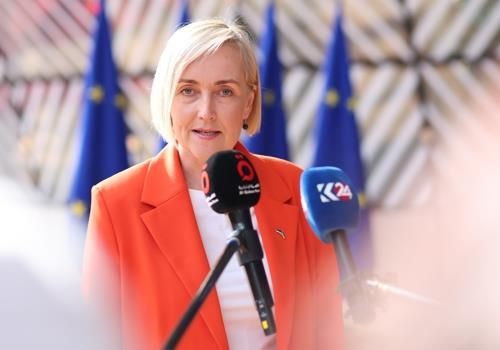
Christina Karas, Estonia's Minister of Education and Research, explained at the recent World Education Forum held in London that "most schools do not ban smartphone use during breaks, but instead operate in a way that allows students to use smartphones for assignments or activities under the guidance of teachers during class." She added that no problems have been reported so far regarding the use of smartphones, and emphasized, "Estonian society is much more open to using digital tools and services."
According to The Guardian, Estonia has been proactive in embracing new technologies even before the advent of smartphones. Since the introduction of the internet in 1997, Estonia has made large-scale investments in nationwide computer and network infrastructure, rapidly providing internet access to most schools.
Estonia is also responding quickly to the recent surge of interest in artificial intelligence (AI). Unlike many countries that view students using AI for homework negatively, Estonian authorities are encouraging students to learn about AI and are focusing on providing proper guidelines, The Guardian reported.
Accordingly, Estonian authorities are planning to provide access to AI tools for 58,000 students and about 5,000 teachers from September this year through 2027, and are negotiating licensing agreements with OpenAI, the developer of the AI chatbot ChatGPT, to this end.
Estonian officials stated that through AI policies aimed at developing teachers' and students' skills in using AI, digital ethics, and AI literacy, Estonia will become "one of the smartest countries in utilizing AI."
© The Asia Business Daily(www.asiae.co.kr). All rights reserved.

















