Japan's Ministry of Internal Affairs and Communications Announces
Food and Energy Prices Lead the Upward Trend
Political Pressure Mounts on Prime Minister Shigeru Ishiba
Japan's Consumer Price Index (excluding fresh food) for April rose by 3.5% compared to the same month last year, according to an announcement by the Ministry of Internal Affairs and Communications on May 23. As prices for rice and other staple foods increase, the political burden on Prime Minister Shigeru Ishiba is also mounting ahead of the House of Councillors election scheduled for July.
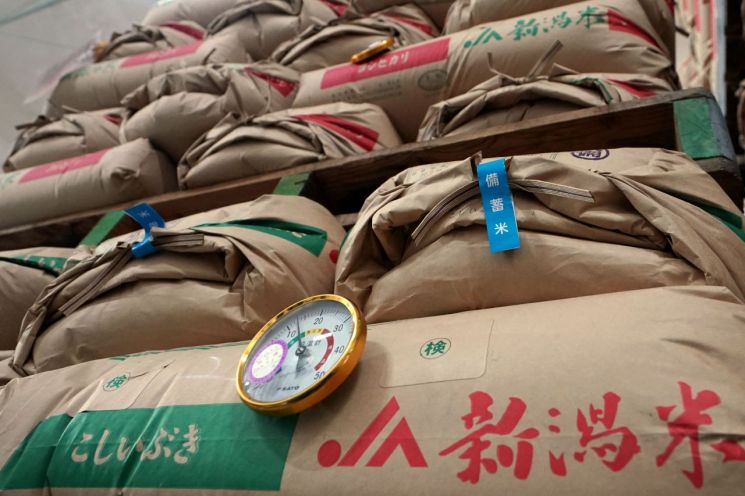
According to the data released by the Ministry of Internal Affairs and Communications on this day, the Consumer Price Index for April, excluding fresh food, saw its rate of increase expand from 3.2% in March to 4.5% in April. The rise was primarily driven by higher prices for food and energy. The number of food items with price increases in April surpassed 4,000 for the first time in 18 months. In particular, the price of rice surged by 98.4%, marking the largest increase since related statistics began in 1971. Rice prices have been on an upward trend for seven consecutive months.
Energy prices also rose by 9.3% compared to the same month last year. This was attributed to the Japanese government's termination of gas and electricity bill subsidies in March. The ruling party is currently considering resuming these subsidies from June, as well as implementing measures to lower gasoline prices.
Bloomberg reported that this trend of rising prices is also affecting the Bank of Japan's (BOJ) monetary policy. Earlier this month, the BOJ kept its benchmark interest rate at 0.5%, but postponed the timeline for achieving its 2% inflation target.
With inflation still running high, household purchasing power continues to be squeezed. Despite companies agreeing to significant wage increases during this year's wage negotiations, the real wages of Japanese workers have declined for three consecutive months through March. Bloomberg pointed out that this is hindering the "virtuous cycle" of rising wages and prices that both the government and the BOJ are aiming to achieve.
As prices, including those for rice, continue to rise, Prime Minister Ishiba's concerns are deepening. His approval rating has recently dropped to its lowest level since taking office. In response, the government is preparing economic stimulus measures to ease the burden of rising prices and plans to present a concrete policy framework before the July election campaign. Prime Minister Ishiba has also announced his intention to lower the price of rice to below 4,000 yen (about 28 dollars) per 5 kilograms in an effort to address voter dissatisfaction.
© The Asia Business Daily(www.asiae.co.kr). All rights reserved.

















