Over 2,000 Adults Confirmed:
Largest Population Ever Recorded in Korea
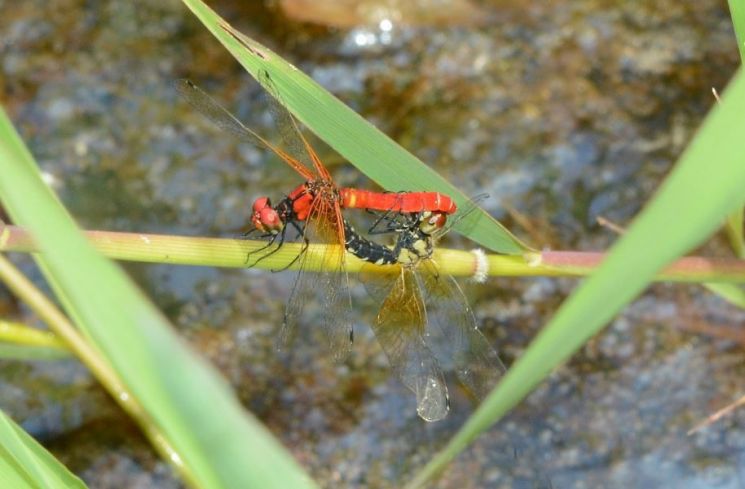 The Korean Little Dragonfly, Epiophlebia superstes, confirmed to inhabit Wolbong Wetland in Gokseong. Provided by Gokseong County
Gokseong County in South Jeolla Province announced on May 22 that a large population of the Korean Little Dragonfly (Nannophya koreana Bae, 2020), which is classified as a Class II endangered wild species and is the smallest dragonfly in the world, has been confirmed to inhabit Wolbong Wetland within the county.
On May 12, an adult specimen was discovered for the first time at Wolbong Wetland. Subsequently, on May 19, a joint survey by the Dasari Biological Resources Institute, composed of domestic insect experts, and Gokseong County confirmed that over 2,000 adult individuals are inhabiting the area. This is the largest population ever reported in South Korea.
The Korean Little Dragonfly was previously referred to as the Little Dragonfly and was thought to be a species distributed in Southeast Asia. However, in 2020, regional genetic analysis revealed that it is a new species found only in South Korea, making it an endemic species with very high conservation value.
The Korean Little Dragonfly is known as the smallest dragonfly in the world, with a body length of about 1.5 cm. Females have striking tiger-like patterns, while males are red and fly very low to the ground. Although it is mainly found in mountain wetlands and fallow rice paddies, it is facing a severe survival crisis due to habitat destruction caused by urbanization and development, as well as climate change.
Wolbong Wetland in Gokseong has been continuously preserved and managed by the county since the early 2000s, and it is a site where the stable habitation of the Korean Little Dragonfly has been confirmed for over 20 years. The discovery of this large population further establishes Wolbong Wetland as a core habitat for species conservation, and the area is now recognized for its high ecological value.
Meanwhile, Wolbong Wetland is also home to a variety of other endangered wild species, including the Great King Dragonfly (Class II endangered), the Leopard Cat (Class II endangered), the Otter (Class I endangered, Natural Monument), the Siberian Flying Squirrel (Class II endangered), the Eurasian Kestrel (Natural Monument), and the Eurasian Hobby (Class II endangered).
A county official stated, "We plan to continue efforts for stable habitat management and taxonomic and ecological research through the preservation of the Wolbongje Fallow Rice Paddy Wetland, which was created as part of the Ministry of Environment's Ecological Conservation Burden Refund Project, and through detailed surveys of endangered wild species." The official added, "We will also consistently review applications for designation as a Natural Monument, the establishment of protection and management plans, and the operation of ecological education and exploration programs with local residents, in order to promote the conservation of biodiversity in Gokseong and to develop it as a resource for ecological tourism."
© The Asia Business Daily(www.asiae.co.kr). All rights reserved.

















