A Means of Psychological Pressure?
"If Carried Out, It Would Be a Direct Challenge to Trump"
On May 20 (local time), CNN reported that there are indications Israel has begun preparations to independently strike Iran's nuclear facilities.
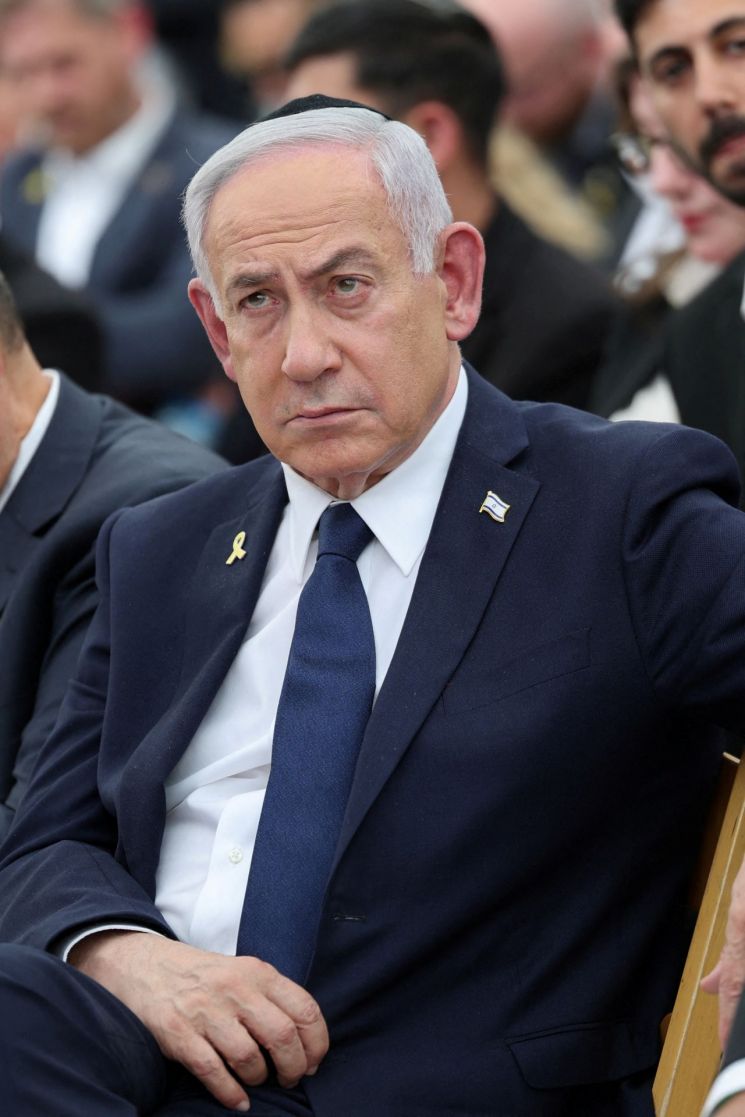
According to CNN, the U.S. government has obtained information on Israel's preparations for an attack on Iran's nuclear facilities through intelligence activities such as intercepting Israeli military communications. Sources stated that Israel has moved the necessary weapons for a strike on the nuclear facilities and has completed air force training required for the operation.
However, some analysts suggest that these actions are more likely intended as psychological pressure on Iran, rather than direct evidence that an Israeli attack on Iran's nuclear facilities is imminent. It remains unclear whether the Israeli government has made a final decision to carry out an airstrike on Iran's nuclear facilities.
Within Israel, there is clear dissatisfaction regarding the progress of nuclear negotiations between the United States and Iran. There is a strong sentiment that the administration of Donald Trump cannot stand by if negotiations are concluded in a way that fails to completely eliminate Iran's uranium enrichment capabilities, which are directly linked to the possibility of Iran developing nuclear weapons. One source stated, "If Israel perceives that the Trump administration is about to strike a 'bad deal' with Iran, it may even launch an attack to deliberately derail the negotiations."
Israel has long been planning attacks on Iran's nuclear facilities and has repeatedly conducted bombing drills. In October of last year, Israel successfully destroyed a large military base, missile production facilities, Russian-made S-300 missile air defense batteries and headquarters, radar installations, and missile launchers on the outskirts of Tehran in a retaliatory airstrike following Iran's ballistic missile attack. Additionally, in December of last year, Israel launched large-scale airstrikes on military facilities remaining in Syria after the collapse of the Bashar al-Assad regime, paralyzing air defense systems and thereby enabling Israel to potentially bomb Iran's nuclear facilities by crossing Syrian airspace in the event of a crisis.
The "Axis of Resistance," a military network in the Middle East led by Iran and including armed groups such as Lebanon's Hamas, has also faced a crisis due to Israel's ongoing attacks. CNN reported, "Due to the destruction of military facilities by Israeli attacks, a weakened economy as a result of sanctions, and the decimation of key proxy forces in the region, Iran's military strength is at its weakest in decades," adding, "Israel has considered this an opportunity."
However, a strike on nuclear facilities has long been regarded as a U.S. "red line" because Iran is extremely sensitive to such an action. If Israel were to carry out an airstrike on Iran's nuclear facilities, it could escalate into a full-scale war, and if surrounding armed groups or countries were to join in, it could develop into an international conflict. Both the previous Joe Biden administration and the Trump administration reportedly sent General Michael Erik Kurilla, commander of U.S. Central Command, to Israel earlier last month to convey the position that Israel should hold off on plans to strike the nuclear facilities. In this context, U.S. officials told CNN that if Israel attacks Iran's nuclear facilities, it would be seen as a direct challenge to President Trump.
If an attack on the nuclear facilities were to materialize, it would likely have a significant impact on the global economy. In fact, immediately after CNN's report on this day, international oil prices temporarily surged by more than 3%.
To destroy Iran's nuclear facilities, which are built deep underground in mountainous regions, without a ground operation, Israel would require support such as the U.S.'s powerful conventional bunker-buster bombs and aerial refueling. Jonathan Panikoff, a former senior intelligence official, stated, "Ultimately, Israel's decision will depend on what actions the U.S. government takes and what kind of agreement President Trump reaches with Iran," adding that Prime Minister Benjamin Netanyahu is unlikely to risk a rupture in relations by launching an airstrike without at least tacit approval from the United States.
The United States and Iran have held four rounds of negotiations over the past month in Oman, mediated by the Omani government since April 12, but remain at an impasse over the fate of Iran's uranium enrichment program. After the Trump administration unilaterally withdrew from the Iran nuclear deal (JCPOA, Joint Comprehensive Plan of Action) in 2018 and reinstated sanctions, Iran has continued to increase its uranium enrichment levels.
© The Asia Business Daily(www.asiae.co.kr). All rights reserved.

















