International Research Team Analyzes Ice Sheet Loss Due to Warming
Greenland and Antarctic Ice Could Raise Sea Level by 65 Meters
"Preventing a 1.5°C Rise Does Not Mean the Problem Is Solved"
Even if the rise in global average temperature is limited to within 1.5°C above pre-industrial levels by 2100, as stipulated by the Paris Climate Agreement, it will still be difficult to prevent polar ice sheet loss and a rapid rise in sea levels, according to a new analysis. On May 21, Yonhap News reported, "An international research team led by Professor Chris Stokes of Durham University in the UK published findings in the scientific journal Communications Earth & Environment, concluding this after analyzing past, present, and future ice sheet loss and sea level rise caused by warming."
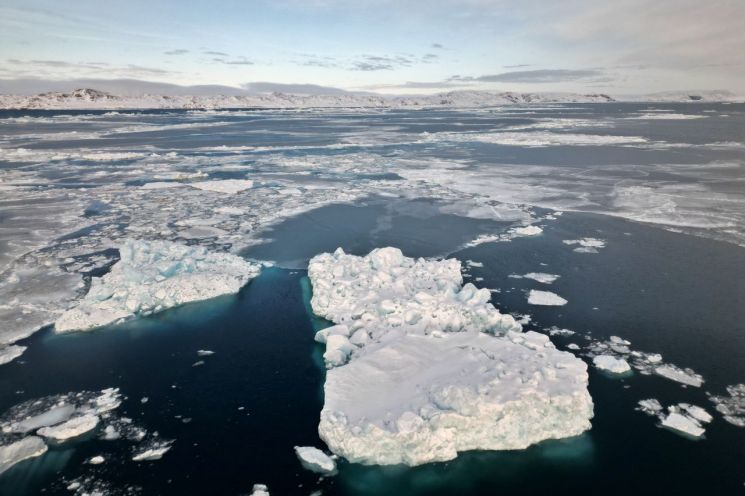
According to the report, the research team reviewed extensive evidence and used simulations to predict future changes in order to assess the impact of a 1.5°C rise in global average temperature on the Greenland and Antarctic ice sheets. They combined analyses of evidence from past periods of warming, current measurements of ice sheet loss, and models predicting how much ice would disappear at various levels of temperature rise over the coming centuries.
The research team concluded that a 1°C rise is the threshold. They stated, "If global temperatures rise by 1.5°C, the loss of the Greenland and Antarctic ice sheets will accelerate, making it highly likely that sea levels will rise over several centuries." They added, "To avoid this, the target for limiting warming should be closer to 1°C rather than 1.5°C." Professor Stokes, who led the study, said, "There is increasing evidence that 1.5°C is too high a temperature for the Greenland and Antarctic ice sheets," and added, "Some degree of sea level rise is inevitable, but the recent rate of ice sheet loss is already at a very concerning level under current climate conditions."
According to the Intergovernmental Panel on Climate Change (IPCC), the amount of ice lost from ice sheets has quadrupled since 1990, and at the current temperature level, which is 1.2°C above pre-industrial times, 370 billion tons of ice are disappearing annually. It is currently estimated that the Greenland and Antarctic ice sheets store enough ice to raise global sea levels by approximately 65 meters.
The research team warned, "Sea level rise can cause significant damage to coastal and island residents and could force the migration of hundreds of millions of people. Policymakers and governments around the world must be fully aware of the impact that a 1.5°C rise would have on polar ice sheets and sea levels." They added, "To avoid a situation in which 230 million people living within one meter of sea level face an existential threat, the rise in temperature must be limited to 1°C or less above pre-industrial levels."
Professor Stokes emphasized, "In the early 1990s, the Earth's temperature was about 1°C higher than pre-industrial levels, and the atmospheric concentration of carbon dioxide was around 350 ppm." He continued, "Currently, the carbon dioxide concentration is 424 ppm and continues to rise, so the safe threshold for temperature increase for the planet appears to be about 1°C." He added, "The point is not that everything ends at a 1.5°C rise, but that the sooner we stop the temperature increase, the easier it will be to return to safe levels in the future." He concluded, "Further research is urgently needed to precisely determine a safe temperature target to prevent a rapid rise in sea levels."
© The Asia Business Daily(www.asiae.co.kr). All rights reserved.

















