Swift Response Plans for Semiconductors and Pharmaceuticals Amid Expanding U.S. Tariffs
Measures to Strengthen Industrial Competitiveness and Mitigate Production and Employment Shocks
Transition to Policy Governance Through Public-Private Collaboration Centered on the Sankyungjang
The government has begun implementing customized policy responses across the entire industrial sector, from strategic industries such as semiconductors and pharmaceuticals to core manufacturing, in response to rapidly changing trade conditions and intensifying technological hegemony competition. Centered on the Industrial Competitiveness Enhancement Ministers' Meeting (referred to as "Sankyungjang"), the government has decided to activate follow-up measures, including tariff responses, strengthening industrial competitiveness, maintaining production and employment bases, and promoting infrastructure and legislative initiatives.
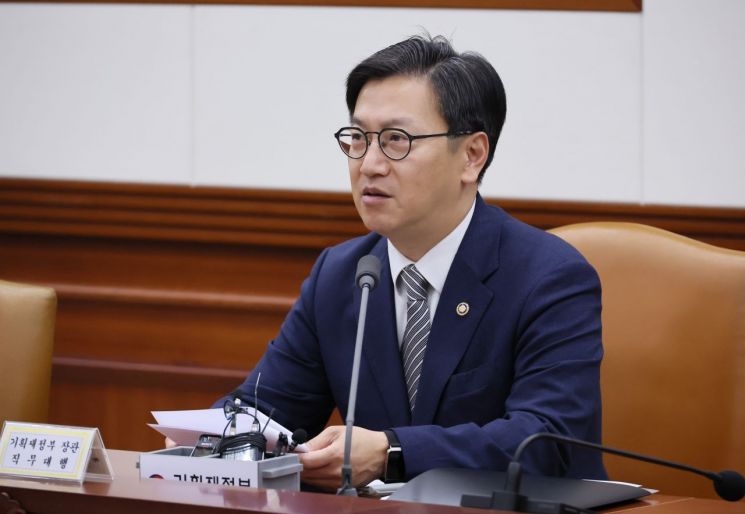
On May 21, the government, in cooperation with relevant ministries, announced the "Progress and Future Plans for Responding to Changes in the Industrial and Trade Environment."
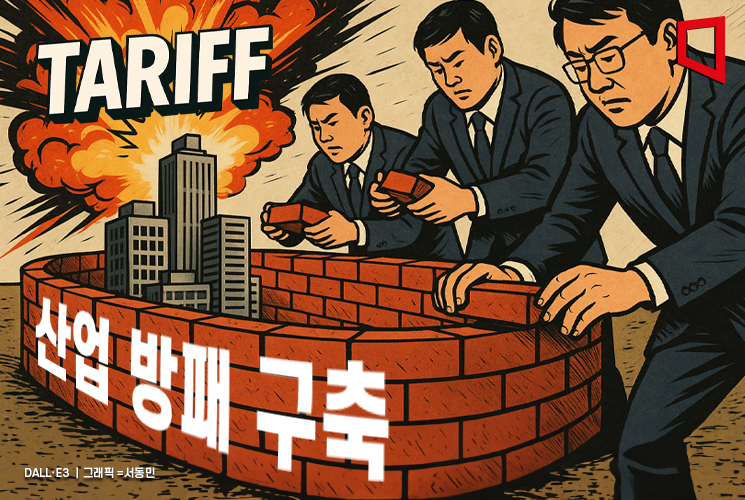
First, the government plans to immediately establish a "U.S. Tariff Response Plan for the Semiconductor and Pharmaceutical Industries" (tentative name) to minimize industry damage if the United States specifies measures to impose tariffs on semiconductors and pharmaceuticals. Response plans for specific items such as steel, aluminum, and automobiles, which have already been established, may also be further supplemented to reflect future trade negotiations and tariff trends.
Measures to strengthen competitiveness through industrial restructuring and technological advancement will also be announced sequentially. For the petrochemical industry, the government will develop specific support measures, including financial and tax support, based on the results of industry-led consulting, together with principles and directions for business restructuring. For the steel industry, a plan for industrial advancement focusing on the development of high-value-added and low-carbon technologies such as hydrogen reduction steelmaking will be announced within the year.
Measures to maintain domestic production and employment bases will be implemented in parallel. Investment subsidies for reshoring companies will be increased from the current level of 124.5 billion won, and support for foreign-invested companies will also be strengthened. In addition, if changes in the trade environment lead to an industrial or employment crisis in specific regions, the government plans to take preemptive action by utilizing the "Designation System for Industrial and Employment Crisis Areas."
Efforts to build advanced industry infrastructure and support legislation will continue. The amendment to the Korea Development Bank Act, which will serve as the foundation for the 50 trillion won "Advanced Strategic Industry Fund," has been referred to the National Assembly's Political Affairs Committee subcommittee. The Special Act on Semiconductors has also passed the National Assembly subcommittee three times this year, expediting the legislative process.
The starting point for these follow-up measures lies in the rapid changes in the global industrial and trade environment. The second Donald Trump administration, immediately after its inauguration, has been specifying a series of tariff policies, including imposing high tariffs on reciprocal tariffs, steel, aluminum, and automobiles, and launching security investigations into semiconductors and pharmaceuticals. In particular, the rollback of major policies such as the abolition of electric vehicle subsidies under the Inflation Reduction Act (IRA) is having a significant impact on the domestic export environment.
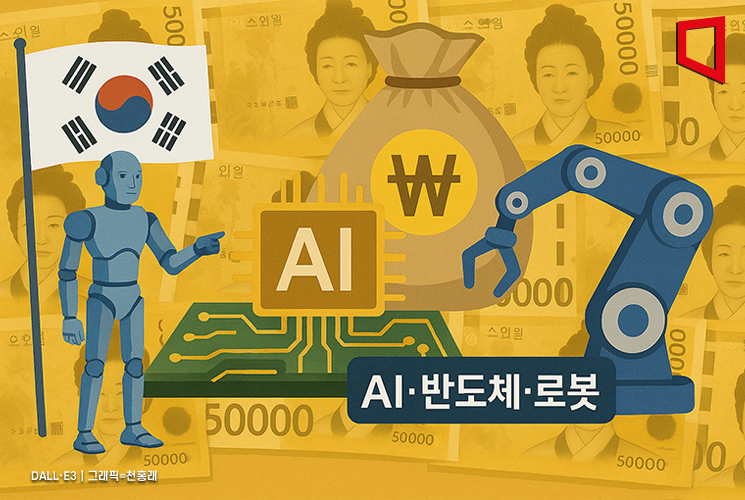
In addition, the strategic securitization of advanced technologies such as artificial intelligence (AI) and semiconductors, technological catch-up by latecomers such as China, and structural factors such as oversupply are continuously threatening the external competitiveness of Korean industries. Accordingly, the government has determined that a comprehensive, pan-governmental collaborative system overseeing the entire industrial sector is necessary, moving beyond localized responses by individual ministries, and has expanded and reorganized the Sankyungjang.
In November last year, the government expanded the function of the Sankyungjang from a meeting focused on corporate restructuring to an "industrial policy control tower." The meeting has been transformed into a public-private joint structure, with participation from relevant ministries such as the Ministry of Economy and Finance, the Ministry of Trade, Industry and Energy, the Ministry of Science and ICT, and the Ministry of SMEs and Startups, as well as companies and economic organizations.
Since then, through a total of 13 meetings, the government has prepared concrete follow-up measures, including: responses to tariff damages by industry, analysis of changes in the trade environment, creation of advanced industry ecosystems such as AI and semiconductors, strengthening competitiveness in core industries such as automobiles, shipbuilding, and secondary batteries, and the designation of industrial crisis areas.
In addition, through the supplementary budget and other means, the government has implemented substantial financial investments, including the introduction of new vouchers for companies affected by tariffs (100 billion won), low-interest loans and special guarantees (8.5 trillion won), expansion of export vouchers (200 billion won), the realistic adjustment of criteria for designating industrial crisis areas, and the establishment of an AI computing center (1.5 trillion won).
A government official stated, "We will continue to develop tailored measures centered on the Sankyungjang and mobilize all available means, including legislation and fiscal support, to enhance the resilience of our industries. Going forward, we will sequentially announce response strategies for each sector, including semiconductors, AI, secondary batteries, and steel, and continue to build an industrial safety net through public-private cooperation."
© The Asia Business Daily(www.asiae.co.kr). All rights reserved.



















