Cheongju Apartment Transactions Up 43.3% in April Compared to January
Heungdeok-gu Apartment Prices in Cheongju Rise by 0.22%
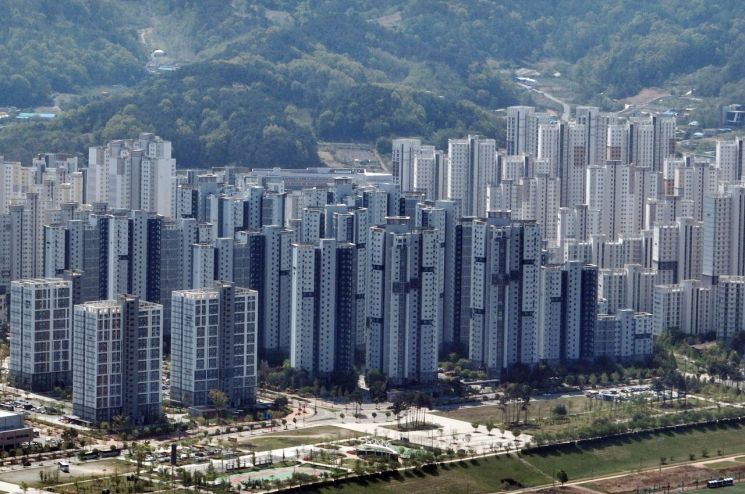
With the presidential election scheduled for June 3 next month, expectations are rising for the possible relocation of the presidential office to Sejong. Following a surge in apartment transactions within Sejong City, it has also been observed that transactions in the neighboring city of Cheongju are rebounding.
According to the Ministry of Land, Infrastructure and Transport’s real transaction price disclosure system on May 22, the total number of apartment sales in Cheongju, North Chungcheong Province last month was 1,138. This represents a decrease of 189 transactions compared to the previous month’s 1,327, but a 43.3% increase compared to January’s 794 transactions.
Expectations have grown as the likelihood of relocating the presidential office and the National Assembly to Sejong has increased following the election. Lee Jaemyung, the presidential candidate of the Democratic Party, pledged to complete the administrative capital in Sejong, to accelerate the construction of the Sejong branch of the National Assembly and the presidential office in Sejong, and to resume the relocation of public institutions as soon as possible. Kim Moonsu, the presidential candidate of the People Power Party, also promised the full relocation of the National Assembly, early construction of a second presidential office, and the expansion of transportation and infrastructure between Seoul and Sejong to strengthen the connection between Seoul and the administrative capital.
As each candidate announced pledges focused on Sejong and the Chungcheong region, apartment transaction volumes in Sejong City surged. In January, there were 305 apartment sales in Sejong; by March, this had increased 2.59 times to 789. Last month, the figure soared to 1,362, nearly 4.5 times higher than in January.
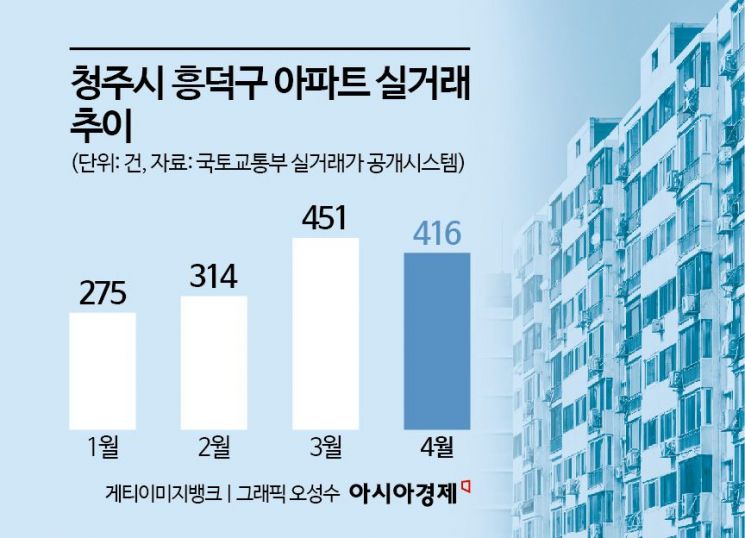
Recently, the warmth has also spread to the Cheongju apartment market near Sejong. In particular, the increase in apartment transactions in Heungdeok-gu, Cheongju, which is 20 to 40 minutes by car from the Government Complex Sejong, has been notable. Heungdeok-gu is drawing attention as it contains apartment complexes in Osong-eup, home to Osong Station (served by KTX and SRT) and the Osong Bio Science Complex. The number of apartment sales in Heungdeok-gu increased by 64%, from 275 in January to 451 in March. In April, the figure slightly decreased to 416, but this is still 95 more transactions compared to 321 in the same period last year.
An agent at a real estate office in Heungdeok-gu, Cheongju, said, "Last December was the hardest because there were no apartment transactions, but now it is better than then. It is difficult to say the market has fully recovered, but as the presidential election has become more active and transactions in Sejong have increased, inquiries and actual sales of apartments in Heungdeok-gu have also risen."
As transaction volumes have increased, prices are also showing an upward trend. According to the weekly apartment price trends from Korea Real Estate Board, as of the second week of May (based on the 12th), apartment prices in Sejong rose by 0.48% from the previous week, the largest increase nationwide. Heungdeok-gu in Cheongju rose by 0.22%, and North Chungcheong Province, where Cheongju is located, rose by 0.08%.
Experts explain that as Sejong grows, apartment transactions in Cheongju may further increase. Kwon Youngsun, team leader at Shinhan Bank’s Real Estate Investment Advisory Center, said, "Given the unique characteristics of Sejong, the city may expand in the future, and such expectations are spreading to neighboring areas. Centered on Sejong, the Chungcheong region including Cheongju also has growth potential, and as an alternative residential area, its attractiveness is increasing."
© The Asia Business Daily(www.asiae.co.kr). All rights reserved.
![Clutching a Stolen Dior Bag, Saying "I Hate Being Poor but Real"... The Grotesque Con of a "Human Knockoff" [Slate]](https://cwcontent.asiae.co.kr/asiaresize/183/2026021902243444107_1771435474.jpg)

















