Supreme Court's Office of Ethics and Audit to Summon Those Involved for Verification
Key Issues: Professional Relevance and Payment Methods
CIO Assigns Case to Third Investigative Division
The Supreme Court's Office of Ethics and Audit has begun verifying the facts regarding allegations that Ji Guyon, presiding judge of the Seoul Central District Court and judge for the 12·3 Martial Law Uprising trial (Judicial Research and Training Institute class 31), was entertained at an adult entertainment establishment. The Corruption Investigation Office for High-ranking Officials (CIO) has also assigned the case and launched an investigation.
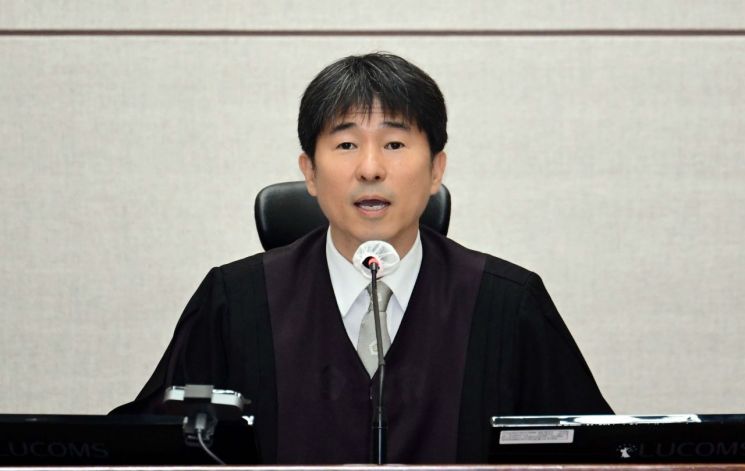
According to the legal community on May 20, the Supreme Court's Office of Ethics and Audit is currently verifying the facts surrounding the allegations of Judge Ji being entertained at an adult entertainment establishment. This verification is based on materials presented by the National Assembly and various media reports. The audit is overseen by Choi Jinsu, the Supreme Court's chief ethics auditor (Judicial Research and Training Institute class 16), who reports directly to the Chief Justice. On May 16 and 19, the Democratic Party of Korea reportedly visited the specified establishment to check whether it was operating, among other verification procedures.
The Office of Ethics and Audit plans to summon Judge Ji as soon as the basic facts are confirmed, in order to verify the identities of those present and payment details. While the office does not have the authority to conduct compulsory investigations, the Supreme Court believes that confirming the facts directly with the judge is essential. It is highly unusual for the Supreme Court's Office of Ethics and Audit to announce the launch of such an investigation. This move is seen as an expression of the court's intent to clarify the process, given the high public interest in allegations involving the presiding judge of a case of national significance.
On May 19, as the allegations raised by Democratic Party lawmaker Kim Yongmin continued to spread, Judge Ji responded just before the trial of former President Yoon Suk Yeol on insurrection charges, stating, "The allegations raised by the Democratic Party are not true, and I have never considered being entertained at such places (adult entertainment establishments). This is not that kind of era. No one even buys pork belly and somaek (soju mixed with beer) for others anymore." He made these remarks in the form of a personal statement before the trial, effectively refuting the allegations.
After Judge Ji's statement, the Democratic Party presented a second set of photographic evidence. The party released a photo showing Judge Ji sitting with two companions at a location believed to be an adult entertainment bar in Gangnam, Seoul. However, the Democratic Party did not disclose specific details such as the companions' professional relevance, the costs incurred, or whether any payments were made on Judge Ji's behalf. It has been reported that the establishment in question is currently registered as a karaoke bar, not an adult entertainment bar. The Democratic Party plans to submit all collected materials, including the photos presented the previous day, to the Supreme Court.
Previously, on May 14, lawmaker Kim Yongmin raised the "entertainment allegations" against Judge Ji during a National Assembly hearing called by the Legislation and Judiciary Committee to investigate allegations of election interference involving Chief Justice Cho Hee-dae and others. Immediately after the allegations surfaced, the Seoul Central District Court stated on May 15, "The allegations are vague, and no concrete evidence has been presented, so there is nothing to clarify at this time." On May 16, the Supreme Court's Office of Ethics and Audit further stated, "We are verifying the facts related to the allegations."
Standards for Determining Judge Ji Guyon's Misconduct... Disciplinary Action to Be Decided by the Judicial Disciplinary Committee
The criteria for determining whether Judge Ji's actions constitute misconduct, as claimed by the Democratic Party, will likely include the professional relevance of those present, the amount paid, and who made the payment. If the companions in the photo are found to be related to ongoing trials, professional relevance is likely to be recognized. However, if the relationship is determined to be a long-standing personal connection, it may be difficult to establish professional relevance.
Even if professional relevance is not established, there remains the possibility of violating the Improper Solicitation and Graft Act depending on the method and party responsible for payment. If each person paid for themselves, there would be no issue. However, if a companion such as a lawyer paid for drinks exceeding a certain amount, it could be considered misconduct regardless of professional relevance. According to Supreme Court precedent, the threshold for criminality is 1 million won. If the amount exceeds 1 million won in a single instance, imprisonment or a fine may be imposed; if not, an administrative fine may be levied.
There are three types of disciplinary actions for judges: suspension, salary reduction, and reprimand. Such disciplinary action can be requested by the Chief Justice or a court president, and the Judicial Disciplinary Committee determines the level of discipline. The committee consists of one Supreme Court justice as chair, along with judges, lawyers, and law professors.
Meanwhile, on this day, the CIO announced that it had assigned Judge Ji's case, which involves allegations of bribery, to the third investigative division (headed by chief prosecutor Lee Daehwan). Judge Ji has been reported to the CIO for alleged bribery and violations of the Improper Solicitation and Graft Act by civic groups such as "Lawyers Who Investigate Prosecutors," "People's Livelihood Economy Research Institute," and "Candlelight Action," in connection with the entertainment allegations.
© The Asia Business Daily(www.asiae.co.kr). All rights reserved.
![User Who Sold Erroneously Deposited Bitcoins to Repay Debt and Fund Entertainment... What Did the Supreme Court Decide in 2021? [Legal Issue Check]](https://cwcontent.asiae.co.kr/asiaresize/183/2026020910431234020_1770601391.png)
















