Massive Blackout Hits the Iberian Peninsula
The Frequency Instability Dilemma of Clean Renewable Energy
Jeju Faces Output Control Losses Due to High Wind Power Share
Renewables Require Parallel Investment in Grid Modernization
Last month, a massive blackout in Spain and Portugal brought the risk of power grid instability caused by renewable energy to the forefront. As investigations revealed that the cause of the Iberian Peninsula blackout was a power grid unable to keep pace with the rapid expansion of renewables, countries are now grappling with how to address the growing issue of grid instability.
Electricity Requires Stable Frequency... Intermittent Renewables Make It Difficult
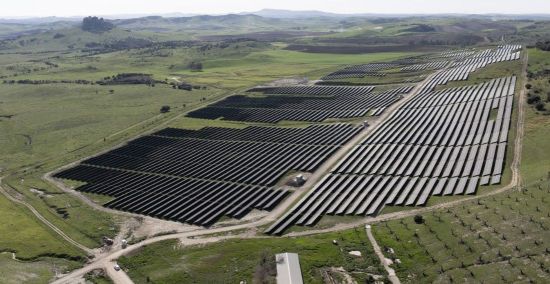
On April 28 (local time), Spain and Portugal experienced a nationwide blackout. For about 12 hours, electricity was cut off in major cities such as Madrid and Barcelona. This event is expected to go down as one of the worst blackouts in European history. Authorities, upon investigation, found that a substation located in Granada, Spain, was the starting point of the outage. It was also determined how the blackout occurred. Authorities reported that they had detected a sudden and significant drop in the frequency of electricity just before the outage.
For electricity to flow through the transmission grid, the frequency must remain stable. If there is a sudden, large fluctuation in frequency, the power grid can be damaged, and transmission can be interrupted. This is why grid operators (such as Korea Electric Power Corporation in Korea) always manage the frequency of electricity to keep it constant. When electricity demand rises, they operate additional backup power plants; conversely, when supply is high, they instruct some plants to shut down.
If a national power grid is composed of generators running on gas or coal, such management is relatively straightforward. These are so-called "dispatchable power sources" because their output can be adjusted by controlling fuel input. However, renewable energy is an "intermittent power source," with generation intensity fluctuating according to sunlight and wind strength. For this reason, Spain, where renewables accounted for a majority share (50.3% as of 2023), faces the risk that sudden environmental changes may lead to frequency instability.
The Renewable Energy Dilemma Ahead: Early Signs Detected in Jeju
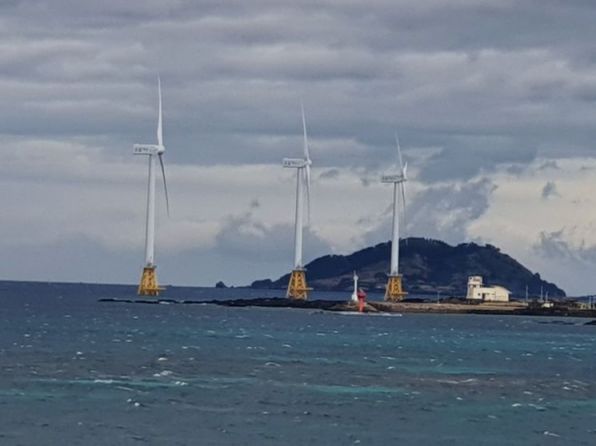
The Iberian Peninsula blackout has reignited concerns about grid instability due to renewables. In Korea, Jeju has the highest share of renewable energy generation (18.17% in 2023, twice the national average). It is also one of the regions where output control instructions are most frequent.
Intermittent power sources cannot have their electricity output arbitrarily controlled, but they can respond to frequency risks through "output control." Output control is an emergency measure that forcibly disconnects a power source from the grid when electricity production becomes excessive and the grid can no longer handle it. In Jeju, there were only three instances of output control in 2015, but this surged to 15 in 2018, 46 in 2019, and 181 in 2023.
The electricity lost due to output control ultimately represents a cost that someone must bear. Korea Electric Power Corporation estimated that, from 2023 to 2034, cumulative revenue losses from output control in Jeju would reach 1.26 trillion won.
Energy Transition Only Meaningful With Simultaneous Grid Reinforcement
Although renewable energy brings the dilemma of grid instability, there are solutions. Grid reinforcement is key. For example, if sunlight or wind suddenly intensifies and causes a surplus of renewable energy in a particular area, the excess can be transferred to other regions via High Voltage Direct Current (HVDC) cables or temporarily stored in secondary battery Energy Storage Systems (ESS). Conversely, when renewable generation drops sharply, electricity stored in ESS can be released to stabilize the grid.
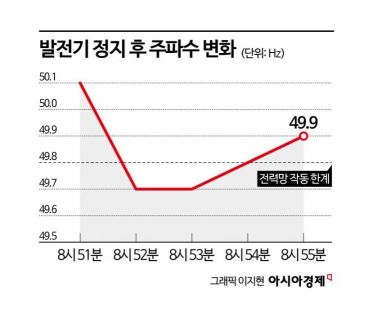 On March 14 (local time), the UK also experienced a rapid frequency fluctuation due to a 2GW scale power generation loss. Unlike Spain, the UK power grid, which has advanced Energy Storage Systems (ESS), restored the grid operating limit frequency of 49.8 Hertz (Hz) within 2 minutes and continued operation without any issues. Source: Modo Energy
Europe experienced a similar frequency fluctuation to the Iberian Peninsula blackout on March 14. At that time, the UK power grid suddenly lost 2 gigawatts (GW) of electricity, causing a rapid drop in frequency. Unlike Spain, however, the UK quickly stabilized its grid frequency by deploying ESS and hydro batteries in an emergency response, allowing transmission to continue without incident.
Ultimately, the real cause of the Spanish blackout was a power grid that failed to keep pace with the expansion of renewables. Bloomberg News reported on May 3 that "Spain invested the least in power grids among European countries over the past five years," and pointed out that "while most European countries maintained a 10:7 ratio of investment in renewables to grid infrastructure, Spain's ratio was only 10:3."
Meanwhile, Jeju is already investing in its power grid to prepare for an even higher share of renewables in the future. There are currently two HVDC interconnection lines from Jeju to the mainland, and plans are in place to build a third line to increase transmission capacity.
Jeju's surplus renewable energy could also become an opportunity to foster new industries, as the excess electricity can be used for clean hydrogen production. Since April 2022, Jeju has invested 62 billion won over a 48-month period, through March 2026, in a demonstration project to produce green hydrogen (hydrogen produced solely from renewable electricity).
© The Asia Business Daily(www.asiae.co.kr). All rights reserved.
![Clutching a Stolen Dior Bag, Saying "I Hate Being Poor but Real"... The Grotesque Con of a "Human Knockoff" [Slate]](https://cwcontent.asiae.co.kr/asiaresize/183/2026021902243444107_1771435474.jpg)


















