96.8% of Injuries Involve the Head and Face
High Risk of Concussion and Skull Fracture
83.9% of Accidents Involve Infants Under 12 Months
The Korea Consumer Agency and the Fair Trade Commission announced on May 19 that they have issued a consumer safety advisory due to the continued occurrence of infant and toddler falls while using baby carriers.
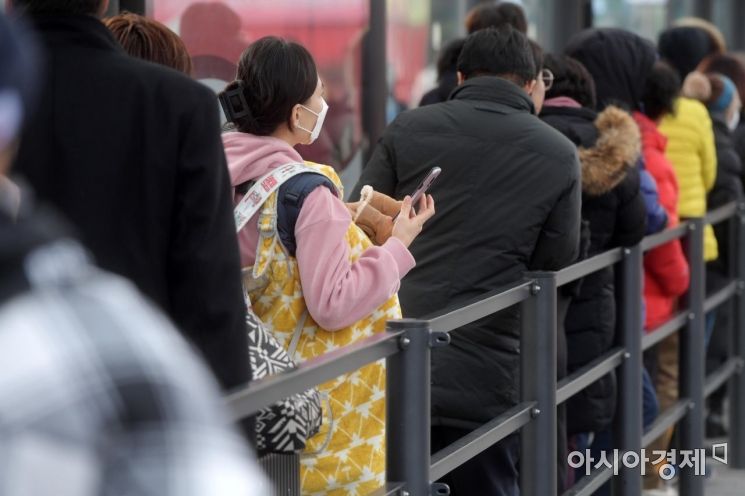 A woman wearing a baby carrier is waiting in line at a taxi stand. (Photo unrelated to the article content)
According to the Korea Consumer Agency, a total of 62 baby carrier-related fall accidents were reported to the Consumer Injury Surveillance System (CISS) over the past five years, from 2020 to last year. By year, there were 4 cases in 2020, 7 in 2021, 15 in 2022, 20 in 2023, and 16 in 2024. Among these, 52 cases, or 83.9% of the total, involved infants under 12 months old, who have limited mobility.
Injuries to the "head and face" accounted for the highest proportion at 96.8% (60 cases), followed by "buttocks, legs, and feet" at 3.2% (2 cases). The Korea Consumer Agency explained that this is because, due to the physical characteristics of infants and toddlers whose heads are relatively heavy, falls often result in head-first impacts.
Notably, one out of every three infants and toddlers suffered a serious injury such as a "concussion" (12 cases, 19.4%) or a "skull fracture" (8 cases, 12.9%) during a fall, highlighting the need for extra caution by guardians.
A detailed analysis of the types of safety accidents revealed that the most common cause was the baby carrier becoming unfastened or loose during use, resulting in the infant or toddler falling (20 cases). This was followed by cases where the infant or toddler slipped through a gap between the wearer’s body and the baby carrier and fell (13 cases).
In addition, there were also cases caused by the guardian’s carelessness, such as the infant or toddler falling while the guardian was putting on the baby carrier (7 cases), or falling when the guardian bent over while wearing the baby carrier (1 case).
The Korea Consumer Agency and the Fair Trade Commission emphasized the following for the correct use of baby carriers: ▲Purchase KC-certified products; ▲Since the methods for wearing and adjusting belts differ depending on the carrier’s structure, carefully read the user manual and ensure proper fitting; ▲Readjust buckles and belts whenever the wearer or their clothing changes.
They also advised: ▲Refrain from bending over or leaning forward sharply while wearing a baby carrier, and instead lower your posture by bending your knees; ▲Regularly check the position and posture of the infant or toddler while on the move; ▲When putting on the carrier or changing the wearing position, do so from a low posture.
© The Asia Business Daily(www.asiae.co.kr). All rights reserved.

















