Ban on Brazilian Poultry Imports Due to Avian Influenza
Chicken Industry Relies on Domestic Products... Limited Impact Expected
Concerns Over Supply Chain Pressures Starting With Processed Food Companies
The government has recently banned the import of Brazilian chicken following the outbreak of highly pathogenic avian influenza in Brazil. However, the overall impact on the domestic chicken market is expected to be limited. This is because most chicken franchise companies use domestically produced chicken, and the self-sufficiency rate in the domestic chicken market is high. Nevertheless, there are concerns that if the import ban is prolonged, demand may shift toward domestic chicken, especially among processed food companies, which could in turn put pressure on the supply chain.
According to the industry on May 19, the Ministry of Agriculture, Food and Rural Affairs has imposed a complete ban on the import of Brazilian hatching eggs (eggs for chick production), table eggs, day-old chicks, chicken meat, and other poultry products, effective from shipments departing on or after May 15. This measure was taken in response to the outbreak of highly pathogenic avian influenza (HPAI) at a commercial poultry farm in Rio Grande do Sul, southern Brazil, on May 15. Shipments that departed after May 1 but before the ban will be tested for HPAI, and their entry will be decided based on the results.
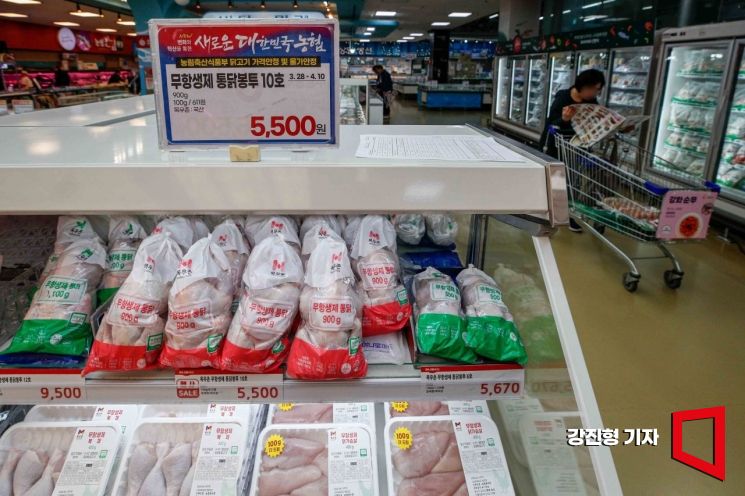
Ban on Brazilian Chicken Imports... Chicken Industry Says "No Issues, Using Domestic Products"
Brazil is the world's largest exporter and the second-largest producer of chicken. According to the United States Department of Agriculture, Brazil accounts for 14% of global chicken production and is a major poultry exporter. Last year, Brazil recorded approximately $10 billion (about 14 trillion won) in chicken exports. In Korea, the majority of imported frozen chicken comes from Brazil. According to statistics from the Korea Meat Distribution and Export Association, last year Korea imported 45,211 tons of chicken from Brazil, accounting for 88% of the total 51,147 tons of chicken imports.
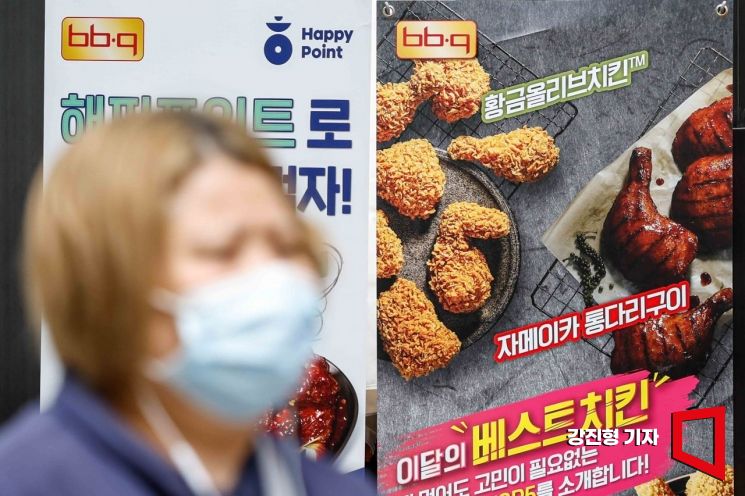
With the government's ban on Brazilian chicken imports, concerns have arisen regarding potential price increases and supply issues in the domestic chicken industry. However, the major chicken franchise companies emphasize that the impact on the industry will be limited. This is because most leading chicken franchise brands use domestically produced chicken rather than Brazilian chicken. BBQ has highlighted that it uses only fresh domestic chicken for both boneless and cut products, while Kyochon Chicken uses domestic and Thai chicken.
The industry explains that last March, when BHC Chicken was criticized for secretly switching some menu items to the much cheaper Brazilian chicken and raising prices, it served as a turning point to reduce the use of Brazilian chicken. After the controversy, BHC Chicken reverted to using domestic chicken for those menu items and continues to do so today. An industry insider stated, "After that controversy, competitors also completely excluded Brazilian chicken, and currently, only some small brands handle a limited amount of boneless products using Brazilian chicken."
In fact, the domestic chicken market has a high self-sufficiency rate. According to the Korea Rural Economic Institute, the self-sufficiency rate for broiler chickens in Korea was 83.3% last year. As demand for chicken continues to rise, the number of parent stock chickens (chickens raised for breeding edible chickens) introduced last year increased by 3.8% to 7,479,000 from 7,204,000 the previous year. As a result, the self-sufficiency rate is expected to rise to 86.0% this year.

Brazilian Chicken Mainly Used in Processed Foods... Concerns Over Supply Chain Disruptions if Prolonged
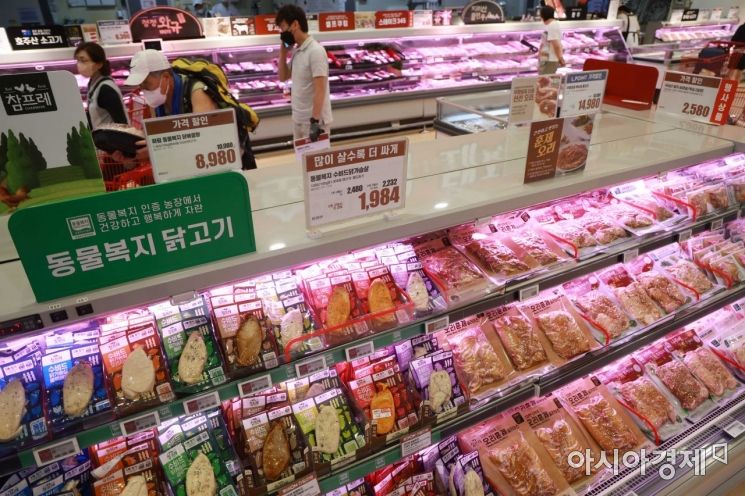
This import ban warrants closer attention to the broader food service and food industry. Brazilian chicken imported to Korea is brought in by parts and is mainly used in processed chicken products sold to general consumers at supermarkets and convenience stores, as well as in B2B foodservice products for group catering and pubs.
An industry official said, "Brazilian chicken is mainly used not by chicken restaurants but in convenience store lunchboxes, side dishes for group meals, and chicken karaage at izakayas. Since most of these are frozen products with long shelf lives, a one- or two-month import suspension is unlikely to cause operational disruptions." However, the official added, "If this measure is extended for several months, it could create supply issues." The current import suspension is a temporary measure for 60 days, after which authorities will decide whether to lift the ban based on an evaluation.
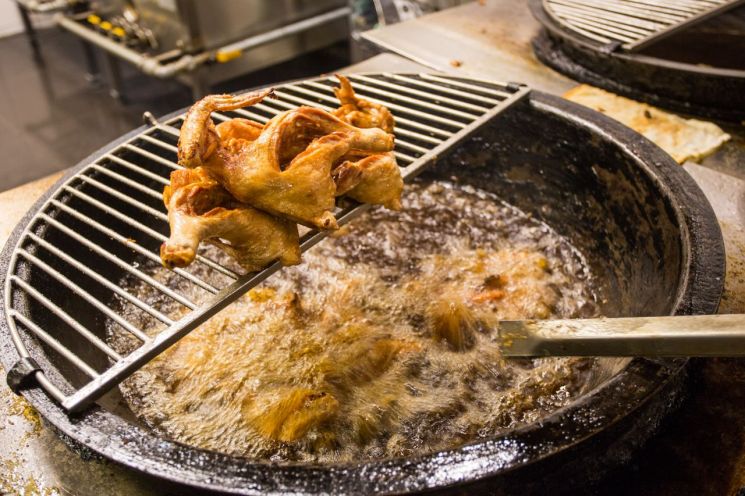
If the ban on Brazilian chicken imports is extended, demand for domestic chicken is expected to surge, which could trigger a chain reaction of supply shortages and ultimately lead to price increases across the board. Another industry insider commented, "If the supply of cheap imported chicken continues to decrease, demand for domestic chicken parts will inevitably rise, and as a result, even companies that already use domestic chicken will face price pressures due to supply instability."
Although the number of broiler chickens slaughtered this month is expected to decrease compared to last year, distribution prices are projected to remain stable. According to the Korea Rural Economic Institute, the number of broiler chickens slaughtered in May is expected to be between 65.47 million and 66.82 million, a decrease of 0.9% to 2.9% from 67.44 million in the same period last year. However, as slaughter volumes increase, prices are expected to fall compared to the previous month.
© The Asia Business Daily(www.asiae.co.kr). All rights reserved.



















